

MAS may opt for aggressive tightening to tame inflation in April meeting
Some economists say the central bank could steepen Singdollar appreciation slope as well as recentre upward its policy band


Singapore
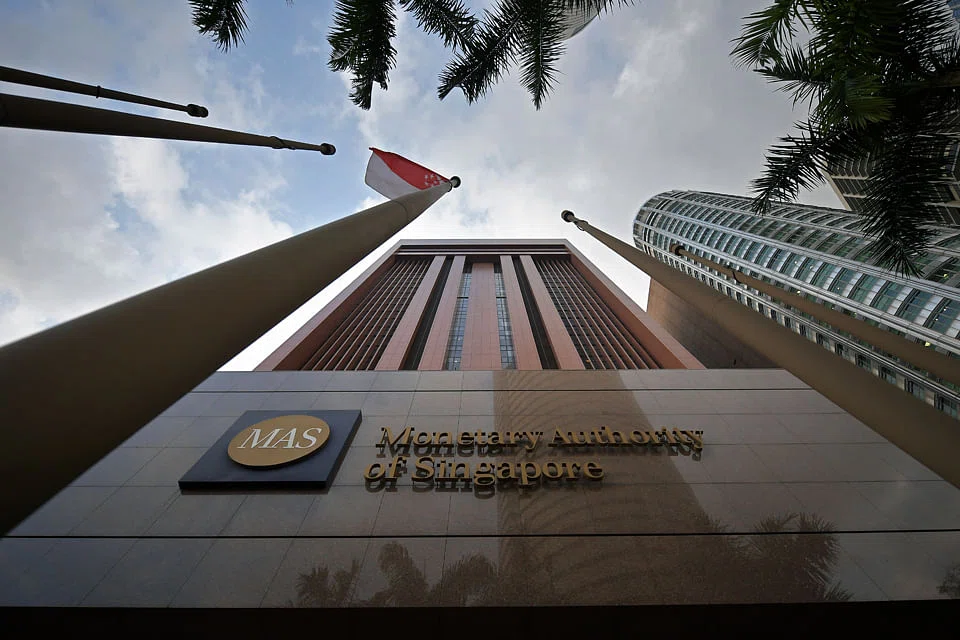
THE Monetary Authority of Singapore (MAS) could allow the Republic's currency to appreciate at a faster rate in its monetary policy review later this week, although economists are not discounting the possibility it may take a more hawkish stance amid rising inflation.
Economists whom The Business Times reached out to unanimously agreed a further tightening is on the cards in the central bank's monetary policy statement slated for Apr 14.
This is despite 2 similar moves in the last 6 months, including an off-cycle one in January that surprised the market.
Even so, there was no consensus on what MAS could do this Thursday (Apr 14). At least 6 economists said the central bank could steepen the slope of the Singapore dollar nominal effective exchange rate (S$NEER) policy band by 100 basis points (bps) to 2 per cent per annum, a move that would allow the Singapore dollar to appreciate faster.
"A steeper slope delivers the most durable form of tightening against inflation, and is also consistent with the gradual maturing of the recovery over the year," said Mohamed Faiz Nagutha, Asean economist at the Bank of America (BofA) Securities.
"While MAS, in recent years, had preferred to move in 50 bp steps, a stronger dose of slope steepening is appropriate given the broadening out of inflation and greater concerns about global inflation than before," he added.
Inflation hit near-decade high levels in recent months, with Russia's invasion into Ukraine exacerbating the energy crisis and supply chain woes caused by the Covid-19 pandemic.
In February, headline inflation crept up to 4.3 per cent while core inflation eased slightly to 2.2 per cent.
Economists Chua Hak Bin and Lee Ju Ye from Maybank as well as Nicholas Mapa from ING believe MAS could recentre the S$NEER band to the prevailing level given elevated inflationary pressures and supply bottlenecks.
The move would provide more room in the near term for the S$NEER to appreciate and contain imported inflation, the Maybank team added.
Among those whose base-case scenario is a steepening of the S$NEER slope, several also said a more aggressive "double-barrelled" move that also involves an upward recentring of the policy band should not be ruled out.
UOB economist Barnabas Gan said this is due to the relative strength of the S$NEER, which is now hovering above its midpoint and testing the top bound of the band.
"This suggests that there is little headroom for the S$NEER to appreciate further, and a recentring would be able to provide further room to accommodate further S$NEER strength as part of the policy tool to manage inflationary risks," said Gan.
Recentring the band is a "more significant adjustment" that requires both growth and inflation outlook to change rapidly and shift to a new path, BofA's Nagutha noted.
While a slope change is likely sufficient to address inflation concerns, he added: "We recognise that near-term inflation concerns have shifted higher since January and MAS may feel the need for an immediate adjustment to also address rising inflation expectations."
With price stability likely a primary focus for MAS, JP Morgan's Asean chief economist Ong Sin Beng said MAS would likely move to preserve that despite downside risks to growth.
Meanwhile, economists expect Singapore's gross domestic product (GDP) to expand by 3.7 per cent in the first quarter of 2022, slowing down from the 6.1 per cent growth in Q4 2021, according to a Bloomberg poll.
Maybank's Chua attributed the slower growth partly to the higher base for manufacturing and the stricter border measures that were in place to stem Omicron infections in January. He expects GDP growth to come in at around 4.5 per cent in Q1.
Adding to that, OCBC chief economist Selena Ling said: "March manufacturing and electronics PMIs (purchasing managers' indexes) have started to soften, with rising input prices and supplier delivery delays being the key contributors". She pencilled in GDP growth in Q1 to come in at around 3.1 per cent.
Oxford Economics senior economist Sung Eun Jung, too, expects growth to weaken due to the delay in reopening and relaxation measures into Q2, as well as the economic uncertainties brought about by the Russia-Ukraine war. She believes GDP will grow by 3.5 per cent in Q1.
Chua said manufacturing is likely to lead growth in the first quarter on the back of global semiconductor demand.
"Services and construction will continue to recover from last year's low base, but will likely accelerate only from Q2 onwards with the significant reopening and relaxation of borders from Mar 29," he added.
TRENDING NOW

World’s largest offshore wind platform by Seatrium consortium on track to be completed by 2028

Is stamp collecting enjoying an analogue revival or are its best days over?

GovTech retrenches another 38 staff in second round of layoffs

MBS adjusted property Ebitda falls 20.6% in Q3 with fewer high-roller visits, weaker hold

