

MAS to drill deeper into climate risks for stress test on banks
Singapore
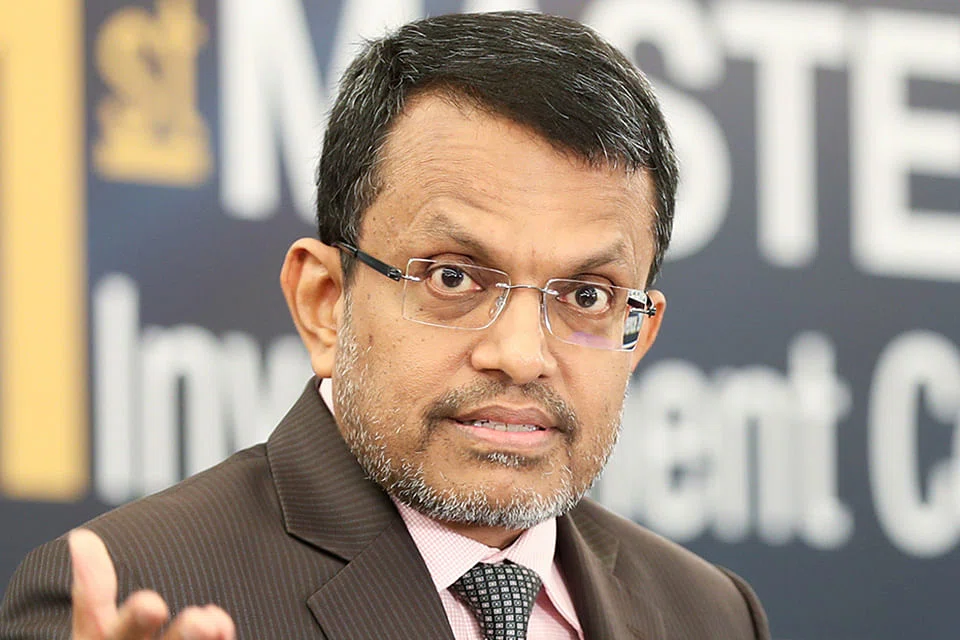
THE Monetary Authority of Singapore (MAS) will, within the next two years, incorporate climate-related scenarios in the annual stress test for the financial industry, said its managing director Ravi Menon.
The regulator's deeper dive into threats to the financial sector as a result of climate change comes amid associated transition risks. Up to an estimated US$20 trillion of assets across the energy, industry and building sectors globally could become stranded by 2050. And at a temperature rise of two degrees celsius, US$1.7 trillion of global financial assets could be at risk of a write-down in value.
Speaking at a conference on Tuesday, Mr Menon outlined these sobering numbers to point out the severity of such threats. "These risks are not trivial and could well threaten the stability of the financial system," he said.
"The climate crisis is the existential challenge of our time... this call to action for a sustainable future has only grown stronger with the Covid-19 pandemic. Covid-19 has sensitised the world to how vulnerable we all are to the forces of nature."
On its part, MAS has started to evaluate the resilience of its official foreign reserves under a range of short-term climate-related disruptions and longer-term climate scenarios. It is also working on a roadmap to better integrate environmental risks across all its business functions, including measuring, reducing and disclosing its own carbon footprint.
"As a central bank and financial regulator, MAS will practise what it preaches," added Mr Menon.
For Singapore, a small tropical island, climate change in the form of rising temperatures and rising sea levels highlights the threat to the country's physical existence.
Mr Menon noted that Singapore's sustainability agenda has taken on "added urgency and broader dimensions" now, amid the threat of climate change and the Republic's commitments under the Paris Agreement.
But he pointed out as well that Asia's move towards a low-carbon future will be different from that of Europe, with millions of people here still without access to electricity, modern sanitation, and drinking water.
"Asia cannot move quickly to a European standard of green without curtailing its economic and social development," he said. "Asia's transition to sustainability has to be progressive yet determined - through ever-deeper shades of green."
The progressive transition to a low-carbon economy is consistent with inclusive economic growth, according to Mr Menon.
He cited statistics from the Global Commission on the Economy and Climate, that suggested "bold climate action" could generate more than 65 million new low-carbon jobs globally in 2030.
Against that backdrop, Mr Menon announced the launch of the Singapore Green Finance Centre, set up by the Imperial College Business School and the Lee Kong Chian School of Business at Singapore Management University.
It is Singapore's first research institute dedicated to green finance research and talent development, and seeks to equip professionals with new skills and create a strong pipeline of green finance talent, MAS said.
The centre is supported by MAS and nine founding partners: Bank of China, BNP Paribas, Fullerton Fund Management, Goldman Sachs, HSBC, Schroders, Standard Chartered, Sumitomo Mitsui Banking Corp and UBS.
The moves come amid rising attention on green finance among banks, with banks committing to sustainable finance.
HSBC is the latest this month to earmark US$1 trillion green financing. It will also target net zero carbon emissions across its entire customer base by 2050. Tony Cripps, CEO, HSBC Singapore, said the bank looks to bring together experts and players from different sectors to address existing "knowledge gaps" in the sustainable finance ecosystem.
Mr Menon noted too that the strong wealth expansion in Asia can offer a boost to sustainable investments.
A UBS study estimates that some 40 per cent of family offices plan to allocate most of their portfolios sustainably in five years' times.
In a media statement, UBS Global Wealth Management's divisional vice-chairman Desmond Kuek said more of UBS clients are seeing sustainability as an integral part of their business strategy and value system. "It offers strong diversification to help weather the economic uncertainty and market volatility that will likely persist in the decade ahead."
Among other things, Singapore will launch by the end of the year a grant to support sustainability-linked loans, said Mr Menon.
This is similar to the existing grant for sustainable bonds, where the cost of external reviews for such bonds are defrayed.
More than S$8 billion in green, social and sustainability bonds have been issued in Singapore since this scheme was launched in 2017.
Singapore, as Asean's largest green finance market, has seen as well that sustainable financing and investment flows have held up well through the first half of this year, despite the pandemic and broad-based economic weakness, added Mr Menon.
READ MORE: Three Rockefellers say banks must stop financing fossil fuels
LISTEN IN: GIC Insights 2020 on the future of sustainability
TRENDING NOW

He built the Vingroup empire. Now South-east Asia’s richest man is handing some key roles to his sons

Grab CEO’s wife Chloe Tong on life with Anthony Tan and finding her purpose

What role can Japan play in Asean’s future?

From folding clothes to factory work: Why China is sending humanoid robots to school

