Mask rules, group size cap, border curbs eased as Singapore reaches 'turning point'
These changes are 'a major step towards living with Covid-19', PM Lee says, though he adds 'they stop short of a complete opening up'

Singapore
MASKS off outdoors, social gatherings of up to 10 people, and quarantine-free entry for all fully vaccinated travellers. More than 2 years into the Covid-19 pandemic, Singapore is making its most sweeping relaxations to domestic and border restrictions yet.
These changes mark "a major step towards living with Covid-19", Prime Minister Lee Hsien Loong told the public on Thursday (Mar 24), though he added "they stop short of a complete opening up".
"After this major step, we will wait a while to let the situation stabilise," he said, noting that "we may have to backtrack and tighten up our restrictions again" if a more dangerous virus variant emerges.
Similarly, Health Minister Ong Ye Kung, one of the co-chairs of the national Covid-19 multi-ministry taskforce, called the imminent easing "a pivoting, not a dismantling, of our Covid-related measures".
While policymakers want to live with Covid-19, other endemic diseases, such as influenza and yellow fever, "continue to kill a lot of people" worldwide - so controls such as vaccinations or isolation measures are still needed, he said.
Still, PM Lee acknowledged that Singapore "has reached a major turning point" in the war against the virus.
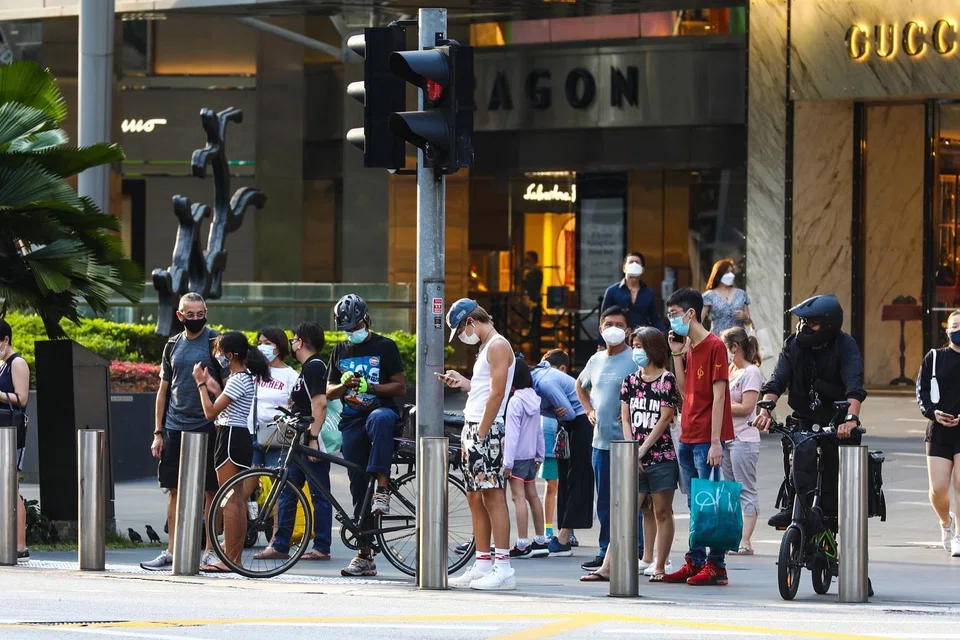
In the most visible sign of the changed posture, masks - which have been compulsory island-wide since April 2020 - will become optional in outdoor settings such as void decks, bus stops, walkways and parks from Mar 29 onwards.
Fully vaccinated individuals can soon dine out in groups of up to 10 - double the prevailing limit - and food and beverage (F&B) establishments will no longer have to check the vaccination status of all diners.
Meanwhile, eateries will be allowed to sell and serve alcohol past 10.30 pm for the first time since the 2-month circuit breaker in 2020.
Upcoming changes also include higher capacity limits of 75 per cent in workplaces and at large business events, such as meetings, incentives, conventions and exhibitions, up from 50 per cent now.
On the international front, Singapore and Malaysia will reopen their land border to all fully vaccinated travellers from Apr 1, without the need for testing or quarantine.
The reopening marks the most significant normalisation since Malaysia's unprecedented closure of the Woodlands Causeway and Tuas Second Link in March 2020.
More broadly, Singapore will allow quarantine-free air and sea entry for all fully vaccinated travellers, including short-term visitors.
Asked why Singapore is relaxing both domestic and border measures at the same time, Ong told the press that imported cases are relatively few and "don't pose a burden to our healthcare capacity", while the burden on hospitals has eased as domestic infections fall.
"Judging the entire conditions that we are going through now, the timing is right for us to effect a change," he said. "There are 2 separate sets of considerations and both are aligned. That allows us to make these moves concurrently."
Barclays economist Brian Tan wrote in a note: "We continue to expect the bigger driver of economic growth this year to be the government's efforts to further reopen the domestic economy and international borders, which could lead to a very visible economic boost, especially in the services sector."
Similarly, Selena Ling, chief economist at OCBC, projected "a faster improvement in the number of visitor arrivals, F&B spending and private consumption appetite in general in the coming months", with the F&B, retail and entertainment industries tipped to benefit.
Lam Yi Young, chief executive of the Singapore Business Federation, said the latest changes will help F&B and hospitality businesses recover, while the Vaccinated Travel Framework will facilitate business travel, including outbound trips.
"The reopening is something that the business community has been looking forward to, and the bold moves announced today will help put us on track for recovery and growth and enable us to emerge stronger," he remarked.
Still, analysts have stuck to their full-year growth forecasts, with Ling saying "a near-term upgrade is unlikely" for the economic outlook, as inflation and hawkish central bank stances may hit demand.
Separately, the expert committee on Covid-19 vaccination has recommended that those aged 80 and above, as well as other at-risk individuals, get a second booster dose of the vaccine around 5 months after their first booster.
Patients with weakened immune systems are already encouraged to receive 3 doses in their primary series of vaccination, with a fourth one as their booster dose.
More than 92 per cent of the population has completed a primary series of vaccinations, while 71 per cent has also received boosters.
But PM Lee warned Singaporeans to be prepared for further "twists and turns" in the pandemic, adding: "We are not yet at the finish line, though we are getting closer."
READ MORE: