More capital flows into Asean amid pandemic and US-China tensions

Sharon See
Singapore
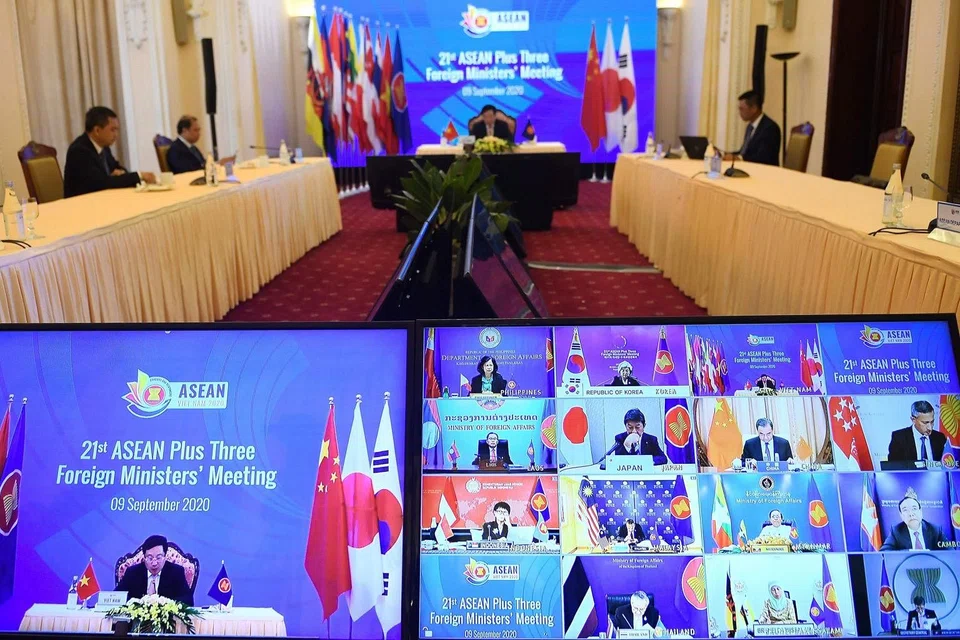
THE Asean region is set to see more capital inflows as companies look to diversify their investments and supply chains amid US-China tensions in a post-pandemic world, a group of panellists said on the first day of the FutureChina Global Forum on Tuesday.
One leading indicator of the supply chain shift lies in China's machinery exports to Asean countries as the region ramps up its production capacity, said Tommy Xie, head of Greater China research at OCBC and one of the panellists at a roundtable discussion focused on China-Asean partnership.
In 2019, Vietnam was already the largest recipient of China's machinery, Mr Xie said. He noted that although foreign direct investment in Vietnam and Indonesia fell by about 50 per cent year-on-year (y-o-y) in the first half of 2020 due to the Covid-19 pandemic, China's machinery exports to the region remains resilient.
China's machinery exports to Vietnam grew by 22 per cent y-o-y in the first seven months of 2020, which Mr Xie said was a "very strong" number.
On the whole, Asean will benefit from the post-pandemic China Plus One strategy, with Vietnam one of the biggest beneficiaries.
Comparing current tensions between the United States and China with that in 2018 and 2019, he noted that US President Donald Trump is increasingly relying on economic sanctions to confront China.
While trade wars operate within a certain multilateral framework, sanctions are unilateral and politically driven, he said. Even so, China's response has been relatively "more restrained", unlike its tit-for-tat approach in 2018, Mr Xie noted. "So instead, this recent tension actually may have become the catalyst for China to speed up its opening of its domestic financial markets," he said.
Fellow panellist Ernest Kan, chief advisor of capital markets in China for the Singapore Exchange, noted the US threat to delist Chinese companies from US exchanges has also pushed these companies to seek funds in this part of the world.
He cited several examples, including fintech company AMTD International's secondary listing on the Singapore Exchange; video-sharing service TikTok and tech giant Tencent's plans to set up headquarters Singapore; and Alibaba's fintech arm Ant Group's planned Hong Kong-Shanghai initial public offering. "You would have expected Alibaba and Ant would have first of all considered the US stock market but because of all this ... we see the (capital flow) coming within Asia," Mr Kan said.
READ MORE: Tencent picks Singapore as its Asia hub after US, India bans