

MPA awards three firms S$8m in funds to defray costs of building LNG-powered vessels
In addition to this, it unveils other incentives aimed at propelling the Port of Singapore into the age of LNG bunkering
Singapore
THE Maritime and Port Authority of Singapore (MPA) on Wednesday used the Singapore International Bunkering Conference and Exhibition (SIBCON) as a platform to unveil a slew of initiatives aimed at taking Singapore's port-city into a cleaner-burning maritime future.
First off, it announced a financial incentive - S$8 million that will go into co-funding the building of ships that run on liquefied natural gas (LNG). These funds will defray the building cost for four ships, given that the MPA has set aside S$2 million for each vessel.
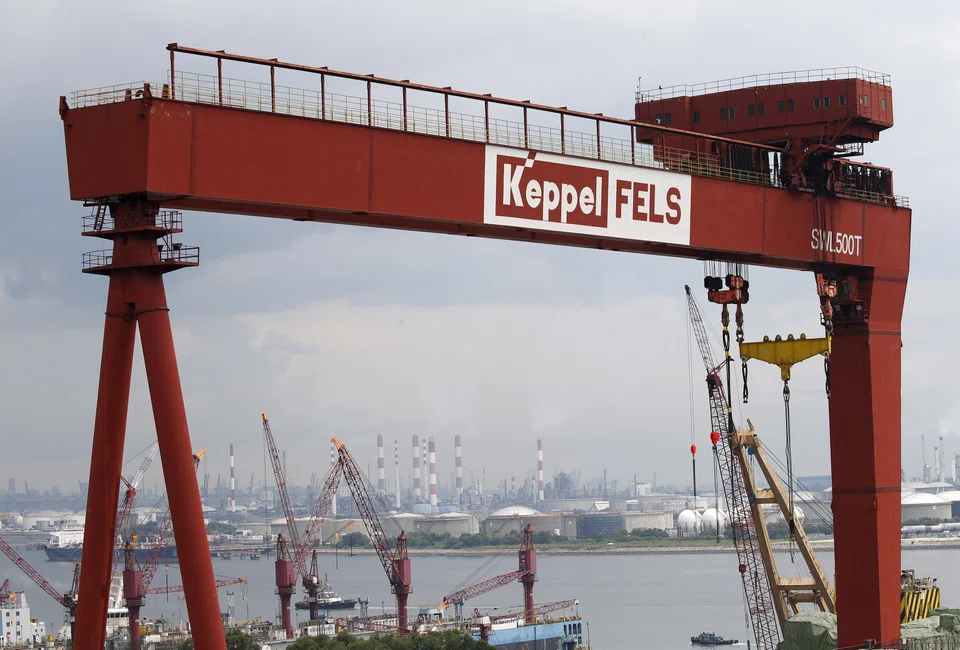
Three companies have bagged funds under this vessel co-funding programme: Keppel Smit Towage Pte Ltd (a business unit of Keppel Corporation), and two other privately-owned maritime players, Harley Marine Asia and Maju Maritime.
The MPA said the types of vessels that will be built include tugboats and bunker tankers. The S$8 million comes from its total kitty of S$12 million allocated for the co-funding programme.
To encourage local harbour vessels to use LNG bunker - Singapore's LNG bunkering pilot starts early next year - the MPA said it will waive five years of port dues for new LNG-fuelled harbour craft that register with it between Oct 1, 2017 and Dec 31, 2019.
Complementing this initiative is the Green Port Programme. Under this, the MPA will grant an additional 10 per cent concession on port dues for qualifying vessels that engage LNG-fuelled harbour craft in their port operations.
In the area of developing LNG bunkering infrastructure, MPA disclosed that it signed a memorandum of understanding on Wednesday with the privately-owned Singapore LNG Corporation (SLNG) to jointly develop an interim truck-loading facility, which will service LNG bunkering operations.
And to provide a reliable, transparent framework for LNG bunkering operations, MPA is working with SPRING Singapore to draw up the technical reference (TR) for bunkering standards in Singapore. The TR will be launched early next year.
The MPA will also widen the dialogue on LNG bunkering by enlarging its two-year-old focus group on the subject. The group at first comprised representatives from the ports of Singapore, Rotterdam (the Netherlands), Antwerp (Belgium) and Zebrugee (Belgium); it will now double in size to include the ports of Jacksonville (Florida, USA), the Norwegian Maritime Authority, Japan's Ministry of Land, Infrastructure, Transport and Tourism and South Korea's Ulsan Port Authority.
The expansion of the focus group will be formalised through a memorandum of agreement.
The MPA said the increased representation of the Asian ports will add impetus to the drive to make LNG bunkering a reality, as the focus group works at building a network of LNG bunker-ready ports on the Asia-Europe shipping route.
In additional to cooperation with ports, the MPA announced that it had held an inaugural LNG Bunkering Roundtable on Wednesday, as part of the SIBCON programme. The roundtable was attended by more than 80 senior executives from key organisations across the LNG bunkering value chain.
Masamichi Morooka, president of the Yokohama Kawasaki International Port Corporation, said: "Throughout the roundtable discussion, I was encouraged to learn that various projects for LNG bunkering infrastructures have been globally undertaken.
"In view of intensifying environmental regulatory requirement for ships, all stakeholders involved in the probable change in ships' fuel to LNG need to move the projects forward. The Port of Yokohama is fully committed to assisting with facilitation of the environmental regulatory requirement."
Touted as a cleaner burning fossil fuel, LNG is among several fuel options being considered by bunkering and maritime players ahead of the imminent enforcing of a 0.5 per cent global cap on sulphur content of bunker fuel by the International Maritime Organization (IMO).
The organisation is due to decide later this month on whether to proceed with implementing the cap by 2020; an alternative deadline of 2025 has been floated.
The use of marine distillates in bunkering is another option vessel owners may consider ahead of 2020.
The MPA said it has set aside an additional S$500,000 to fund the test-bedding of the use of massive flow meters (MFMs) for the delivery of marine distillates.
This mode of delivery - through metered pipes - has been praised for making deliveries more transparent and efficient in bunkering operations than the traditional tank-gauging method.
Trials on them have started.
The MPA has previously announced the mandatory adoption of MFM for the delivery of marine fuel oil (MFO) in the Port of Singapore from Jan 1 2017.
Implementation of this is on track; 110 bunker tankers are already ready to commence MFO deliveries through MFM in the port, and more than 23 bunker tankers have been scheduled for installation and testing over the next two months.
MPA chief executive Andrew Tan said: "As a leading global hub port and international maritime centre, Singapore is committed to setting the highest standards for the bunkering industry, and providing a broad range of solutions to meet the energy needs of the global shipping industry.
"While the IMO remains in the driver's seat to accelerate the overall effort to reduce shipping emissions at the international level, port authorities also have an important role to play at the national level.
"The MPA will continue to engage its key stakeholders to collectively raise standards, which will enable it to stay relevant in the global bunkering industry."
READ MORE: KepLand divests Myanmar hotel for US$41m
TRENDING NOW
Singapore expects all parties to honour commitments, says PM Wong after Indonesia cuts gas exports
Gas Supply may pursue remedies if contract breached following Indonesia’s export cuts: Tan See Leng
SoftBank’s Son plans US$50 billion Malaysia tech outlay: Anwar Ibrahim

Is Manila Asia’s new dining hot spot?

