New platform to help SMEs navigate regulations, business transformations
Singapore
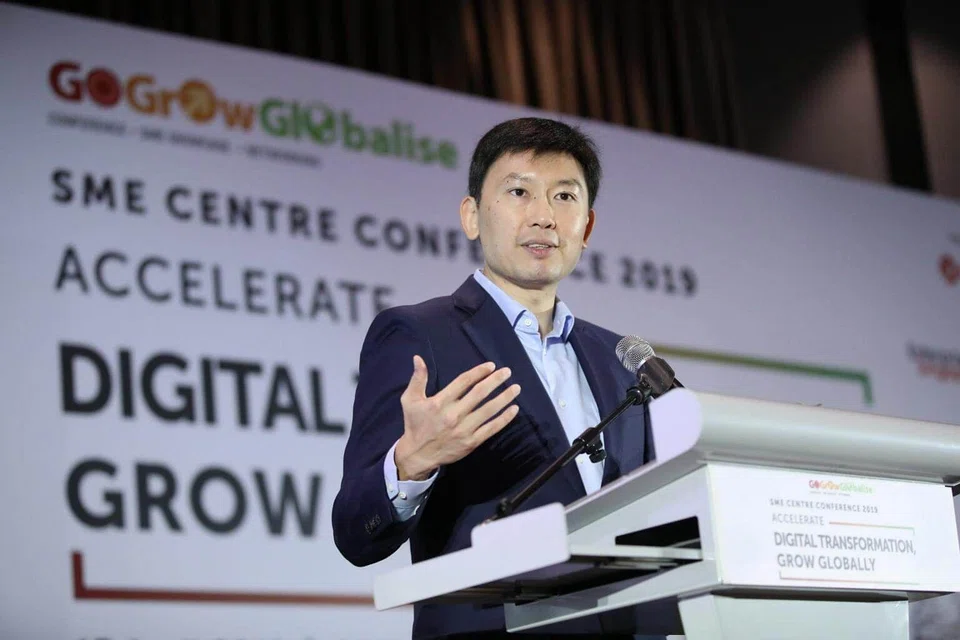
A NEW one-stop platform for enterprises to seek advice and submit feedback, on top of ongoing government efforts, will help ease challenges that business face in navigating regulations and business transformations, Senior Minister of State for Trade and Industry Chee Hong Tat said on Wednesday.
Mr Chee announced the launch of the SBF-ASME Pro-Enterprise Clinic by by the Singapore Business Federation (SBF), Association of Small & Medium Enterprises (ASME) and the Ministry of Trade and Industry's (MTI) Pro-Enterprise Panel (PEP) at the SME Centre Conference 2019.
The initiative aims to reduce the number of touchpoints that small and medium-sized enterprises (SMEs) have with public agencies.
The clinic will be able to answer straightforward queries on regulations and direct companies to potential solutions for their business problems. It will also collate feedback and more complex queries and channel them to MTI's PEP, which will work with the relevant public agencies to address queries and offer suggestions for rule enhancements.
When necessary, SBF and ASME will arrange for one-to-one sessions with companies to discuss ways to reduce red tape and barriers to growth and innovation. Companies can register on either the ASME or SBF websites for an appointment in the first clinic, which will last until April 17, 2020.
"Over time, we hope to involve more TACs (trade associations and chambers) to work with the Pro-Enterprise Panel to provide such services and further support our companies," said Mr Chee.
"When we review our rules, we help our companies reduce costs, save time and support their business ideas. But it also helps to keep our regulatory system nimble and responsive to new changes in business requirements and technology. It is a win-win partnership."
Mr Chee added that there are many other tools available to help companies undertake enterprise transformation, but companies must be clear about what they want to do in order to take full advantage of them.
"Enterprise transformation must start with a vision of what the business wants to achieve, what problems it wants to solve and what capabilities it needs to build to reach its goals," Mr Chee said at the SME Centre Conference 2019.
"The government will help our companies, but we can only achieve effective transformation when our efforts are enterprise-centric and transformation-focused, not scheme-centric and grant-focused."
With their strong industry networks of members, suppliers and customers, the TACs can serve as intermediaries for companies looking to improve productivity and competitiveness, expand and work with other businesses, Mr Chee said.
The SME Centres managed by key TACs are also helping companies to collaborate, through initiatives such as group-based upgrading projects that address common business challenges faced by SMEs in the same vicinity or industry.
Despite the challenging macro environment, Singapore's growth remains slow but stable with potential for a turnaround in the second half of 2019, said OCBC Bank's head of treasury research and strategy Selena Ling in a keynote address at the event.
Singapore SMEs can find opportunities in consumer demand from Asean's growing middle class, as well as more wealth being generated in the region and flowing in from elsewhere, with investors viewing Asia as a safe haven amid the uncertainty dominating Europe and the US.
"The economic weight of the world it tilting to Asia, and we are sitting in the right neighbourhood," Ms Ling said.