

Office lunches may not prove much costlier as low demand caps CBD food prices
Francine Ho
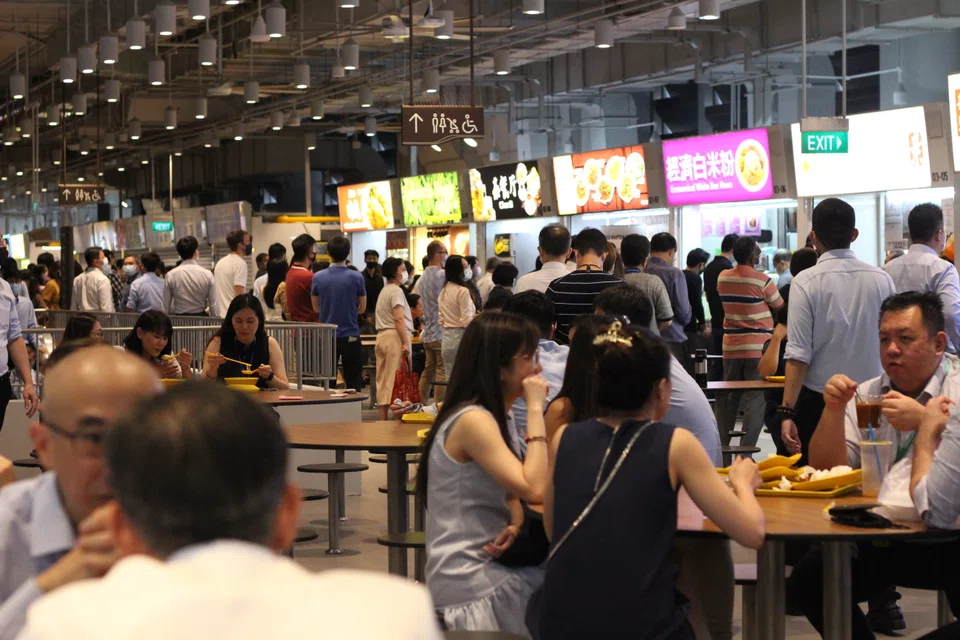
AS THE office crowd returns to the central business district (CBD) amid loosened Covid-19 curbs, one might expect workers to face higher lunch costs than when they were working from home – but that is not necessarily the case, say office workers to whom The Business Times spoke.
“The rise of work-from-home arrangements and the lack of tourists due to the pandemic has caused overall demand for food in the (CBD) area to shrink”, said CIMB Private Banking economist Song Seng Wun.
At the same time, with more people staying at home, footfall for F&B outlets in the heartlands has increased, he added. Furthermore, heartland F&B businesses benefit from daily demand for all 3 meals, whereas F&B demand in the CBD is generally limited to breakfast and lunch on weekdays.
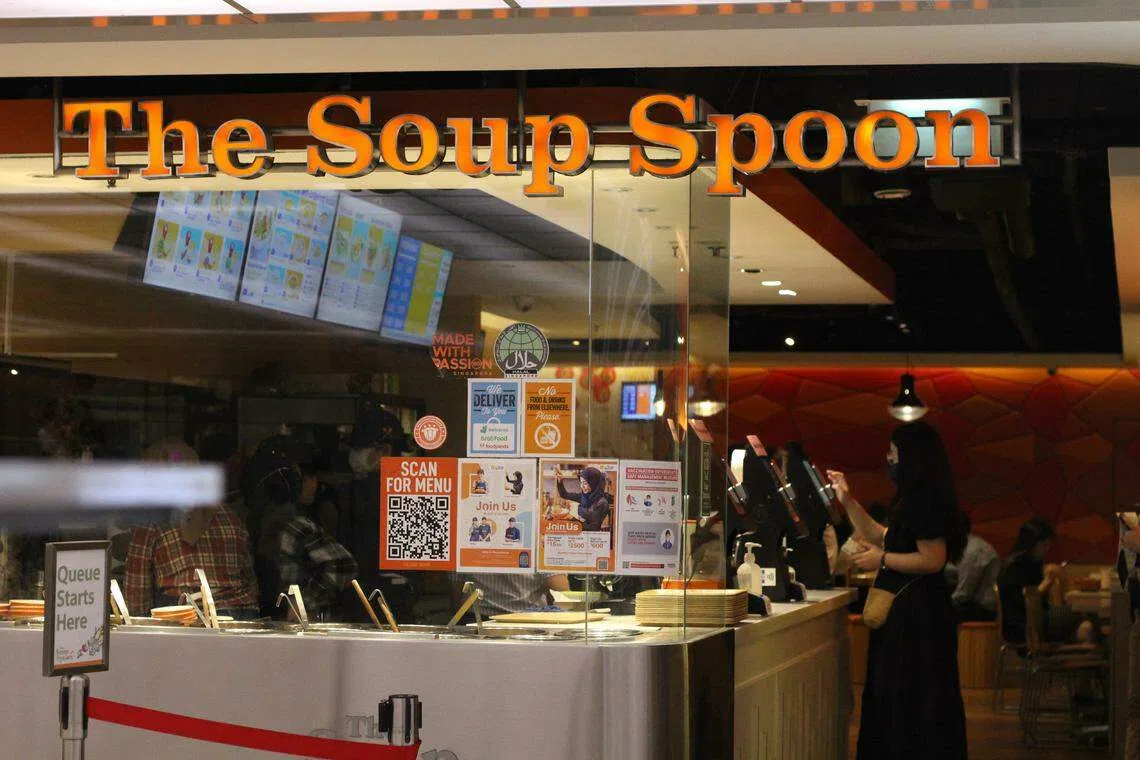
This observation is borne out by the experience of F&B chain The Soup Spoon, whose CBD outlets at Raffles Place and Shenton Way have been the most badly affected by earlier pandemic curbs.
Andrew Chan, managing director of the chain, said that heartland outlets have had a stronger performance in comparison to those in the central area.
Though sales in the CBD "are gradually increasing over time" as more Covid-19 restrictions are lifted, they are still only around 70 per cent of pre-pandemic levels, he added.
Geographical differences in demand may have caused prices of food in the CBD to remain steady while pushing up prices of food in the heartlands, said Song.
Demand-related worries have indeed kept prices steady at laksa and rendang hawker stall Old Nyonya in Maxwell Food Centre. Ruby Chen, who runs the stall with her husband, said she has not raised prices since before the pandemic as she wants her fare to remain affordable for customers.
“The business had an 80 per cent fall in sales as Maxwell Food Centre is within the CBD and tourist district. But we were afraid that if we raised the price, people would not patronise our stall,” said Chen.
Still, anecdotal experiences vary. One Raffles Place office worker, who declined to be named, said that he had not noticed any price hikes. In contrast, marketing executive Brenda Khoo, 24, has noticed prices rising by S$1 to S$3 in hawker centres and restaurants near her office in Tanjong Pagar.
CBD employees told BT that they generally spend S$5 to S$15 on lunch when in the office. For several of them, the return to the workplace has meant spending more on food, compared to when they were able to cook and thus save meal costs when working from home.
Yet for those who do not cook and frequently use food delivery services when at home, returning to the CBD has helped them save money instead.
One such employee is Dion Seow, a 24-year-old programme manager working at Tanjong Pagar, who said: "I live alone so I tend to spend more at home. My lunch hour is usually just 1 hour, so it is quite hard to go out and buy food sometimes.”
Seow noted that F&B options near her house are more limited than in the CBD, so when stores are closed, it is more convenient for her to get food delivered for lunch – which is a lot pricier than eating near her office, she added.
Yet even if F&B prices have been stable in the CBD thus far, inflationary pressures – such as rising ingredient costs due to the Russia-Ukraine war, higher utility costs, and higher labour costs – might eventually push up prices everywhere, observed Song.
The Daily Cut, a grain bowl restaurant with locations in Raffles Place and Tanjong Pagar, has not raised its prices since 2014 but is planning to do soon, said its founder Jonathan Yang.
The business faced a sharp drop in sales during the pandemic and is now feeling the effects of increased global commodity prices, supply chain changes, and the lingering impact of Covid-19, said Yang.
Though sales have been improving as more workers return, he expects this to plateau at 80 per cent to 85 per cent of pre-pandemic levels.
“Right now, our core focus is to make sure that the business remains viable,” he added, with the price increase aimed at helping the company remain operationally profitable.
TRENDING NOW

Easy to rent out, hard to sell: Are buyers losing interest in Singapore’s one-bedroom condos?

GovTech retrenches another 38 staff in second round of layoffs

Stocks to watch: Seatrium, CapitaLand Investment, Keppel DC Reit, Suntec Reit, CLCT, TSH Resources

World’s largest offshore wind platform by Seatrium consortium on track to be completed by 2028

