

Online shopping may plateau in short term; growth to lag physical retail sales

Sharon See
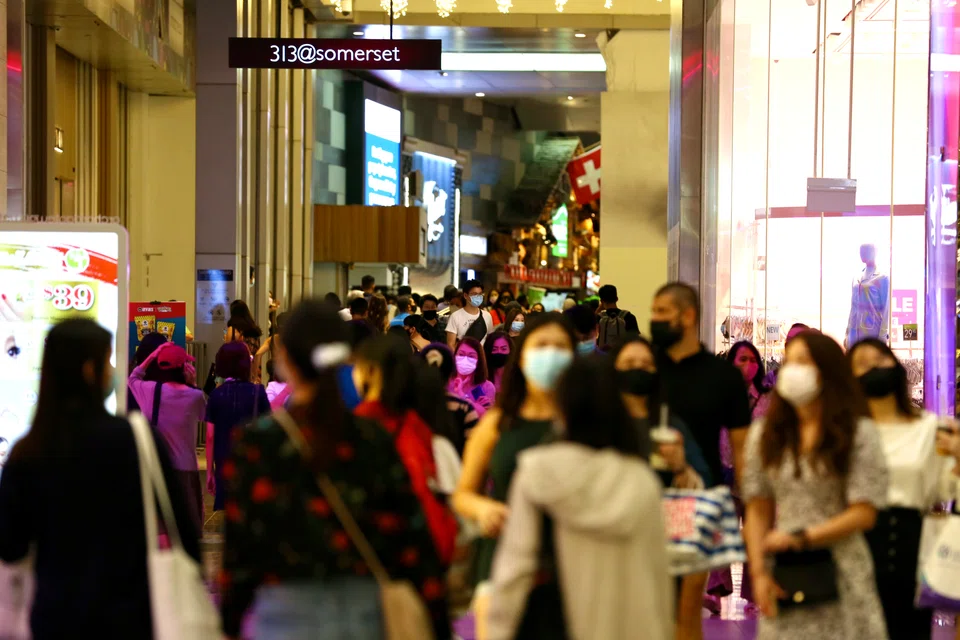
ONLINE shopping, which enjoyed a boom during the Covid-19 pandemic, could plateau in the months ahead, said watchers, as Singapore's borders reopen and measures ease, allowing more shoppers to return to physical stores.
Online retail made up nearly a quarter of all sales in May 2020, according to the Department of Statistics, when the Republic was in the midst of an 8-week “circuit breaker” that saw the closure of non-essential businesses from early April 2020 to stem the spread of Covid-19.
That proportion has fallen since and is now mostly hovering somewhere between 10 and 15 per cent, although there has also been a gradual upward trend.
This is likely because consumer behaviour has been “somewhat cemented” from their online shopping habits at the height of Covid-19, said UOB economist Barnabas Gan, adding that online retail sales could continue to fare well.
Guillaume Sachet, partner for advisory at KPMG in Singapore, believes there are several forces at play - supply chain disruptions, rising inflation, predictions of a possible recession and an uneven recovery from the Covid-19 pandemic in the region.
“It is very likely that while there could be some variance in certain consumption patterns in view of more physical visits here, we should expect online transactions to continue to hold strong, if not grow further,” said Sachet. “We must understand that many transactions have since gone digital, particularly if resumption of trade and travel are not complete.”
But even if the volume of online sales grows, it could be dwarfed by sales at physical stores, particularly with the return of tourists, said analysts, which means online sales as a proportion of total sales could well stay at current levels. SingStat’s data also does not capture online sales from overseas retailers.
“It’s not because people are not shopping more online,” said DBS senior economist Irvin Seah. “With an easing of measures, I don’t think that there will be an increase in the near term. Quite likely, the numbers will run sideways and potentially you could even have a marginal decline.”
Still, e-commerce players here continue to be bullish about their prospects.
A Lazada spokesperson said the company’s data indicates a 20 per cent year-on-year increase in monthly sales after November 2021, despite the slight dip in SingStat’s data.
An Amazon spokesperson said the number of Singapore sellers in Amazon’s local and international stores has increased by more than 45 per cent from 2019 to 2021.
“We expect the business and consumer shifts to persist even as physical stores reopen, as we continue to see high demand for categories across grocery, PC (personal computer) and electronics, home, kitchen, baby, toys and more,” the spokesperson said.
Certain product categories are likely to continue to perform well online, watchers said, going by past trends, and computer and telecommunuications equipment is one of them.
“The surge in tech-savvy youngsters is leading the way in shopping for tech gadgets since these items are becoming more affordable and it is not critical to see the product physically before purchasing. Younger consumers are seen investing in the latest smartphones, fitness watches as well as gaming products to keep up with new trends.,” said KPMG’s Sachet.
Perishable items may not fare as well, DBS’s Seah reckons, and people are likely to want to inspect their food items before purchasing them at the supermarket.
Nonetheless, Sachet believes supermarkets and hypermarkets may be particularly motivated to boost their digital sales platforms due to the potential for delivering significant increases in revenue, adding that this can be seen in improvements in their mobile applications and delivery modes for essential goods.
During the Covid-19 pandemic, many retailers were scrambling to set up or boost their e-commerce operations in hopes of raking in more sales at a time where people were not able to go out much.
That drive to digitalise is likely to stay even in the post-pandemic world, said watchers.
“A trend we are seeing is that consumer and retail companies are highly motivated to speed up the integration of digital customer sales and service solutions in their business models and are accelerating the implementation of technology-enabled operations to improve the overall efficiency of the business,” said Sachet.
Noting that going digital helps them to reduce cost and meet customer demand for e-commerce, he said: “Among the critical areas to look into are cyber risk, simplifying product offering and to consider how to ensure brand differentiation when face-to-face brand engagement is reduced.”
And even if sales are not as as high as they used to be at the height of the pandemic, DBS’s Seah said having an e-commerce platform is a good marketing and branding channel for retailers.
He said: “This is an additional sales channel, and I don’t see why the local retailers should give this up because the data already shows very clearly there is a shift in consumer behaviour.”
TRENDING NOW

Indonesia’s coal tycoon Low Tuck Kwong replaced as Bayan Resources president-director

OCBC names Ang Eng Siong as global corporate banking head in rejig of wholesale banking business

Consider lowering homeownership barriers for some non-resident foreigners

DBS opens flagship investment strategy to retail investors with new fund

