

Out of Asia and into the Indo-Pacific
Using the term Indo-Pacific is more than just semantics - it extends the borders of America's awareness.
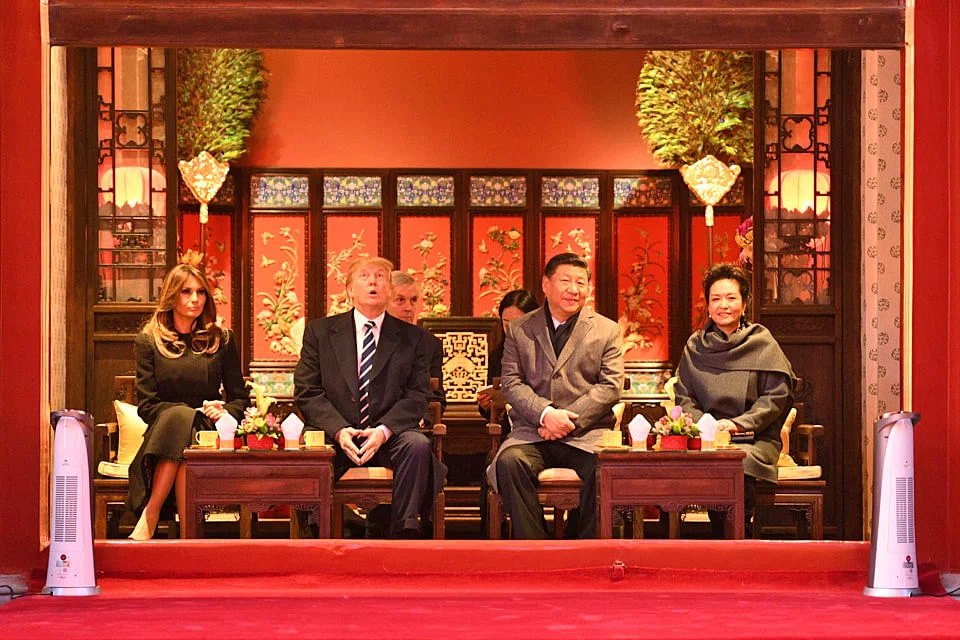
AS US President Donald Trump makes his way across Asia, ears in local capitals have picked up a subtle but unmistakable change in messaging from the US administration. The shift focuses on an apparently innocuous term: "the Indo-Pacific". US National Security Adviser HR McMaster introduced the president's itinerary to reporters as "a great opportunity to demonstrate America's and the Trump administration's commitment to the Indo-Pacific". Mr Trump himself has used the term, and it is all over the official press releases from the White House.
Territorial disputes
This is not just semantics. The difference between the more commonly used "Asia-Pacific" and the new "Indo-Pacific" is actually quite deep. Those who prefer the latter want to stress that the great power conflicts in East, South and South-east Asia are essentially maritime - over the control and openness of trade routes and over who gets to build and secure the infrastructure through which the vast majority of the world's trade passes. By pushing the borders of America's awareness as far as India, it means that China and its concerns are no longer at the centre of US strategy. And it might also reflect a desire to "bring India permanently into the US web of alliances and partnerships in the region".
For the Japanese, it reflects their pressing need to keep sea routes free of Chinese influence. For Indians, the term embodies the conviction that the most important relationship between any two capitals over the next century will be that between Delhi and Beijing. For the countries of South-east Asia, the term mirrors the hope that a network of alliances - led by the US, Japan, Australia and India - would allow them to preserve their sovereignty and strategic independence amid China's rise.
Indeed, the one country that clearly dislikes the term is China. And that may be the biggest takeaway from this presidential progress so far - the Trump administration's decision to shelve its predecessors' diffidence and junk the notion that the US might accommodate China's preference for a unipolar "Asia-Pacific". From an "America First" president, this willingness to ally if not lead in the effort to counterbalance China may be the best thing that countries in the region could have hoped for.
The phrase "Indo-Pacific" has been used before, of course, though only rarely by US presidents. During Shinzo Abe's first term as prime minister of Japan in the mid-2000s, it was hoped that a "quadrilateral" that encompassed the US, Australia, Japan and India could help patrol sea lanes and stabilise the region. But that initiative foundered. Then prime minister Kevin Rudd's Australia, its economy thriving on China's demand for commodities, had no intention of displeasing Beijing. India's government was not too keen on unsettling relations with its giant northern neighbour either.
Australia pulled out of the quadrilateral dialogue in 2008 explicitly to soothe Chinese sensitivities. Mr Rudd's foreign minister told the press after a visit from his Chinese counterpart: "One of the things that caused China concern last year was a meeting of that strategic dialogue. Australia would not be proposing to have (another) dialogue of that nature."
Times have changed
But times have changed. Having returned to power, Mr Abe is firmly in command in Tokyo. He has turned "a free and open Indo-Pacific" into something of a mantra. Meanwhile, the commodity market has cooled and Australia has been reminded of the costs of economic dependence. "Indo-Pacific" has become its official definition of its neighbourhood.
India's Narendra Modi, who is close to Mr Abe, has lately embraced the term as well, especially after his nation emerged from a nasty border confrontation with China. Beijing's protestations of a peaceful rise may not sound quite as credible in 2017 as they did in 2007.
Much work will need to be done before the new terminology results in practical changes on the ground, of course. Officials from the "quadrilateral" are likely to meet at the upcoming East Asia Summit in the Philippines. They will need to set concrete goals for military and strategic cooperation - for example, scheduling regular patrols together for their navies.
The meeting itself would send a message: When it became a possibility, China warned that it had better not be set up to "target or damage a third party's interest". That is probably not an issue yet. None of the countries is engaged or powerful, or determined enough at the moment to contain Chinese ambition in the short term. Still, leaders such as Mr Trump and Mr Abe have taken an important first step towards ensuring that, in the decades to come, China's leaders do not have it all their way in, yes, the Indo-Pacific. BLOOMBERG VIEW
This column does not necessarily reflect the opinion of the editorial board or Bloomberg LP and its owners.
READ MORE: Trudeau's no-show at meeting throws spanner in TPP talks
TRENDING NOW

One-third of Singapore-listed firms at risk in severe AI downturn: MAS

‘We don’t want to stay as we are’: CEO Patrick Ng builds a more resilient Huationg

He built the Vingroup empire. Now South-east Asia’s richest man is handing some key roles to his sons
Radiant World table shows six lenders with US$870 million exposure

