

Plenty of opportunities in Chile and Latin America for Singapore firms
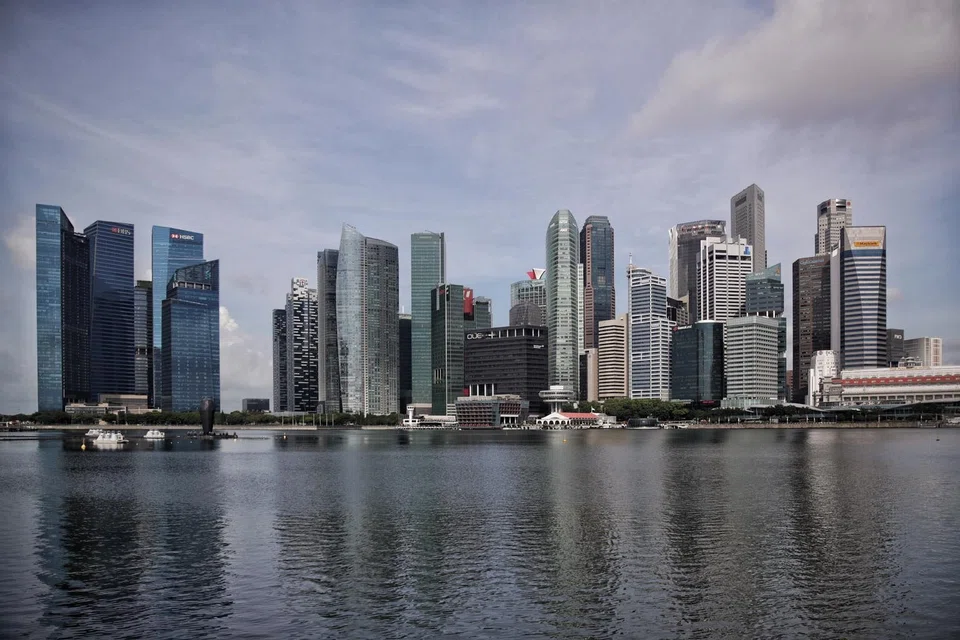
IN July, along with Colombia, Mexico and Peru, the Pacific Alliance welcomed Singapore as its first Associate State.
The Pacific Alliance was launched just 10 years ago with the intention to promote the development of member countries with greater economic integration, as well as to enhance trade with the Asia-Pacific region.
Today, the four economies have a combined population of 231.6 million and gross domestic product (GDP) of more than US$1.8 trillion, which amounts to around 42 per cent of the region's GDP.
Singapore's association marks a milestone in the Pacific Alliance's 10th anniversary, providing companies and investors from Latin America and Singapore a window of opportunity to improve their economic relations, attracting investments, expanding markets and boosting access for service suppliers in a wide range of sectors.
Like-minded countries
Chile is a long-standing friend of Singapore. Not only do we have strong diplomatic relations, but our countries are also strongly committed to free trade and a rules-based multilateral system.
Chile and Singapore are also members of the World Trade Organization and the Asia-Pacific Economic Cooperation, where we have worked together to develop strategies to strengthen the multilateral trading system and collaborated to facilitate trade in the Pacific Rim.
We are trade partners in the P4 Agreement, and are original signatories of the Comprehensive and Progressive Agreement for Trans-Pacific Partnership. Likewise, just as Singapore is a trade hub in Southeast Asia, Chile has become Latin America's trade hub.
Chile is globally connected through a network of 30 free trade agreements (FTAs) with 65 economies, tariff reductions close to 88 per cent of global GDP and market access to five billion consumers.
When it comes to foreign direct investments, Chile is the leader in Latin America, with one of the highest GDP per capita.
As world traders, Singapore and Chile are aware that businesses need assurance that their investments and intellectual property will be adequately protected, and that local regulations will be applied in a fair and transparent manner.
In Chile, we have made sure to include all these fundamental principles in our FTAs.
Companies from Singapore, as with all other foreign investors, are guaranteed, among other things, their right of free movement of capital and their right to appeal in case a dispute arises with the state.
Digital trade is the future
As we have witnessed, measures taken by governments around the world in light of the pandemic have accelerated digital connectivity.
In this context, Chile, Singapore, and New Zealand signed the Digital Economy Partnership Agreement (DEPA) in 2020, establishing a road to align our systems to interoperate and facilitate end-to-end digital trade, promoting data-driven innovation across borders.
DEPA is a framework that aims to lower the costs of operations for businesses and to improve their access to each other's markets.
The Pacific Ocean may appear to divide us, but we are laying a 13,180km-long submarine fibre optic cable across the South Pacific to enhance digital connectivity between our continents.
In addition, under the recent association between Singapore and the Pacific Alliance, there are chapters of e-commerce and telecommunications that establish a framework for digital trade.
By these means, we want to secure the main aspects of the modern digital economy - free flow of data, non-discrimination of digital products and non-forced localisation of computer facilities, while including provisions such as consumer and personal information protection, electronic signatures and source code.
Therefore, we set the ground for an open market for telecommunications companies, facilitating their interconnection and allowing them to offer their services to the public.
Entrepreneurial ecosystem
In Chile, we nurture our innovation ecosystem in a similar way that Singapore was able to grow into a centre for innovation.
One example is Start-up Chile, a public accelerator programme created for high-potential entrepreneurs to bootstrap their startups and use Chile as a base.
Since the beginning, it has supported over 1,600 companies from 85 countries, creating US$1.4 billion in net value assets.
The possibilities of knowledge-sharing and partnerships with Chile's own agri-food sectors in tech, research and sustainable solutions are immense.
On this front, we work closely with Enterprise Singapore (ESG) to support the internationalisation of Singapore businesses in Chile and Latin America, and vice versa.
Similarly, our startups have already actively participated in ESG's international startup pitching competition Slingshot in the past four years.
So far, 12 startups from Chile have taken part, and there will be more co-innovation opportunities for start-ups to support the Green Economy, a promising sector in Latin America.
Asia is the largest agri-business export market for Chile. Under the Pacific Alliance, Singaporean companies can partner with Chilean producers to develop food products or ingredients to be exported to Southeast Asian markets.
Singaporean firms can also diversify their supply chains and sources for competitively priced commodities, raw materials, as well as use Chile's links to trade in services across the Americas.
Even amid the pandemic, the Chilean government has worked with ESG to co-organise virtual roundtables, seminars and pitching sessions for Singapore startups to present their solutions to Chilean corporates in the areas of trade-tech, agri-tech and fintech.
There is a wide range of incentives for foreign investment as Chile supports economic activities, innovation, and the competitiveness of all companies, regardless of their origin. Such incentives include tax-free zones, tax benefit for investment in research and development, and different types of investment incentives.
Opportunities in clean energy
Like Asia, Latin America is transitioning to sustainable solutions to tackle the impact of global warming and to drive our growing industries and cities.
This transition will create opportunities for international expertise, technology providers and capital investors looking to integrate clean energy solutions, environmental initiatives on circularity, waste management and recycling, and plan for new utility-scale renewable energy projects.
Corfo, the same agency behind Start-up Chile, recently launched a call to finance and leverage green hydrogen projects in Chile to solve some gaps and strengthen this new economic sector for the country.
New challenges have spurred collaboration between Chile and Singapore in the field of green hydrogen, with a memorandum of understanding recently signed between our government agencies.
According to the National Strategy on Green Hydrogen, Chile will become one of the world's leading producers of green hydrogen by 2030 at the lowest price per tonne.
This presents opportunities for innovation, to promote growth and local employment, as well as to create new companies with local and global impact where Singapore is poised to play a key role.
- The writer is Vice-Minister of Trade, Ministry of Foreign Affairs of Chile
- Enterprise Singapore and the Embassy of Chile in Singapore are organising a webinar, Investment and Cooperation Opportunities between Chile and Singapore on Innovation and Technology, at the end of September. For more information, visit www.enterprisesg.gov.sg
Decoding Asia newsletter: your guide to navigating Asia in a new global order. Sign up here to get Decoding Asia newsletter. Delivered to your inbox. Free.
Share with us your feedback on BT's products and services
TRENDING NOW

He built the Vingroup empire. Now South-east Asia’s richest man is handing some key roles to his sons
Floods compound Philippine growth woes from public-works scandal

Tokyo reverses baby bust with AI matchmaking and generous subsidies
More interest in ETFs, low-cost funds but Singapore still lacks pressure to further lower fund fees

