

PUB exploring feasibility of desalination plant on Jurong Island: Masagos
Singapore
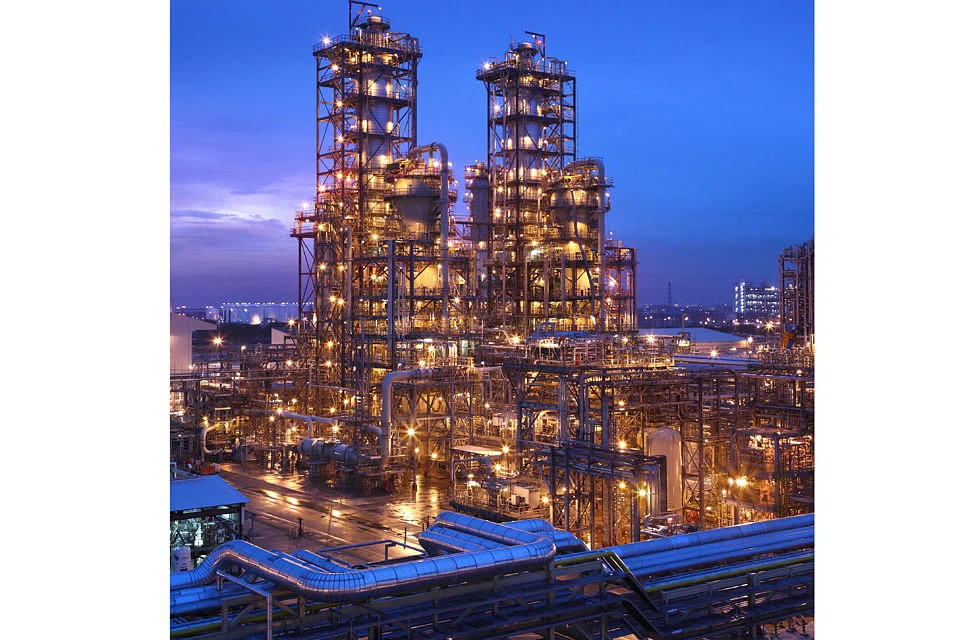
SINGAPORE'S water agency PUB is exploring the feasibility of developing a desalination plant on Jurong Island - which accounts for one-tenth of the country's water use - as the country looks to strengthen water security and its resilience to droughts.
This will come on top of two more desalination plants, each with a capacity of 30 million gallons (113.6 million litres) a day, that have been planned, said Masagos Zulkifli, Minister for the Environment and Water Resources, during a Committee of Supply speech in Parliament on Tuesday.
One in Tuas is currently being built and will be completed in 2017; another one in Marina East will be completed in end-2019.
The announcement by Mr Masagos comes amid water levels in Linggui Reservoir in Johor - which can supply about 60 per cent of Singapore's water needs - dropping to historic lows of 37 per cent.
"My personal worry from more extreme weather patterns due to climate change is the new challenges it poses to our water sustainability," he said.
Singapore today has two desalination plants - SingSpring and Tuaspring - which together produce 100 million gallons a day, meeting nearly a quarter of the country's water demand of 430 million gallons a day.
The non-domestic sector's share of total water consumption is expected to rise from 55 per cent currently to about 70 per cent in 2060. Singapore's total water demand is projected to more than double by then.
Jurong Island, home to about 100 petrochemical, specialty chemical and supporting companies, is a big guzzler, using a total of 46 million gallons a day. Much of this goes towards cooling processes, during which water is lost to the atmosphere and cannot be re-used.
Mr Masagos said that PUB, using data newly collected last year after it mandated large water users to submit Water Efficiency Management Plans, will develop water efficiency benchmarks for various industries.
For companies on Jurong Island, it will also work with them to use seawater for cooling instead of freshwater.
Fewer than 20 companies there are currently doing so, according to PUB. ExxonMobil and Shell, two of the largest investors on Jurong Island, are among them.
ExxonMobil said that it has been using seawater for cooling in its Singapore operations since the 1970s, and also uses the technology "extensively" at its new expanded petrochemical complex, which opened in January 2014.
"The use of this technology is driven largely by the availability of seawater around our manufacturing site," said a spokeswoman.
Using seawater in its new polymer units within the expanded petrochemical complex has helped to reduce the company's freshwater demand by about five million gallons a day, or one tenth of the total water demand on Jurong Island, she added.
The firm has since 2013 also tapped the membrane bio-reactor technology to treat wastewater and recycle it for cooling purposes. About a quarter of the treated water was used for cooling in 2014, said the spokeswoman.
Shell, which has facilities across Jurong Island and Pulau Bukom, said that factors such as the design of the plant and existing company and public infrastructure are taken into consideration when deciding whether to use seawater or freshwater for cooling.
The company started doing so when its first unit on Jurong Island - designed to use seawater for cooling - started operations in 1997.
Now, about 70 per cent of Shell's processes use seawater for cooling, said a spokeswoman, adding that a unit uses Newater for a closed cooling circuit.
"Continuous improvement to reduce energy usage in our units results directly in lesser water needs for our operations," she said, "a nice example of how energy savings go hand in hand with reducing the need for cooling, hence water usage, to achieve this."
The company also tries to use air cooling technology to reduce its demand for water, and has started a project to recover discharged water to further reduce its use of Newater.
TRENDING NOW

If Europe goes to war, the fallout will be felt in East Asia

Singapore government slaps loan curbs on individual private-hire car buyers

Wider talent pools, smoother operations: What these S’pore firms gain from inclusive hiring
Philippines’ FDI slowdown exposes uneven investment prospects across S-E Asia

