Q2 GDP may dip from Q1 but recovery still on track: economists
They say Singapore's recovery story is still bright, powered by manufacturing and exports; the country's vaccination strategy is also a plus factor

Singapore
WHILE Singapore's economy is likely to post a stellar year-on-year rebound in the second quarter, economists are also expecting a small sequential decline due to the tighter Covid-19 restrictions imposed in May and June.
Coming off a low base from Q2 last year, when the Republic's gross domestic product (GDP) plunged by a record 13.2 per cent year on year, initial optimism had lifted this year's Q2 growth expectations to 15 per cent, said the Monetary Authority of Singapore's quarterly survey of professional forecasters released a month ago.
But that sentiment appears to have cooled slightly on the eve of the Ministry of Trade and Industry's advance estimates for Q2, slated for release on Wednesday.
Several economists told The Business Times that they have moderated their predictions for the quarter's gross domestic product (GDP) by a notch, covering a range from UOB's 12.4 per cent to Mizuho Bank's 14.4 per cent.
The Singapore authorities introduced a ban on dine-ins while curbing social group sizes in a period called Phase 2 (Heightened Alert) from May 16 to June 13. Dining-in was then restricted to just two for another month.
What this means is a quarter-on-quarter decline is likely on the cards, and economists that BT spoke with have pencilled in a range from -3.6 to -2 per cent.
Predicting a sequential decline of 2.7 per cent after seasonal adjustment, Chua Hak Bin, Maybank Kim Eng's senior economist, said: "Besides aviation and tourism, the recovery in the construction, recreation, retail and F&B sectors remain sluggish and sensitive to lockdowns and stricter border controls."
Vishnu Varathan, head of economics and strategy at Mizuho Bank, said any quarter-on-quarter slip "ought to disappoint but not alarm".
"After all, a bumpy recovery from Covid-19 was always the main expectation," he said.
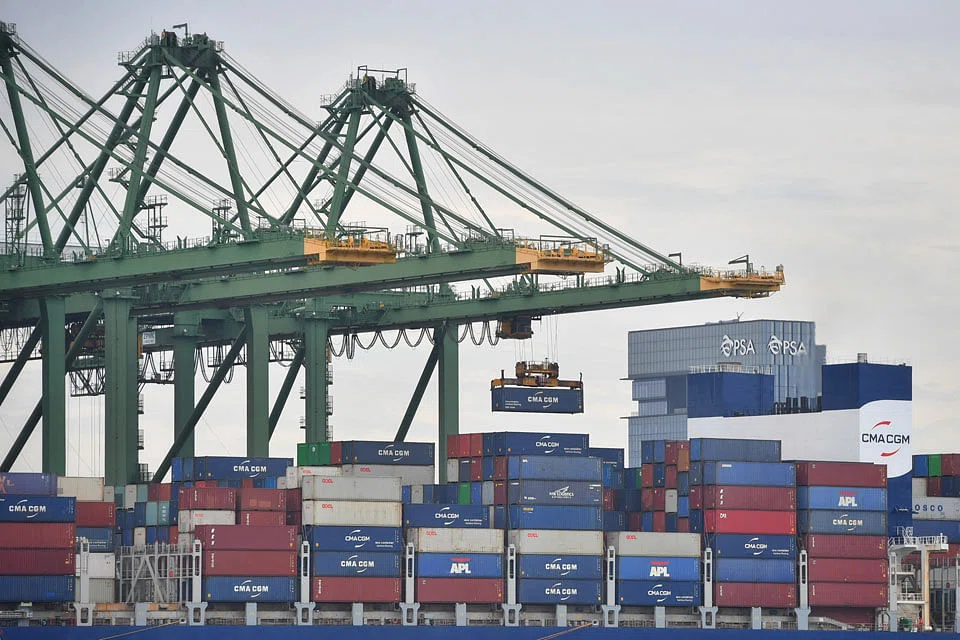
Still, Singapore's recovery story is a bright one, fuelled by manufacturing and exports, sectors hardly affected by Covid-19 curbs.
DBS senior economist Irvin Seah said: "The momentum remains very strong, particularly for the electronics industry. Despite earlier concerns about semiconductor chip shortages, which still is a problem, the global shipments of semiconductors and the demand for semiconductor equipment has continued to rise again."
Jamus Lim, an economist at ESSEC Business School, believes the real-estate market may also be a net contributor, supported by the strong tailwind worldwide in the sector; finance would also offer a positive contribution.
Having a concurrent year-on-year growth and quarter-on-quarter decline is an indication that Singapore is moving from "recovery" to "normalisation", Mr Seah said, adding that Q2 is more of a "technical pullback".
Sung-Eun Jung, an economist at Oxford Economist, said a rebound in sequential growth could come in Q3, reverting to "historical trend" as the economy continues to reopen: "The recent acceleration in vaccination rate bodes well for a sustained recovery in domestic demand."
Indeed, Singapore's vaccination strategy sets it apart from the rest of Asia, making its economic recovery a unique one, said UOB economist Barnabas Gan.
"For one, Singapore has one of the highest vaccination rates in the world, with 39 per cent of the population fully vaccinated as at July 10, which is significantly higher than the rest of Asia," he said.
He said high-frequency economic data, including a 30-per-cent surge in industrial production in May, has been supportive of Singapore's overall growth, which comes on the back of a global economic recovery and strong export momentum.
Meanwhile, the labour market is recovering. The unemployment rate has fallen from its peak of 3.5 per cent in Q3 2020 to 2.8 per cent as of May, he said, adding that he expects it to decline to 2.6 per cent by year-end.
But Paul Kent, an economist and partner of advisory at KPMG Singapore, said the talent pool could become a drag to GDP growth, since there are many specialised roles that will require specific skills.
"While retraining and reskilling will always be an important part of providing to the talent pipeline, there will always be a talent gap that needs to be filled in the short term, which is challenging amid movement restrictions," he said.
Since flash data is typically based on the first two months of the quarter, it is likely the final print would be different.
Mr Varathan said that the final number, which would include June's performance, could show an "upside revision".
"Not because we expect the underlying momentum to have picked up considerably, but rather because it is likely that the flash estimates may err on the side of conservatism, having to account for the heightened alert," he said.
OCBC chief economist Selena Ling said it could also occur if June comes in stronger due to the transition to Phase 3 (Heightened Alert) and a relaxation of Covid-19 rules.
"This should pave the way for the official 2021 GDP growth forecast to be upgraded in August," she said.
"Even if H2 growth moderates to single-digit year-on-year growth rates, a full-year growth of above 6 per cent looks eminently possible."
READ MORE: