

Q3 prompt payments hit new low: credit bureau
But the Singapore Commercial Credit Bureau says more firms are making efforts to fulfil their debt obligations partially. Retail reported a fall in slow-payment numbers

Vivienne Tay
Singapore
PROMPT payments fell to a new low in the third quarter of 2020, and accounted for less than two-fifths of total payment transactions, the Singapore Commercial Credit Bureau (SCCB) said on Tuesday.
Although local payment performance deteriorated during the quarter, some slight improvements were seen in certain sectors, the SCCB said in a statement.
Prompt payments were down to 38.4 per cent, from 40.1 per cent in the second quarter and 48.8 per cent a year ago.
Prompt payments are defined as those where 90 per cent or more of total bills are paid according to the agreed payment terms.
Slow payments accounted for more than two-fifths of total payment transactions in Q3, dipping slightly to 44.2 per cent in the period, from 45.8 per cent in the previous quarter. Slow payments climbed from 37.3 per cent a year ago.
Slow payments refer to situations where less than half of total bills are paid within the agreed terms.
Partial payments rose moderately to 17.5 per cent in Q3, from 14.1 per cent in Q2 and 13.9 per cent in 2019.
Partial payments are those where between 50 per cent and 90 per cent of total bills are paid within the agreed payment terms.
Dun & Bradstreet (D&B) Singapore, a business analytics firm, compiled the figures by monitoring, through the SCCB, more than 1.6 million payment transactions of firms.
Audrey Chia, D&B Singapore's chief executive officer, said the full impact of payment delays was more greatly felt in Q3 than in the previous quarter, with businesses continuing to face cash flow woes amid the economic fallout caused by the Covid-19 outbreak.
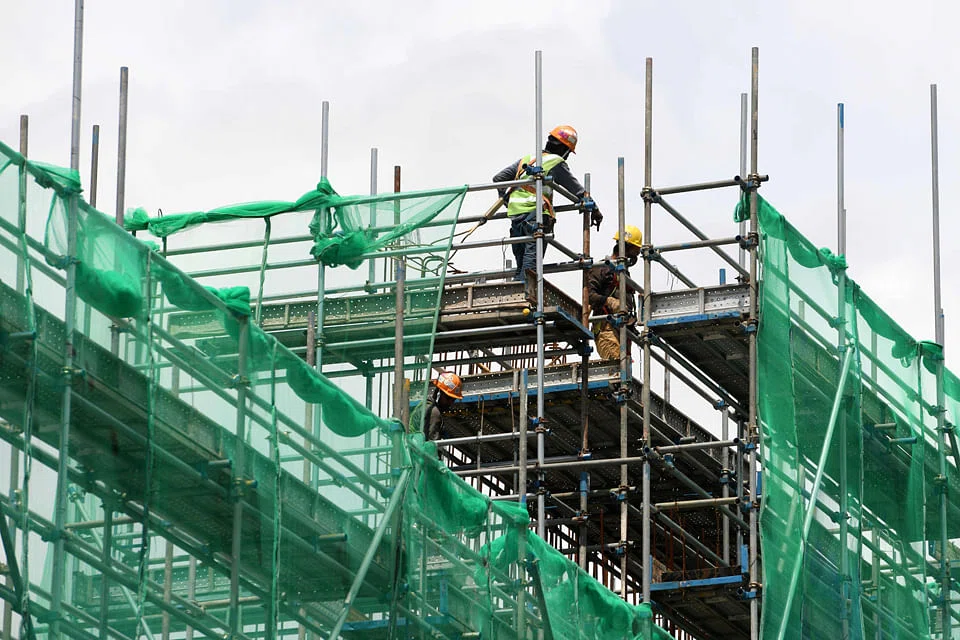
The construction sector, in particular, saw a significant deterioration as a result of a temporary halt and delays in project completion.
However, the SCCB has noted that more businesses are making concerted efforts to fulfil their debt obligations partially.
While prompt payments have hit an all-time low, the bureau has noted an increase in partial payments being made by businesses, compared to the previous quarter, she said.
"We would expect this trend of staggered payment plans to continue in the coming months," she said.
The construction sector had the largest quarter-on-quarter (q-o-q) increase in payment delays; these accounted for more than half of total payment transactions.
Slow payments rose q-o-q to 56 per cent in Q3, from 52 per cent in Q2 and 46.9 per cent a year ago.
On the other hand, the retail sector recorded a "visible improvement" in slow payments compared with the previous quarter, SCCB said. This was largely due to a fall in slow payments by retailers of general merchandise, food and beverages, as well as apparel and accessories.
Slow payments for the retail sector dropped to 42.3 per cent in Q3, from 51.2 per cent in Q2. However, slow payments "climbed significantly" from 34.5 per cent last year.
The rise in payment delays is observed amid loan deferments being extended by banks.
Just on Monday, small and medium-sized enterprises (SMEs) were given another three to six months to resume full loan repayments, with the extension of a debt moratorium programme.
The Business Times reported on Tuesday that Singapore banks believe that loan requests and deferments by individuals and small and medium-sized enterprises (SMEs) already peaked earlier in the year, and that the banks do not expect a significant number to seek further relief.
UOB said it expects the hard-hit building and construction and tourism-related sectors to seek additional liquidity support to get them through this period.
TRENDING NOW

Simba admits exceeding spectrum limits amid failed M1 deal; parent company Tuas’ full-year profit surges 277%

He built the Vingroup empire. Now South-east Asia’s richest man is handing some key roles to his sons

Ex-execs of CW Group, Allied Tech charged with offences linked to lawyer’s S$76 million misappropriation

Singapore to prioritise high-value AI infrastructure as Asean markets play to their strengths: Tan Kiat How

