

Rates softening, but firms not biting
Corporate shopping sprees fuelled by low rates unlikely; companies could rejig debts instead, say analysts

Singapore
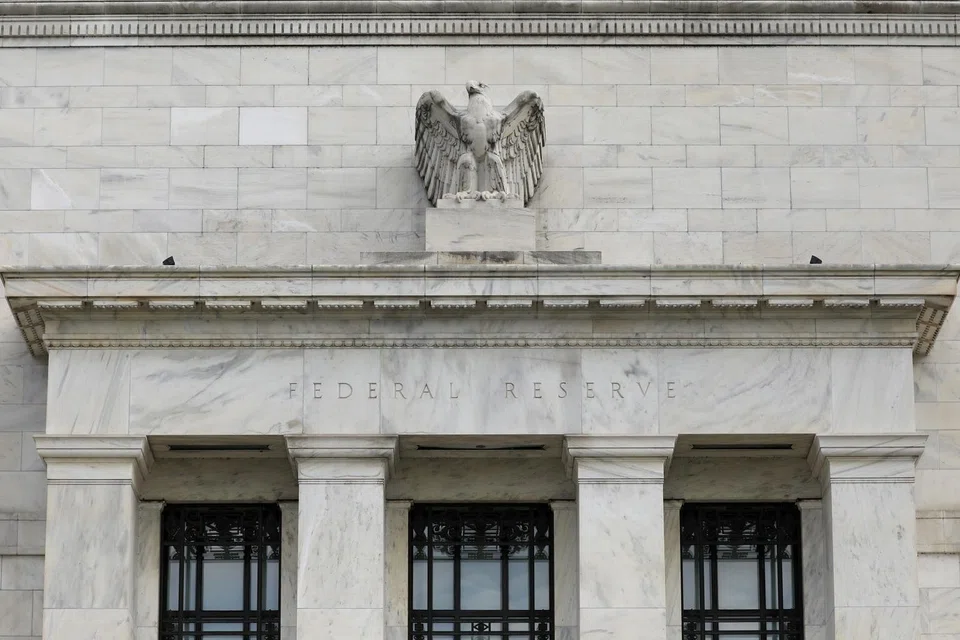
THE widely-expected quarter-point cut in US Federal Reserve interest rates - which is likely to come at the Fed's end-July meeting - should filter into the Singapore capital market as well, watchers believe.
On how long the rates could last, DBS rates strategist Eugene Leow told The Business Times that "lower for longer is probably the key theme".
But, given the storm clouds over the economy, analysts believe a corporate shopping spree fuelled by low rates is unlikely. Companies could, instead, opt to rejig debts.
Business loans here grew by 3.85 per cent in the first five months, compared with a year ago, according to the latest data from the Monetary Authority of Singapore (MAS).
Noting that a Fed rate cut "has already been priced in by the market", Ang Tang Chor, president of Hong Leong Finance, cited a halt in Singapore Interbank Offered Rate (SIBOR) hikes.
Mr Ang, whose firm lends largely to small businesses here, added: "To businesses with SIBOR-based loans, this is a blessing against rising business costs in a slowing global economy and weak local growth market."
Heng Koon How, head of markets strategy at United Overseas Bank, said that "the low interest rate environment is likely to continue for the second half of this year, at least until growth stabilises or there is a sustained uptick in inflation outlook".
UBS regional chief investment officer Kelvin Tay was more confident, forecasting that the rate cycle would stay low for 18 to 24 months.
To be sure, Mr Heng warned: "There may be a limit to how fast local interest rates can fall. This is due to a weaker Singapore dollar, which tends to keep local interest rates well supported."
But local rates should dip even if the MAS pulls back on currency in October, Mr Leow said in a July 16 report.
"The trajectory of the US dollar is therefore a lot more important for Singapore dollar rates," he wrote.
"Unless sentiment towards Asia sours materially, short-term Singapore dollar rates are biased lower in a Fed easing environment."
Along these lines, Singapore Exchange (SGX) market analysts noted in a report on Tuesday that a dovish Fed would be "particularly good news for Singapore's trade-orientated sectors".
Still, it may be a case of "all those cuts and nowhere to go", as the corporate landscape weighs fewer sexy deals and more practical debt-paring.
"Corporates can take this opportunity to streamline their loans, while consumers are advised to this opportunity to pay off some of their debt," said UOB's Mr Heng.
"It's a very attractive market, from a debt perspective, to be going into today," Matthew Pollard, chief executive of Keppel Infrastructure Trust's manager, said to BT. With a S$700 million loan maturing in June next year, "obviously, we're having conversations with bankers now about that".
Noting that the iEdge S-Reit Index has generated a total return of 21.9 per cent in the year so far, the SGX research team wrote that Reits' strong showing has come on both defensive flows, amid US-China trade tensions, and expectations of a rate cut.
Rate-sensitive Reits may have less interest on their debt and thus offer more attractive returns, UBS' Mr Tay observed. But he also cautioned that yield-attractive asset buys are scarcely to be found on the table, so the trusts' managers will hardly be rushing to scoop up new properties.
"I don't think we'll see a big increase in leverage, especially because the prognosis for the economy is poor," Mr Tay said, adding that the rate cuts will not be substantial enough to whet the debt appetite. "I can't think of any sectors that would want to take advantage of leverage."
He also predicted that corporate refinancing could pick up in about 12 months, while three-year perps could be called back and re-issued at a lower coupon rate, if the rate cycle continues to trend downwards.
Meanwhile, Hong Leong Finance's Mr Ang noted that cooling economic growth has put small and medium-sized enterprises (SMEs) here in a tight spot - especially as they tend to sit downstream and are squeezed by bigger players' slowdowns. "In general, SMEs are treading cautiously by minimising investments and managing cash flow prudently."
Besides commercial loans - which are largely used for working capital - Hong Leong Finance also offers SMEs government financing facilities "to give them the crucial support in their liquidity and business transformation journey", Mr Ang added, referring to government grant schemes for SMEs that can cover up to 70 per cent of innovation or expansion costs.
"Whether companies choose to take on debt to expand still depends heavily on their confidence in the business climate," said Singapore Business Federation chief Ho Meng Kit, noting that companies may "be conservative and hold back on hiring" amid fears of an economic slump.
"The interest rate cut may provide some relief for those who are servicing loans. It might prompt some companies to tap the capital market for cheaper liquidity. But I urge our companies to be vigilant and keep a close eye on the economic situation as external risks play out more clearly in the next few months."
TRENDING NOW

Knight Frank’s Tan Tee Khoon leaves firm, Nicholas Keong takes over auction business
Keppel Energy, Sembcorp Utilities and Tuas Power to supply biomethane in pilot project

GovTech retrenches another 38 staff in second round of layoffs
Take-up of new private homes dives 45% in Q3 as prices accelerate with 1.4% rise

