

RCEP countries 'on track for major deal by year-end'

Walter Sim
Tokyo
TRADE ministers of 16 countries that account for 30 per cent of global trade have re-affirmed their resolve for a regional trade deal that will benefit economies at different levels of development.
The ambitious deal is on track for a substantial agreement by the end of this year, Singapore's Minister for Trade and Industry Chan Chun Sing said on Sunday, in what will be a major boost for free trade. It comes as the threat of a global trade war looms after the United States imposed tariffs that affect imports from China, Europe and Canada, among others.
Progress has been made in working on the obstacles in the Asean-led Regional Comprehensive Economic Partnership (RCEP), though Mr Chan acknowledged that some issues will require greater political will.
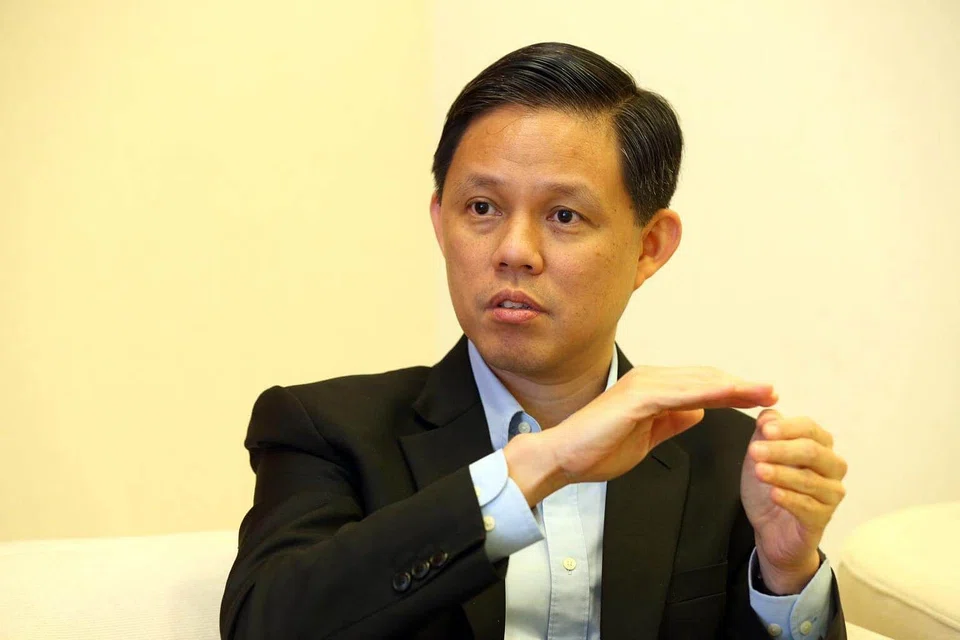
He was speaking at a news conference in Tokyo alongside Japanese counterpart Hiroshige Seko, with whom he co-chaired a meeting attended by trade ministers of the 16 RCEP countries. There are high hopes for a substantial deal by the Asean Leaders' Summit in Singapore this November.
"What is important is that people commit to the process in good faith," Mr Chan said. "This is so that challenges and each other's sensitivities can be discussed openly. Each of us can then exercise maximum flexibility in the positions we want to adopt, taking into account not only our own interests, but also those of the partner countries."
Mr Seko added of the areas that require political decision-making: "We should enhance our level of maturity and present a final package with such issues narrowed down."
Ministers of the 16 RCEP countries - the 10-nation Asean bloc, as well as Australia, China, India, Japan, New Zealand and South Korea - vowed in a statement yesterday to "work with a greater focus on finding breakthroughs" to achieve a package of year-end outcomes.
A successful conclusion of the RCEP, Mr Chan said, will "send a strong and powerful signal to the world of our belief in free and open trade with benefits for all our respective people".
However, just two of the RCEP's 18 chapters have been concluded thus far, and the Tokyo talks did not result in any new chapters being closed.
It is understood that some of the hurdles include e-commerce, intellectual property and market access to sectors such as agriculture.
In this vein, the trade ministers are working towards a deal that will allow economies at different levels of development to "actively participate in and benefit from an open and inclusive regional economic integration".
The RCEP trade negotiators will next meet in Bangkok from July 17 to 27 for their 23rd session of working-level talks.
Their ministers will meet in Singapore in end-August, on the sidelines of the Asean Economic Ministers' Meeting.
TRENDING NOW

If Europe goes to war, the fallout will be felt in East Asia

Indonesia stocks suffer worst plunge in nearly 30 years as MSCI proposes standalone status

Keppel seeks US$1 billion for Vietnam investments as it joins country’s international financial centre

Philippines’ FDI slowdown exposes uneven investment prospects across S-E Asia

