

Reserve Bank of Australia pumps liquidity, proposes bond buys to ease financial conditions
 Add BT as a preferred source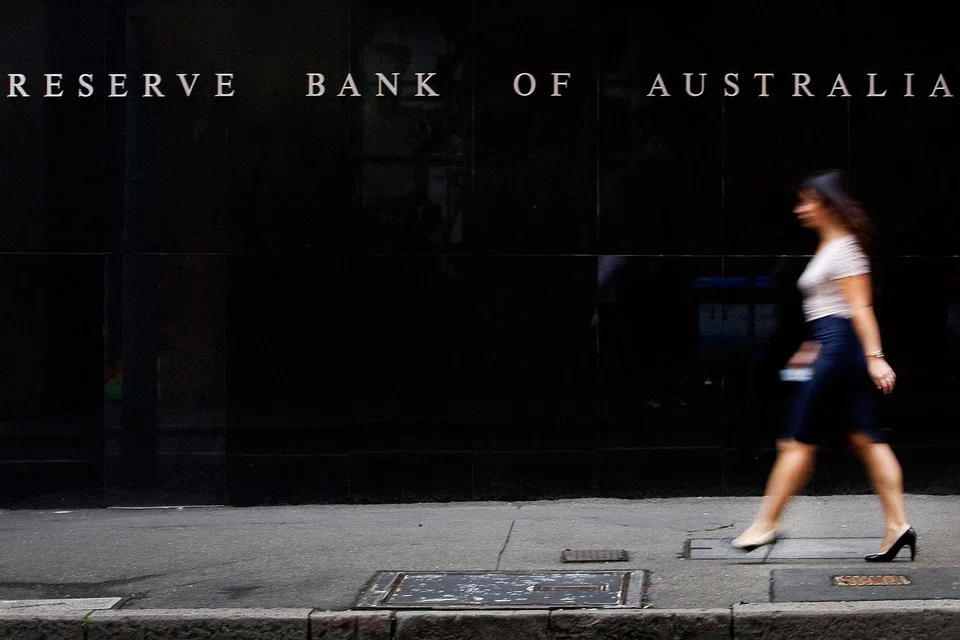
DeeperDive is a beta AI feature. Refer to full articles for the facts.
[SYDNEY] Australia's central bank injected A$6.9 billion (S$5.92 billion) into the financial system on Tuesday and said it would buy A$4 billion in government bonds as it looks to blunt the economic fallout from the coronavirus pandemic.
The Reserve Bank of Australia (RBA) has flooded the system with nearly A$65 billion cash since March 12 when a liquidity crunch sent global markets into a tailspin. It has also purchased A$9 billion in government bonds since launching its "unlimited" quantitative easing programme on March 20.
The RBA has so far been successful in flattening the yield curve as it aims to keep short-term yields around the cash rate of 0.25 per cent.
A recession - the country's first in nearly three decades - is still inevitable.
Westpac economist Bill Evans revised his forecast for the unemployment rate to now surge to 11.1 per cent in the June quarter, up from his previous estimate of 7 per cent, with the economy seen contracting 3.5 per cent in that period.
"Economic disruptions are set to be larger as the government moves to address the enormous health challenge which the nation now faces," Mr Evans said.
Navigate Asia in
a new global order
Get the insights delivered to your inbox.
"That challenge is probably best summarised by a potential shortage of ICU beds in coming weeks if we do not significantly slow the rate of infection immediately."
The total number of cases in Australia jumped to almost 1,900 on Tuesday after the most populous state of New South Wales recorded its biggest daily leap.
Secondary data on Tuesday showed a sharp deterioration in services sector activity in March, underlining the hit from the coronavirus.
The CBA Services PMI fell to a record low of 39.8 as restaurants, cafes and tourism were hit hard by travel bans and cancellations of events and concerts.
A separate analysis of card spending data by Commonwealth Bank of Australia showed shopping outside of grocery, alcohol and healthcare was bleak.
And a weekly gauge of consumer confidence by ANZ-Roy Morgan plunged to 30-year lows to 72.2 points.
The government has responded swiftly, with a stimulus of A$66.1 billion on top of A$17.6 billion announced earlier this month though economists said a third package might be needed.
"It will be difficult to avoid a recession - that is obvious," CommSec chief economist Craig James said.
"But there will be a massive injection of funds in the June and September quarters. And that swift action in providing stimulus should allow the economy to bounce back relatively quickly. However, much damage will remain for years, not months."
The surplus cash held by banks at the RBA was A$43.6 billion, by far the biggest on record.
REUTERS
Decoding Asia newsletter: your guide to navigating Asia in a new global order. Sign up here to get Decoding Asia newsletter. Delivered to your inbox. Free.
Share with us your feedback on BT's products and services
TRENDING NOW
‘Boring’ is the new black: The stars are aligning for a Singapore stock market revival
Near sell-out launches in March boost developer sales to 1,300 units after four slow months

China pips the US if Asean is forced to choose, but analysts warn against reading it like a sports result

Genting Singapore’s Lim Kok Thay receives S$7.5 million pay package for FY2025

