

Residents are targets for dirty money fronts in business friendly Singapore
Regulators alert to vulnerability of directors-for-hire, as Singapore residents used to legitimise shell companies channeling illicit flows
Singapore
THERE are thousands of corporate services firms in Singapore that offer Singapore residents as directors of Singapore-incorporated companies for as little as S$250 a month.
An online check sieves out companies that sell services - with one marketing these as "bonanza packages" - to entities looking to set up a business in this financial centre in a jiffy. With any company looking to register its business in Singapore requiring at least one local director under regulations here, such professional service firms bundle services to help incorporate a company, get a Singapore nominee director and corporate secretary, as well as digitise official letters coming through a Singapore registered address - all for less than S$3,000.
Such affordable directors-for-hire services are legitimate. Yet, even as Singapore prides itself for being friendly to businesses looking to set up shop here, regulators acknowledge that the country's openness has also made itself vulnerable to money-laundering and terrorism financing threats.
Against that backdrop, Singapore-incorporated shell companies have emerged in recent years as fronts for funnelling illicit money flows, top regulators told The Business Times in an interview.
Officials from the Monetary Authority of Singapore (MAS) and the Commercial Affairs Department (CAD) said that when such a company is incorporated here, a local Singapore resident director and company incorporation agent are often involved.
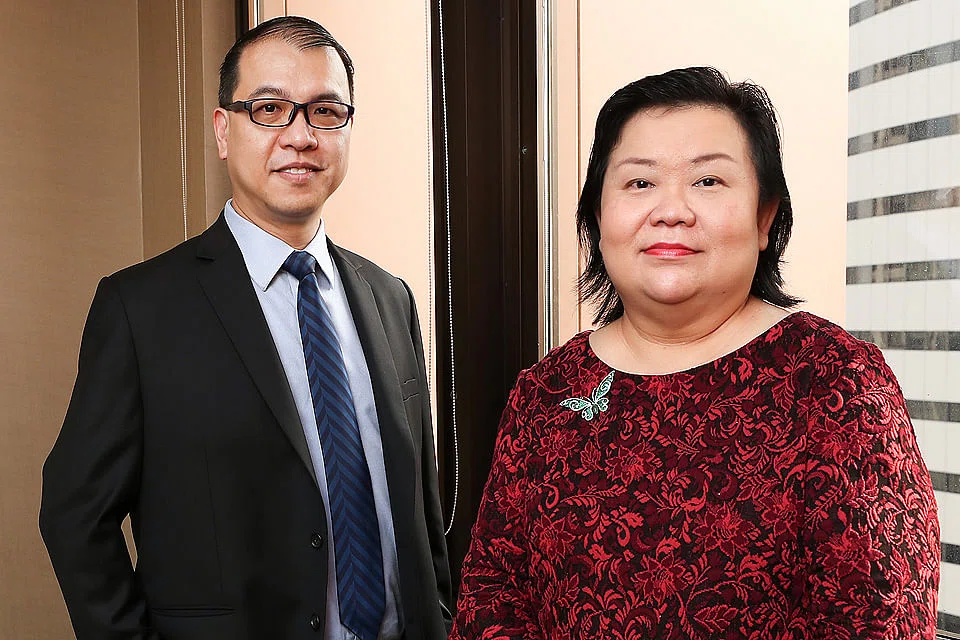
The criminals then use a bank account under the company's name to funnel through illicit funds, which are usually proceeds of crime from foreign offences. When the crime is prosecuted in Singapore, it is then the Singapore-resident director who is typically on the hook, noted Ian Wong, deputy director, financial investigation group at CAD.
With Singapore residents as directors adding that gloss of credibility, regulators have observed that a few companies operating in Singapore for a long time had been roped in as front companies too.
Valerie Tay, head of the anti-money laundering department at MAS, told BT: "While they may have legitimate purposes, shell companies are a structure that can be vulnerable to criminal abuse."
She added that foreign criminals have turned their attention to using Singapore shell companies for nefarious activities, following the Panama Papers incident in 2016.
The data dump of some 12 million confidential documents of a Panama-based law firm exposed the private financial information and network of rich individuals based on their offshore accounts. While there is nothing inherently wrong in using offshore accounts, that unprecedented leak also brought to light shell corporations used for illegal fund transfers.
Data provided by CAD showed that Singapore nominee directors have been prosecuted for their roles in aiding money laundering offences in recent times.
Just last year, two directors were charged in two separate cases after being recruited to act as directors of locally incorporated companies that turned out to be fronts for fraudulent wire transfers.
In one case, Chua Lee Eng served as a director of two companies that received more than US$1.6 million in fraudulent wire transfers into the companies' bank accounts in 2010.
She was paid between S$2,000 and S$3,000 each year for allowing her name to be registered as a director of the companies without exercising any oversight. For this, she was fined S$4,000, while her recruiter was fined S$6,000. Both were disqualified from being a director for three years.
These followed on from Singapore's first conviction of a "corporate money mule" in 2016.
The manager of a corporate service provider, Abdul Ghani bin Tahir, was then sentenced to 12 months' imprisonment and fined S$50,000, after six illicit deposits of stolen properties totalling US$321,954 were deposited into the corporate bank account of a Singapore company of which he was a director. He was also disqualified as a director for five years.
Asked about the banks being prosecuted in these cited cases, Ms Tay pointed out that banks may not have breached criminal rules under the law, and that questions are asked if the banks are wilful or complicit in these instances.
That being said, MAS takes issue on a supervisory front, by asking if banks could have improved their detection analytics or have filed a suspicious transaction report (STR) to regulators to raise an early red flag, she said.
"We have in the past few years sharpened our capabilities to detect these illicit activities in our system," she added.
In 2017, the MAS and the CAD set up a partnership with eight banks here and the Association of Banks in Singapore to work to meet higher standards in anti-money laundering and in countering the financing of terrorism activities, known in the industry globally as AML/CFT.
The Singapore collaboration, known as ACIP - the AML/CFT Industry Partnership - has meant a platform through which MAS can send a system-wide view of STRs to individual ACIP banks. The banks drill through their specific banking network to shut down more entities' accounts that are suspected to be funnelling dirty funds.
READ MORE: Two suspicious minds better than one in curbing dirty money flows
TRENDING NOW

Two Singapore-listed palm oil firms named in Greenpeace report on Indonesian plantation fires
Singapore Airlines flight returns to San Francisco after ‘unruly’ passenger incident

Singapore looking into which companies responsible for haze-causing fires: PM Wong

Deluge IPO 3.86 times subscribed ahead of SGX debut

