

Retirement age still a crucial safeguard for older workers, Tan See Leng says, while not ruling out 'future changes' to road map
 Add BT as a preferred source
DeeperDive is a beta AI feature. Refer to full articles for the facts.
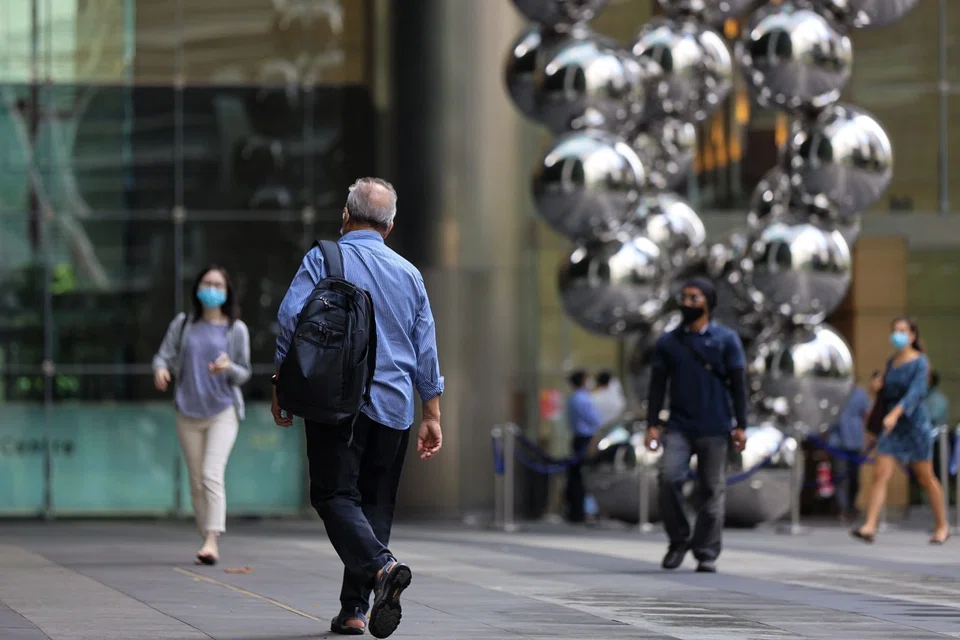
HAVING statutory retirement and re-employment ages "is still important as a floor and safeguard against employers" who are not progressive enough to let staff work for as long as they want, Manpower Minister Tan See Leng said on Tuesday (Nov 2).
He was giving a round-up speech in the House for legislative changes to the retirement and re-employment ages and Central Provident Fund (CPF) top-up and disbursement rules.
Calling current plans - to raise the retirement age to 65 and the re-employment age to 70 by 2030 - ambitious but achievable, he said proposed amendments "fully reflect the tripartite consensus on this road map".
"We do not rule out future changes to our approach, and this model of constructive tripartism will ensure that we are able to adapt and to respond to such needs in the decades to come," Dr Tan added in his speech.
That's as People's Action Party (PAP) MP Louis Ng (Nee Soon GRC) had asked why the retirement age range that can be specified by the minister in the law is being reduced to 62 to 65 years, against 62 to 67 years before.
And, while Workers' Party MPs Sylvia Lim (Aljunied GRC) and Jamus Lim (Sengkang GRC) and PAP MP Yip Hon Weng (Yio Chu Kang SMC) had separately asked on Monday (Nov 1) whether a statutory retirement age is still needed, Dr Tan noted that the issue was carefully considered by a tripartite workgroup on older employees.
Navigate Asia in
a new global order
Get the insights delivered to your inbox.
"Countries without the equivalent of a statutory retirement age do not necessarily have better employment rates for senior workers, despite some of them having anti-discrimination legislation," he said. He added that the "continued relevance" of Singapore's approach is seen in how its average effective retirement age has risen faster than the average such age in the Organisation for Economic Co-operation and Development bloc.
Dr Tan also affirmed that the size of the one-off Employment Assistance Payment (EAP), for older workers who do not take up re-employment, is set to be increased on Jul 1, 2022, in line with general wage growth.
PAP MPs Nadia Samdin (Ang Mo Kio GRC) and Patrick Tay (Pioneer SMC), assistant secretary-general of the NTUC, had asked whether the EAP sum - which ranges from S$5,500 to S$13,000 - is enough for workers.
But, noting the need for "a fine balance", the minister added that a high EAP may deter employers from hiring workers near retirement age, while a low EAP may discourage employers from offering them re-employment.
Dr Tan also reiterated that the tweaks to CPF procedures will not change lump sum withdrawal rules, or affect programmes such as the Silver Support Scheme, which gives cash payouts to seniors who drew lower incomes during their working years.
Neither do the changes affect the CPF payout eligibility age of 65 years, which is not linked to the retirement or re-employment age, he added.
Decoding Asia newsletter: your guide to navigating Asia in a new global order. Sign up here to get Decoding Asia newsletter. Delivered to your inbox. Free.
Copyright SPH Media. All rights reserved.
TRENDING NOW

Shelving S$5 billion office redevelopment plan proved ‘wise’ as geopolitical risks mount: OCBC chairman
Why where you park your joint venture matters: Lessons from a US$689 million shareholder dispute

China pips the US if Asean is forced to choose, but analysts warn against reading it like a sports result

Singaporeans can now buy record amount of yen per Singdollar

