

Rising Treasury yields, inflation expectations fuel safe haven pull-out
Sell-off in Japanese yen, Swiss franc and gold could be aggravated by US$1.9t relief bill passed by US Senate; strengthening greenback against yen and franc offers opportunities for carry trades, says strategist
Singapore
WHATEVER was safe is no longer safe.
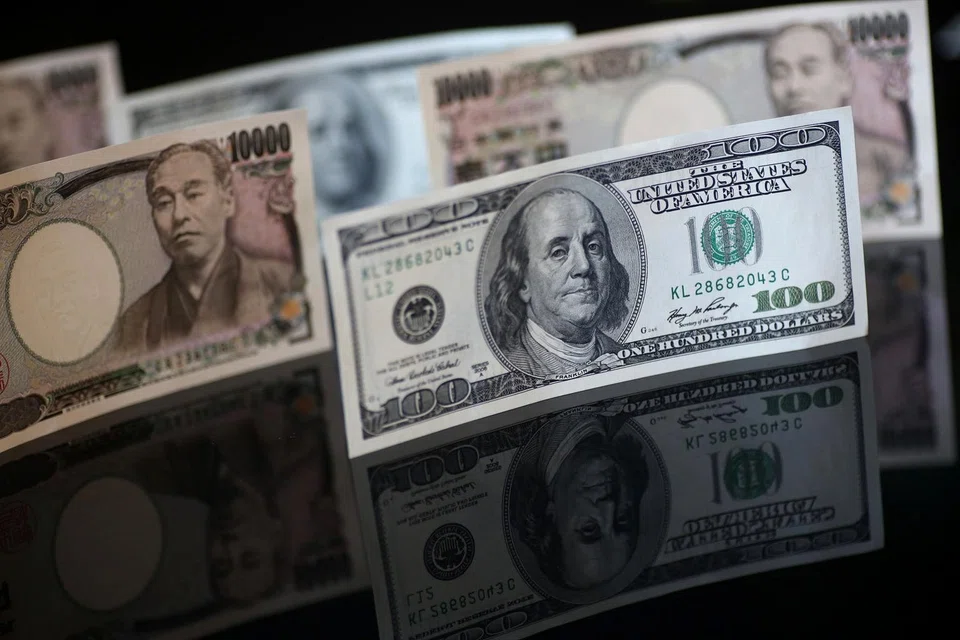
The recent sell-off in haven assets such as the Japanese yen, Swiss franc and gold, fuelled by rising US 10-year Treasury yields which signal economic optimism and inflation expectations, could be aggravated further following the US$1.9 trillion relief bill passed by the Senate last weekend.
USD/JPY hit a fresh nine-month high of 108.66 at about 6pm on Tuesday, while USD/CHF hit a seven-month high of 0.9335 on Monday but corrected slightly to 0.9333 at 6pm on Tuesday. At the start of the year, on the brink of positive vaccine development news and right before the Georgia Senate run-off elections, USD/JPY was about 103.2, and USD/CHF 0.8861.
Market expectations of a US economic recovery and a return to interest rate hikes have driven up Treasury yields from under one per cent to 1.59 per cent as at March 8, and the latest stimulus package cemented expectations of higher inflation coming.
DailyFX strategist Margaret Yang, said the strengthening greenback against the yen and franc offered opportunities for carry trades, because it widened the interest rate difference between the funding currency and asset currency. "While the Japanese and Swiss 10-year government bonds rose by 10 basis points and 28 basis points respectively over the last three months, US 10-year Treasury yield climbed 67 basis points," she said.
Agreeing, Philip Wee, senior currency strategist at DBS Group Research, said that global reflation trades have been reflected by carry trades, such as traders going long on the British pound and Australian and New Zealand dollar, funded by the Swiss franc, yen, and to a lesser extent, the euro.
But he advised against chasing the sell-off in the franc and yen, as both currencies have already depreciated more than 5 per cent year to date and are "aggressively oversold", going by their 14-day Relative Strength Index. USD/CHF has a key resistance at 0.93 and USD/JPY around 110, he said.
Higher Treasury yields is not good news for the non-yielding gold, either. The yellow metal on Tuesday traded below US$1,700 but recovered to about US$1,704 by 6pm. It has still come off about 17 per cent from its peak of US$2,059 last August. Outflows from its exchange-traded funds (ETFs) have been relentless.
Singapore Exchange market strategist Geoff Howie noted that the combined assets under management (AUM) of the five global SDPR GLD ETFs has fallen 19 per cent so far this year, from US$71 billion at the end of 2020 to US$58 billion. This was a function of both unit price declines and fund outflows.
Outflows for the Singapore-listed SDPR GLD ETF have been comparatively less than the combined fund flow of four other listings. Still, the ETF has returned negative 8.9 per cent this year, making it the worst ETF performer on the bourse. Gold has historically been one of the Singapore's most held ETFs by AUM.
Most strategists The Business Times spoke to believe that 10-year Treasury yields will go higher still.
Axi chief global markets strategist Stephen Innes said: "This is a worrying concern. What's happening now is that when the market becomes fearful of higher inflation, it's almost a self-fulfilling prophecy because it starts defending against higher inflation, for instance by selling off long-duration bonds and tech stocks."
Expectations for where US 10-year Treasury yields could end up this year range between 1.75 per cent and 2 per cent.
The more bullish Mr Innes, who has a 2 per cent target, believes that USD/JPY could move to 113 or more, while gold could fall to US$1,600, supported by demand for physical gold in Asia as economies recover. India and China, for instance, are big gold importers.
He also believes that US GDP could grow by 8.5 per cent this year, overshooting China's growth target of more than 6 per cent. "This will cause rotation out of China and Asia into the US and that's going to be supportive for the US dollar but bad for gold."
The worry now is whether the US Federal Reserve is falling behind the Treasury yield curve. "That's a scary proposition," Mr Innes noted. "When that happens, it usually leads to a systematic meltdown because instead of gradually increasing interest rates, the Fed may be forced to raise interest rates very much and all of a sudden, so we get a really big reversal in Fed policy."
He is expecting the Fed to hint at tapering its quantitative easing programme from this September, and for the taper to begin only next year, while rate hikes could wait till 2023.
Until then, he expects Treasury yields to keep ascending. "You can't just put these taper genies and interest rate genies back in the bottle. Once the market gets hold of this narrative, they're going to continue pushing the envelope higher."
At the upcoming March 16-17 Federal Open Market Committee meeting, the market will be watching for any sign of pushback from the Fed to arrest the pace of rise in longer-end US yields. Most strategists said they expect the Fed to maintain its dovish stance not to hike rates through 2023. But they will pay closer attention to how the Fed upgrades its GDP and inflation forecasts, as well as for any indication of more internal debates regarding tapering asset purchases, taking into account the latest stimulus package.
Sim Moh Siong, currency strategist at Bank of Singapore, describing recent choppiness in stock markets, said that rising US Treasury yields have led investors to rotate from technology stocks, which pay little dividends and hence carry higher duration risks, to value and cyclical counters such as financials, industrials or energy. "If rising yields lead to a bigger equity market sell-off, which hasn't happened so far, and that rotation becomes disorderly, then that will lead to greater risk aversion, and we might see greater pushback from the Fed," he added.
Things will not be pretty when the rate hikes come either, as the 2013 "Taper Tantrum" can testify to. "The initial reaction will be bad, until cooler heads prevail when markets realise that rising interest rates actually indicate stronger economic growth, and that's a good thing," Mr Innes said.
READ MORE:
TRENDING NOW

Inside Singapore’s government team that kills its own products

Once staunchly pro-China, Malaysian Chinese businesses are now distancing themselves from Beijing

Cliff Tan has 7 million followers and a 4-month waitlist. Why won’t he expand his business?

Grab CEO’s wife Chloe Tong on life with Anthony Tan and finding her purpose

