

Russian Covid cases hit new high as eastern Europe imposes fresh curbs
 Add BT as a preferred source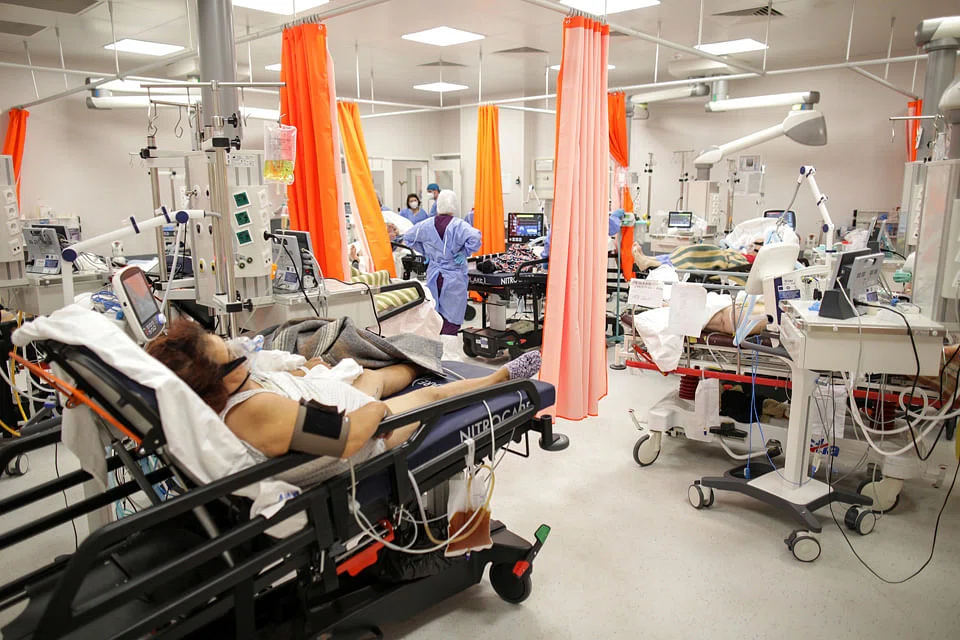
DeeperDive is a beta AI feature. Refer to full articles for the facts.
Moscow
RUSSIA reported a record high number of daily Covid-19 cases and some central European countries imposed fresh restrictions on Monday (Oct 25), as a new wave of the pandemic gathered pace.
In Asia, the Red Cross called for urgent help for Papua New Guinea and China's latest outbreak forced the capital Beijing to delay its annual marathon and step up other curbs, less than 4 months before it hosts the Winter Olympics.
Authorities around the world have been sounding the alarm as infections surge, with governments in regions where vaccine uptake has been low forced to toughen up restrictions in a bid to stop the virus raging out of control.
Russia on Monday reported 37,930 new Covid-19 infections in the last 24 hours, its highest single-day case tally since the start of the pandemic.
Frustrated by the slow take-up of Russia's Sputnik V vaccine by its own population, authorities are introducing stricter measures this week to try to curb the spread of the pandemic.
Navigate Asia in
a new global order
Get the insights delivered to your inbox.
President Vladimir Putin last week declared that Oct 30 to Nov 7 would be paid non-working days.
Vaccine scepticism is high across central and eastern Europe, and as a result, the region has become a hotspot.
Tougher restrictions came into force in Romania and the Czech Republic on Monday, while in Slovakia stricter rules were expanded to more regions. In Bulgaria, police will start imposing fines on people who break restrictions from Monday.
In Romania, where a government official on Oct 23 lamented a "disaster situation", the government reintroduced a night curfew and made health passes mandatory for entry to most public venues, while school children were sent on vacation for 2 weeks.
"The restrictions seem to be working, there are fewer people on the streets," said Gheorghe Ion, a Bucharest cab driver. "I've been waiting here for an hour without an order."
Poland's health minister warned that the government would need to consider tighter restrictions if cases kept increasing, but stressed that it was not planning a lockdown.
While experts have said that a lack of confidence in public institutions caused by decades of Communist rule has fuelled vaccine scepticism in the region, there were signs that more people were responding to fears about the wave by getting a jab.
In Romania, authorities said inoculations were on the rise last week, while in the Czech Republic, the daily number of doses administered was the highest since late-August.
The International Federation of Red Cross and Red Crescent Societies warned of the potential for huge numbers of deaths in Papua New Guinea unless international action was taken to help the island nation's struggling health service.
Less than 1 per cent of the population has been fully vaccinated, according to Our World in Data figures, with the Red Cross blaming misinformation, public apprehension, and logistical challenges.
"Urgent efforts and further support are needed in healthcare to prevent a massive loss of life in the coming days and weeks," said Uvenama Rova, Papua New Guinea Red Cross secretary-general.
Chinese health officials warned on Oct 24 that its latest cluster, caused by the highly transmissible Delta variant and involving many carriers who recently travelled across some provinces, was increasingly likely to expand further.
Beijing has banned entry of people from other cities with cases, and closed indoor venues such as some chess and card parlours, even in districts without infections.
Although the infection numbers are far smaller than many places outside China, authorities have adopted a zero tolerance strategy.
New Zealand saw its second-highest daily tally of Covid-19 cases since the pandemic began, with 109 new locally acquired coronavirus cases reported on Monday, the bulk of them in its largest city, Auckland.
Once lauded for its success in stamping out the virus, New Zealand has been struggling with an outbreak of the Delta variant centred in Auckland, despite the city remaining under a strict lockdown for more than 2 months.
In Western Europe cases were also on the rise, despite higher rates of vaccine uptake than in the continent's east.
Infections in the Netherlands have been rising for a month and reached their highest level since July on Oct 24, after many social distancing measures were dropped in late September.
Prime Minister Mark Rutte is expected to update coronavirus policies by Nov 5, but pressure is rising to come up with an earlier response to the recent numbers. REUTERS
Decoding Asia newsletter: your guide to navigating Asia in a new global order. Sign up here to get Decoding Asia newsletter. Delivered to your inbox. Free.
Share with us your feedback on BT's products and services
TRENDING NOW

From 1MDB to ‘corporate mafia’: Is Malaysia facing a new governance test?

Higher costs, lower returns: Why are Singaporeans still betting on real estate?

South-east Asian markets account for 8.8% of global capital inflows from 2021 to 2024: report

Richard Eu on how core values, customers keep Singapore’s TCM chain Eu Yan Sang relevant

