

S$60b rescue package proof of optimal fiscal balance: Heng

Sharon See
Singapore
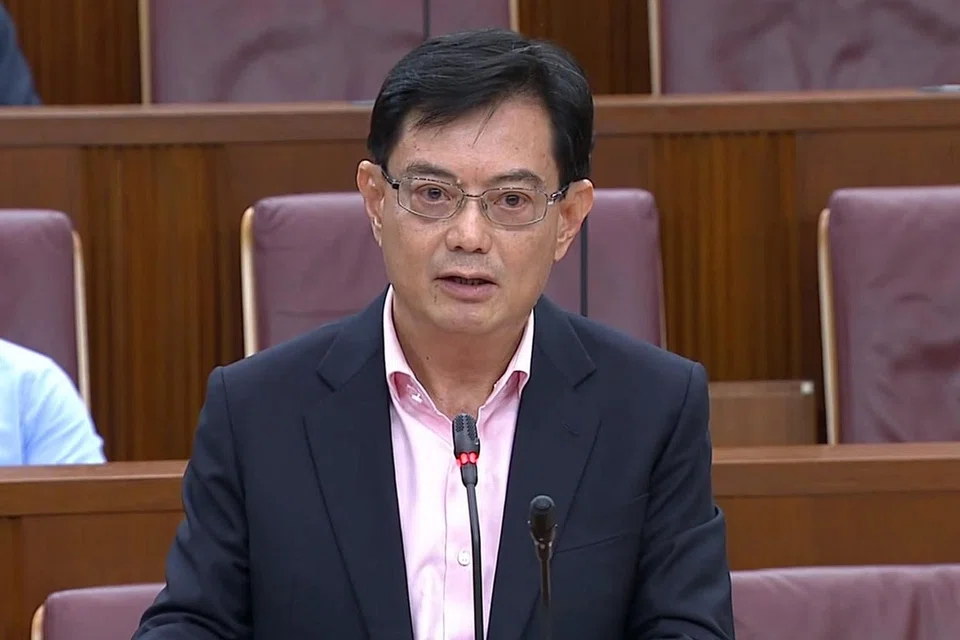
SINGAPORE'S best response to the coronavirus pandemic is to build both economic and social resilience, Deputy Prime Minister and Finance Minister Heng Swee Keat said on Tuesday.
This is why the approach of the S$48.4 billion Resilience Budget and S$5.1 billion Solidarity Budget is to preserve the capabilities of viable companies to recover and to keep Singaporeans in their jobs, Mr Heng said in a parliamentary speech to wrap up the debate on the government's second and third economic rescue package.
For businesses, this means supporting them in terms of cost, cash flow and credit; for Singaporeans, it means saving jobs and providing cash support.
Over the two days, various Members of Parliament (MPs) sought clarifications even as they spoke in support of both packages, which were delivered just 11 days apart.
Together with the S$6.4 billion in support measures announced during Budget 2020, the government's response to the Covid-19 pandemic now amounts to almost S$60 billion, of which S$21 billion comes from past reserves.
"Our ability to put together a support package for Singaporeans amounting to 12 per cent of GDP (gross domestic product), without borrowing against the country's future, is testament to the optimal fiscal balance we've sought to maintain over the years," Mr Heng told the House.
Calling Singapore's reserves a "strategic defence", Mr Heng shot down Workers' Party chief and Aljunied GRC MP Pritam Singh's call to disclose the size of these reserves, saying it was a matter of national security and strategic interests, particularly for a small import-dependent country without natural resources.
Several MPs had asked whether the government could provide more cash for families to tide through this difficult period.
Detailing the various payouts, Mr Heng said low-wage workers on Workfare Income Supplement will get S$3,000 in cash, while Singaporeans who have become unemployed due to Covid-19 will get S$2,400 over three months. Those who need urgent help can get a cash assistance of S$500 under the Temporary Relief Fund. Eligible self-employed persons will get a payout of S$9,000.
Adding to these is a new one-off Solidarity Payment of S$300, available to adult permanent residents or long-term visit pass holders with immediate family who are Singaporean.
Meanwhile, the Jobs Support Scheme (JSS) will give employers up to S$31,000 in wage offsets over nine months for each local worker retained.
Jessica Tan, MP for East Coast GRC, and Sylvia Lim, MP for Aljunied GRC and Workers' Party chair, asked how the government is making sure that companies receiving wage support do continue to retain their workers.
"By design, employers who reduce their employees' wages or put their employees on no-pay leave during this period will have their JSS payouts reduced correspondingly," Mr Heng said. However, companies that have already done so can still bring their workers back on the payroll to receive the wage support.
Mr Heng again urged property owners to support tenants by unconditionally passing on savings from the property tax rebates. He said: "Some property owners commented that such an obligation penalises them, but this move does not make property owners worse off. In fact, it staves off rental terminations and keeps their premises rented out.
"With a property tax rebate of up to 100 per cent, property owners pay less or even no property tax for the year. Property owners should pass the full tax savings on to their tenants, as the property tax rebate is intended to benefit the tenants."
Looking to the future, Covid-19 will reshape the world and amplify the global structural shifts - in global supply chains and the digitalisation drive - already underway, Mr Heng said. Singapore is in a good position to make the most of these opportunities, he said, as he detailed plans to redouble efforts to position the country as a "global Asia node of technology, innovation and enterprise".
Work on Smart Nation and other research and development efforts will continue, Mr Heng said. To prepare people for this, the SGUnited Traineeships Programme is set to provide more than 500 traineeships across the research, innovation and enterprise ecosystem, on top of plans to help businesses transform and upskill their workers.
TRENDING NOW

From legacy to launch: Francis Yeoh and Yeoh Pei Xien on family unity and YTL’s next‑gen ventures

Things to know about DBS’ incoming chairman Anthony Lim
Wealthy Indonesians snap up government bonds as yields near 8%: OCBC

From local AI partnerships to global opportunities: How MNCs help Singapore firms scale

