

Sentiment poll shows slowing growth in Singapore factories; Purchasing Managers' Index loses 0.2 point to 50.6 in November
 Add BT as a preferred source
DeeperDive is a beta AI feature. Refer to full articles for the facts.
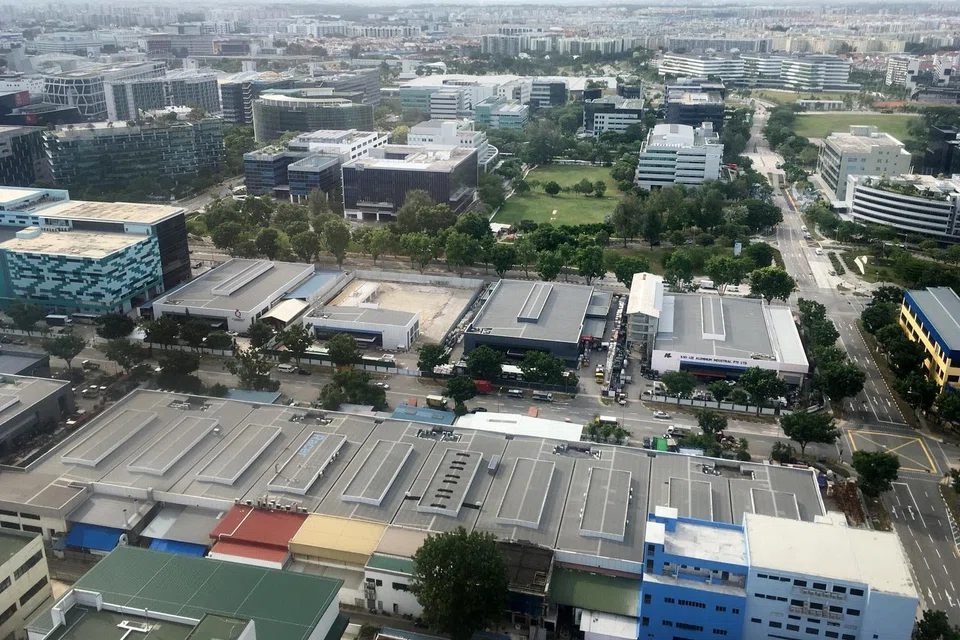
ACTIVITY in the Singapore factory sector cooled further in November from its most recent peak in July, even though manufacturing across the region stayed in positive territory.
Now, all eyes are on how the new, highly mutated Omicron variant of Covid-19 will affect activity, as the sector wrestles with earlier bouts of production and logistics disruption.
The early gauge from the Singapore Institute of Purchasing and Materials Management (SIPMM) on Thursday (Dec 2) showed sentiment slipping from the month prior - in line with a similar trend around the region - on slower expansion in areas such as new orders, new exports, output, inventory and employment.
The SIPMM Purchasing Managers' Index (PMI) dipped to 50.6 points in November, from 50.8 points in October, while the reading for the linchpin electronics cluster eased to 50.8 points, down from 51.1 previously.
PMI readings above 50 points indicate an expansion, and those below 50, a contraction.
The SIPMM attributed the latest change to "slowing growth posted across most manufacturing sectors", though the overall industry has now expanded for 17 straight months.
Navigate Asia in
a new global order
Get the insights delivered to your inbox.
Similarly, OCBC chief economist Selena Ling called cooler PMIs no surprise "as we saw the Delta resurgence also basically hit regional economies and add to supply-chain disruptions".
Local factories took a cue from the rest of South-east Asia. The IHS Markit Asean PMI showed a retreat to 52.3 points, from 53.6 in October.
The PMI slowdown was driven by moderating growth in Singapore, Indonesia and Thailand, even as the rate of expansion picked up in Malaysia, Vietnam and the Philippines.
In China, the official manufacturing PMI returned to growth mode at 50.1 points, up from 49.2 in October. But the private Caixin PMI - which focuses on smaller and external-oriented manufacturers - declined to 49.9, compared with 50.6 before.
China's output and exports took a hit from the impact of the pandemic and shipping woes, wrote Nomura analysts Sonal Varma and Rebecca Wang, while "reopenings in South-east Asia did help ease the supply bottlenecks, but only at the margin".
Granted, Oxford Economics analyst Priyanka Kishore said the positive data still reflected "a further easing in supply-chain disruptions in many economies, especially in South-east Asia", which will support "robust industrial output growth" in Asia in 2022.
But analysts at Barclays noted that regional PMI surveys were carried out ahead of the detection of Omicron, so "the actual impact will be seen only in the December PMI report". They added: "Under a worst-case scenario of governments reimposing lockdowns to stop the spread of Omicron, this could push back the timing of supply-chain normalisation and keep input price pressures elevated for longer."
Said Ling: "With Omicron, the rain clouds are gathering again and may mean a further exacerbation of global supply-chain bottlenecks (and) higher import costs, and ultimately weigh on growth, if this variant potentially proves to be worse than Delta."
The Nomura report said factory reopenings across South-east Asia will ease supply bottlenecks and support output, "but, if elevated prices dampen future new orders, demand could become the bigger challenge".
Tracking the regional trend, Singapore manufacturers' input prices kept rising in November - but more slowly than before - at 52.4 points for electronics and 51.7 points overall.
New orders fell to 51.1 points overall, from 51.3 points before, while new exports lost 0.1 point to 50.9, and output fell the same amount to 50.8. The employment reading dropped to 50.6 overall, from 50.8 before, and to 50.9 for electronics, from 51.2 in October.
Sophia Poh, SIPMM vice-president of industry engagement and development, said in a statement: "Anecdotal evidence suggests that local manufacturers are adapting and coping well with the cost pressures, as a result of increasing order demand.
"However, the new Omicron Covid-19 variant has raised fears of economic uncertainty and manufacturers are now concerned about more restrictive measures and disrupted supply chains."
Ling has projected Singapore manufacturing growth to slow from 12.2 per cent in 2021 to 3 per cent to 4 per cent in 2022, "but we will have to wait and see" about the Omicron impact.
Still, Barclays' team noted: "Despite mixed performances in the details, all economies in the region reported expansionary PMIs, underscoring still relatively firm external demand and resilience in manufacturing activities."
Decoding Asia newsletter: your guide to navigating Asia in a new global order. Sign up here to get Decoding Asia newsletter. Delivered to your inbox. Free.
Copyright SPH Media. All rights reserved.
TRENDING NOW

Shelving S$5 billion office redevelopment plan proved ‘wise’ as geopolitical risks mount: OCBC chairman

Eurokars Group introduces rental car franchises Enterprise Rent-A-Car, National Car Rental, and Alamo to Singapore
20 photos that show how dramatically Singapore has changed in two decades
Singapore’s key exports up 15.3% in March from electronics surge, exceeding forecasts

