

Silver linings in economy amid weak sentiment
Economists see Singapore's outlook brightening in H2; they identify construction and services as the sectors that are likely to post stronger growth

Janice Heng

Singapore
THE indicators have not been painting a rosy picture of Singapore's economy, but the worst might soon be over, said economists, expecting some recovery in this year's second half. As Mizuho Bank head of economics and strategy for Asia and Oceania Vishnu Varathan put it: "The 'half-full' version of the lacklustre economy is that Singapore's economy is close to bottoming, if not already bottomed."
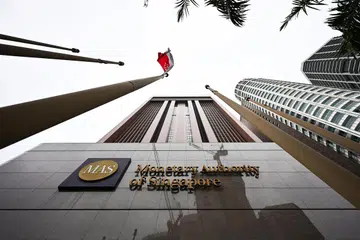
The twice-yearly Macroeconomic Review by the Monetary Authority of Singapore (MAS) on Friday noted that after several quarters of above-potential growth, the economy saw "a step-down in growth" in Q4 2018 and Q1 2019. Flash figures for the first quarter put gross domestic product (GDP) growth at 1.3 per cent, the slowest rate in a decade and the fifth straight quarter of easing growth.
Manufacturing-related figures have been weak. Latest figures on Friday showed that manufacturing output was down 4.8 per cent in March. Non-oil domestic exports saw a surprise 11.7 per cent plunge in March on the back of an electronics slump.
Yet it is not all doom and gloom, said economists. Firstly, the picture is brighter outside manufacturing.
As the MAS macroeconomic review noted: "Given the external challenges, the Singapore economy will have to turn towards domestic drivers for growth this year."
Said Asean+3 Macroeconomic Research Office chief economist Khor Hoe Ee: "The declines in exports and manufacturing activities are partially offset by stronger domestic-oriented growth drivers, for example (the) construction and services sectors. ...This is also evident in the stronger construction-related business loans growth recently."
Maybank Kim Eng economist Chua Hak Bin cited construction as a "bright spot" leaving the doldrums, with 1.4 per cent growth in Q1 after 10 straight quarters in contraction.
Said Dr Chua: "Redevelopment of en-bloc sites, extension of MRT lines and expansion of the integrated resorts will likely support construction activity for the next few years."
UOB economist Barnabas Gan named services as another sector that might see stronger growth. Financial, business, and information and communications technology services "will continue to benefit from steady domestic demand amid increased investments in digitalisation", he said.
Massive infrastructure projects in Asia could trigger demand for financial, business and engineering services, with possible spillovers, said Mr Varathan. He sees the digitalisation wave as supporting growth in both hardware and software sectors.
DBS economist Irvin Seah pointed out that, after all, services account for 70 per cent of the economy and employment. "While trade-related services probably have been weighed down by the manufacturing sector, domestic services ... and key financial services are expected to do the heavy lifting," he said.
Secondly, even within manufacturing itself, there are bright spots. Mr Gan notes that the biomedical industry continues to support the overall manufacturing cluster. Despite the overall fall in manufacturing in March, biomedical output was up 13.7 per cent. On a year-to-date basis, biomedical manufacturing is up 12.9 per cent from the year-ago period.
The broader manufacturing outlook would also change if a trade deal between the United States and China emerges in May or June.
This would revive investments and exports in the second half of the year, said Dr Chua. OCBC Bank head of treasury research and strategy Selena Ling notes a possible pick-up in regional trade if that happens.
This hope is in line with findings from the MAS survey of professional forecasters in March, where the easing of US-China trade tensions was the top upside risk to growth forecasts. Other upside risks were stronger growth in China, and a pause in monetary policy tightening in developed economies.
China's Q1 GDP growth surprised on the upside at 6.4 per cent. Earlier this month, Barclays raised its full-year forecast for China's growth to 6.5 per cent "on improving domestic policy efficacy and a better export outlook". DBS's Nowcast model is suggesting second-quarter growth of about 7 per cent.
As for monetary policy, the MAS stayed on hold in their April monetary decision, and policymakers elsewhere have also begun to adopt more accommodative policies, noted Dr Khor. "This bodes well for the global economy, and relatedly Singapore," he said.
Association of Small and Medium Enterprises president Kurt Wee cited reduced expectations of rising interest rates as one source of hope for local firms. On the whole, "there is some quiet optimism that things will not get very much worse", he said.
As for US-China trade tensions, firms have been proactive in trying to cope, he added. "I think companies are actively reviewing their business networks to ensure that they are able to continue to grow."
But on the consumer front, sentiment is still "quite flat" for Singapore retailers: "We don't expect domestic consumption to go up by very much."
Ms Ling does not expect consumption to pick up significantly amid external headwinds. Nonetheless, consumer confidence "should remain relatively supported amid a still-tight domestic labour market", she said, noting that upcoming foreign manpower policy tightening in services should keep the labour market tight.
"For SMEs, the story may be bittersweet - while the growth slowdown may imply less upward pressure on the cost front, whether in terms of rentals or manpower, concurrently the demand story is also lower," she added.
On the whole, however, things may be turning around. "The worst is probably behind us," said Mr Seah, who thinks the economy has reached the bottom of the current growth cycle. He expects 2019 to be "back-loaded", with a significantly stronger second half for Singapore.
Business sentiment may already be shifting. Mr Seah noted that sluggish loan growth has been dragged down mainly by housing and consumer loan growth. "In contrast, while business loan growth plunged during the height of the trade war, it has bottomed late last year and is now on the way up," he said.
Businesses may have shelved investment plans when trade tensions flared up at the end of 2018, but a positive turn in trade talk rhetoric has brought "emerging optimism" for the business outlook, he added.
Dr Chua notes green shoots in March, such as a regional uptick in Purchasing Managers' Index figures, and China's industrial production growth rebounding to 8.5 per cent, the fastest since July 2014. He expressed measured optimism about Singapore's outlook, saying: "We are pencilling a growth recovery in the second half, but the recovery will likely be weak rather than strong."
Similarly, Mr Varathan expects not a sharp rebound but "a rather measured pick-up off the bottom". Bright spots in services and construction will help to alleviate the situation and nurture recovery, he added.
TRENDING NOW

Looking beyond looming CEO succession, should UOB potentially pursue a transformative merger?

Once staunchly pro-China, Malaysian Chinese businesses are now distancing themselves from Beijing

Family offices ‘kept captive’ by relationship managers turn to independent advisers, direct deals
MAS holds monetary policy settings, pausing after two straight tightenings

