

Impact of diesel tax hike, foreign labour leads debate
MPs raise concerns about the effect of these policy changes on businesses, especially the smaller ones
Singapore
THE impact of the diesel tax hike and the tightening of foreign manpower quotas on businesses, and issues of long-term fiscal sustainability dominated the second day of the Budget debate in Parliament on Wednesday.
Members of the house voiced their concerns about the ability of firms - especially small and medium-sized enterprises (SMEs) - to cope with the changes unveiled by Finance Minister Heng Swee Keat on Feb 18.
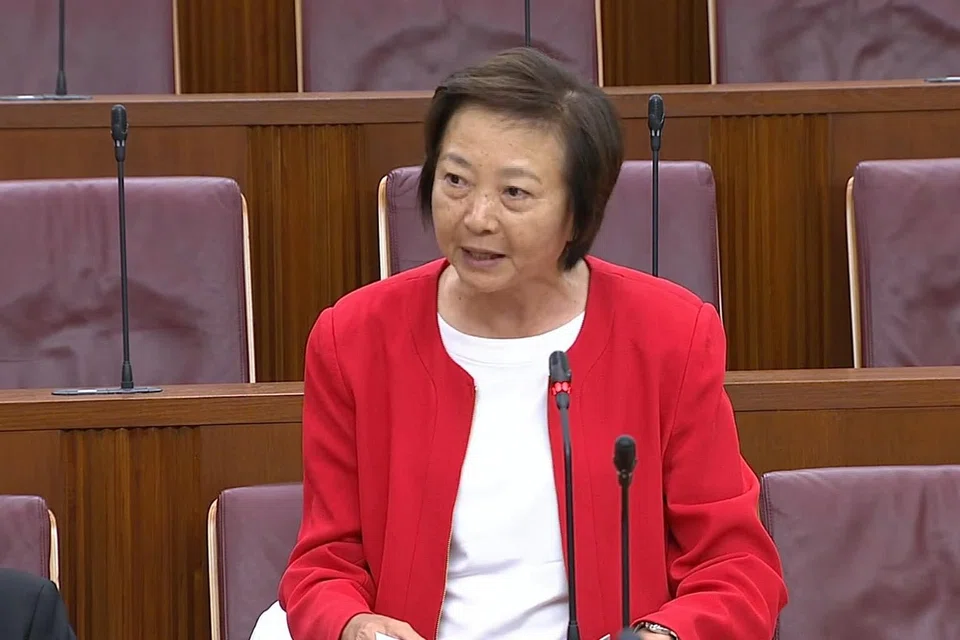
Member of Parliament (MP) Lee Bee Wah pointed out that the lack of warning or lead time about the doubling of diesel excise duties to S$0.20 a litre has hit many service providers.
"They have contracts signed with the old price and they are not allowed to claim for material price fluctuation," she said, warning that the increase could set off a "domino effect" of rising prices across the economy.
She also asked whether the income from the diesel tax hikes could be returned to businesses in the form of future grants so they can implement measures to reduce their carbon footprint, in a nod to what Mr Heng had said about the carbon tax in his Budget speech last year.
MP Gan Thiam Poh appealed for an exemption of the diesel tax increase for companies unable to switch fuels so easily: "For certain heavy machinery and special-purpose vehicles, there are no diesel alternatives in the market. This tax increase imposes an unnecessary burden on their owners and operators.
"We should build the infrastructure for businesses to switch to natural gas, electricity or solar as soon as possible - before the introduction of such a tax."
Questioning by MPs on the tightening of the foreign manpower quota in the services sector also continued.
MP Joan Pereira urged the government to reconsider the lowering of the dependency ratio ceiling (DRC) for the health care sector, as it will have a "major impact" on voluntary welfare organisations, community and nursing homes and hospitals, given that care-giving is labour-intensive, and technological advancements haven't caught up.
But Minister of State for Manpower Zaqy Mohamad, responding, said that the government recognises that essential sectors such as health care will need bandwidth to adjust.
"While the DRC cuts apply across the services sector, we will continue to work with MOH (Ministry of Health) to provide manpower flexibilities to health care providers so that their day-to-day operations are not affected," he said.
He stood firm on the government's foreign manpower policy stance: "Our short-term needs must not become our long-term dependency, lest we become over-reliant on foreign manpower and risk hurting local employment outcomes."
Mr Zaqy, who is also Minister of State for National Development, noted that no changes were made to the employment pass (EP) policy this year; none have been made since 2017. Giving a signal of further tightening to come, he added: "We will monitor this. As local wages rise, we will have to adjust the EP criteria from time to time."
He said firms will thus have to hire more locals or transform their business. This is why the government is reducing the DRC rather than raising levies.
"We do not want a situation where firms continue using existing operating models and simply pay higher levy costs," he added.
Aside from the impact on businesses, MPs also suggested means to increase sources of revenue to ensure fiscal prudence, given rising expenditure in health care.
MP Cheryl Chan, for example, proposed a net wealth tax and inheritance tax for ultra-high net worth individuals, estimated to make up the top 1-2 per cent of society.
At the same time, she said, more help must be given to the lower-income; she urged employers to play their part to re-invest in their workers and to give them a decent wage, and for those in the top and middle tiers of the economy to be willing to pay more for services.
The crux of the issue is the amount that consumers and employers are willing to pay so that a living wage can be paid to lower-income workers: "We cannot continue this path of racing to the last dollar for value of contracts, asking for more productivity from these workers without paying for tools or environment that aid their productivity improvement, and assigning more tasks to them when we can do some on our own."
The finance minister will respond to MPs in his Budget roundup speech on Thursday; this will be followed by the ministries' Committee of Supply debates, which will last a week.
TRENDING NOW

Britain’s mansion tax shows the difficulty of targeting wealth

Once staunchly pro-China, Malaysian Chinese businesses are now distancing themselves from Beijing

The only common thing in S-E Asia is that we all eat rice: Cisco’s Asean president

Singapore data centre operator DayOne opts for US IPO at likely US$20 billion valuation

