

Budget 2020: A game changer for Singapore's climate policies?

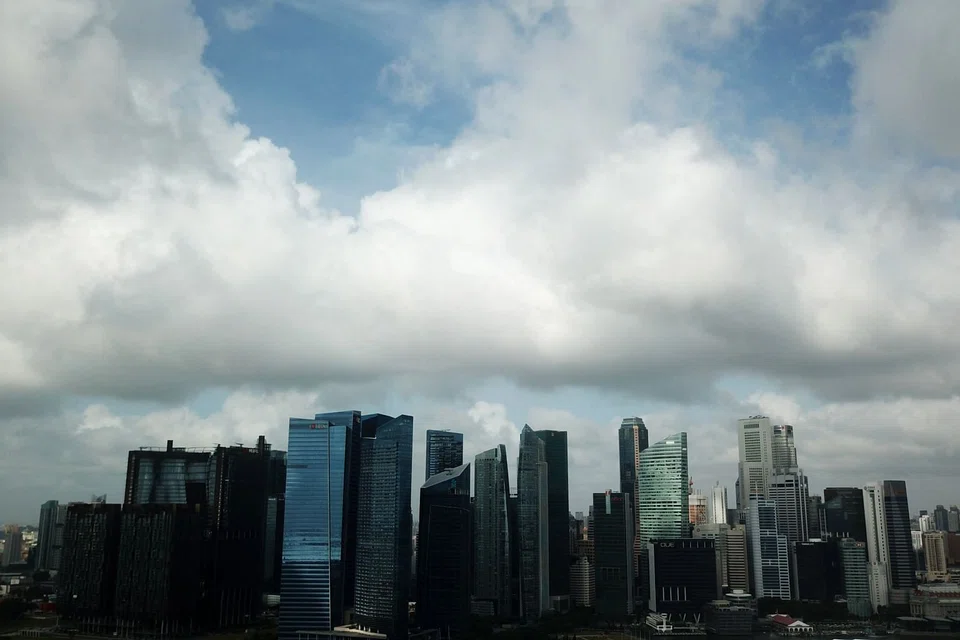
Singapore
AS CLIMATE change increasingly occupies public discourse in Singapore, observers are expecting it to feature more strongly in Budget 2020, alongside the government's priorities in business restructuring and social spending.
This could come in the form of incentives to boost the adoption of electric vehicles and the use of green financial instruments or adaptation measures to combat rising seawater or urban heat, observers said.
Setting the stage is an update to Singapore's climate pledge under the Paris Agreement, expected to be unveiled any time now, as hinted at by Environment and Water Resources Minister Masagos Zulkifli late last year.
Under the 2015 pledge, Singapore intends to reduce its emissions intensity - the amount of greenhouse gases emitted per dollar of gross domestic product - by 36 per cent from 2005 levels by 2030, and to stabilise emissions with the aim of peaking around 2030.
This update could set the tone for the government's climate change strategy in the coming years, since Singapore "takes target setting seriously", Melissa Low, a research fellow at the National University of Singapore's Energy Studies Institute, said.
However, Ms Low believes there is a limit to how much the government can impose curbs on businesses, particularly multinational corporations (MNC), even though industry emissions account for 60 per cent of all emissions in Singapore.
"We started to plateau in energy efficiency savings because the uptake of further energy improvements can be challenging for MNCs that are not headquartered here as the decision making process does not lie in Singapore," Ms Low said.
This is because refineries and drugmakers would need to follow strict rules in their manufacturing processes, for example, to ensure their products conform to a particular standard, which means improvements to energy efficiency are limited to ancillary services, she said.
The next biggest polluter is transport at about 14.5 per cent, and observers believe there is room for the government to promote the use of electric vehicles (EVs).
Sanjay Kuttan, who chairs the sustainable infrastructure committee under the Sustainable Energy Association of Singapore, said a new category of "green COE" could encourage take-up of EVs while helping to shift the vehicle quota from existing categories over. This in effect reduces the number of fuel cars given that Singapore currently has a zero growth policy for vehicles.
He added that this has the added benefit of tracking the number of EVs in Singapore, which would aid infrastructure planning, in terms of building charging stations.
While subsidising private car owners to switch to EVs with taxpayer money is not a good solution, Dr Kuttan said, the government could consider providing incentives to operators of public vehicles, such as taxis, buses and electric vehicles.
"At the end of the day, we want to have numbers on the street because scale will give you your benefits faster, from an environmental perspective. One company can buy 100 taxis, it's better than one person buying one car," Dr Kuttan said.
Subodh Mhaisalkar, executive director of the Energy Research Institute @ NTU, said buses and taxis ply the most miles in Singapore, so "converting these fleets to EVs is a very big needle mover".
The Land Transport Authority said in November that it is planning to deploy electric buses from early this year.
Prof Subodh also said it may be worth considering having disincentives such as a tax on petrol or diesel and use that to offset paying for charging infrastructure.
The government started charging companies a carbon tax in 2019 at a rate of S$5 per tonne of greenhouse gas emissions from 2019 to 2023, but Louis Ng, MP of Nee Soon GRC and a member of the Government Parliamentary Committee for Environment and Water Resources, is hoping the government can review the effectiveness of the tax sooner given the urgency of climate change. The government has said it plans to increase the tax incrementally to S$15 by 2030.
"It always sounds strange that we say 'in 10 years' and we keep stressing that this is an existential issue," Mr Ng told The Business Times.
He added that he hopes the government can reveal the amount of carbon tax collected so far, as the money is meant to be used to fund the greening of the industry.
He is also proposing for the government to consider including climate change-related risk in the Monetary Authority of Singapore's annual industry-wide stress test, in line with what the Bank of England is doing. The transparency, Mr Ng said, will lead to changes, while also help guard against greenwashing, that is, companies pretending to go green.
Euston Quah, an economist and Albert Winsemius Chair Professor from the Nanyang Technological University, believes greenwashing can be a problem when companies pledge to use less plastic or when hotels advocate reusing towels to save the environment without passing on the savings to consumers.
This is especially pertinent if the government is using taxpayer money to give green grants to companies, he added. Given this, he suggested that companies should be required to show how they are returning the subsidies to consumers in terms of cost savings when applying for grants.
Meanwhile, it is useful to establish a common understanding of what is considered green, and Frances Chen, head of corporate sustainability at HSBC Singapore, believes there are practical ways to do so.
She noted that Europe and China, have issued precise standards for key carbon emitting sectors on what is considered green - for example, a technology can only be considered green if its emissions are below a set hurdle. These are standards Singapore could look to and contextualise for the local market, she suggested.
Mikkel Larsen, chief sustainability officer of DBS, is hoping to see a further expansion of incentives to grow the sustainable bond market enabling a larger group of companies to tap into green finance.
"Today when something is developed in Singapore, the world knows that it has gone through the proper rigour and processes . . .Therefore products or frameworks that are developed here can punch above their weight, helping to contribute to global climate change solutions," Mr Larsen said.
Beyond climate change mitigation measures, Prof Quah is also hoping to see "adaptation measures" from Budget 2020, since the former "takes a long time".
"I'm of the view that we should adapt. It's just like pollution and haze, so rather than wait for all the policies to kick in, we should just accept that there'll be higher temperatures, sea levels will rise," Prof Quah said.
TRENDING NOW
Three ex-employees of Envy group join Ng Yu Zhi in bankruptcy

He built the Vingroup empire. Now South-east Asia’s richest man is handing some key roles to his sons

Grab CEO’s wife Chloe Tong on life with Anthony Tan and finding her purpose
Incidence of civil servants buying property near unannounced MRT stations ‘a concern’, but may not establish misconduct: PSD

