

Singapore aims to halve 2030 peak emissions by 2050
It commits to an absolute peak emission level of 65 MtCO2e, will include nitrogen trifluoride as seventh greenhouse gas

Singapore
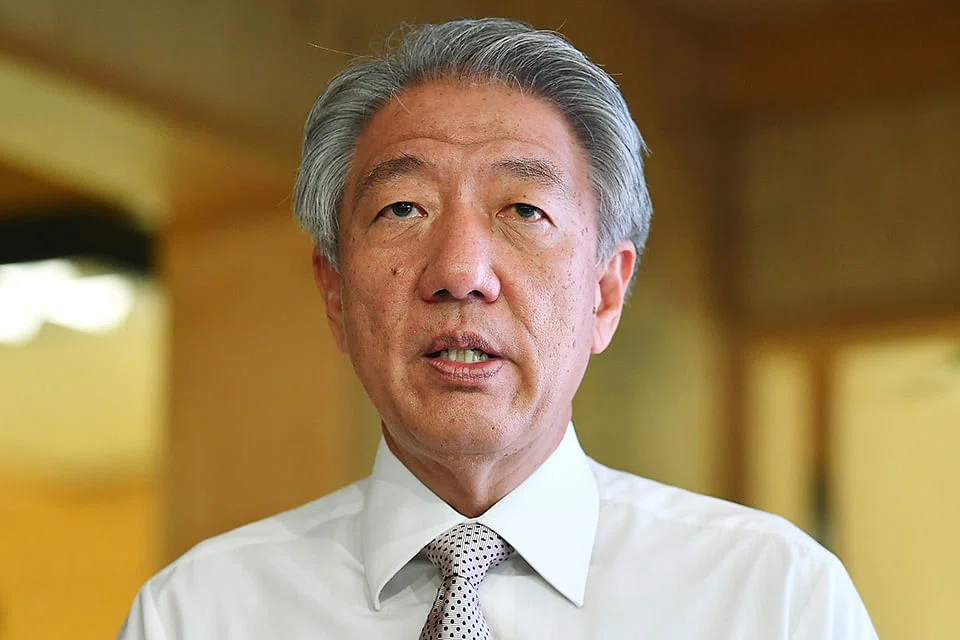
SINGAPORE will enhance its climate pledge and long-term strategy this year, with a view to halve its emissions by 2050 after they peak in 2030, Senior Minister Teo Chee Hean said in Parliament on Friday.
The new targets will be submitted to the United Nations Framework Convention on Climate Change later this year.
Singapore will commit to an absolute peak emission level of 65 million tonnes of carbon dioxide equivalent (MtCO2e) around 2030, said Mr Teo, who is Co-ordinating Minister for National Security and Chairman of the Inter-Ministerial Committee on Climate Change, as he spoke on the first day of the Committee of Supply (COS) debate on Friday.
In the 2015 pledge under the Paris Agreement, Singapore said it intends to reduce its emissions intensity in 2030 by 36 per cent from 2005 levels, and to peak by around 2030. At the time, authorities said emissions are expected to stabilise at around 65 MtCO2e based on projections.
Effectively, the latest move indicates a shift to a target with an absolute cap, from a target to reduce emissions intensity, which measures carbon emissions per gross domestic product (GDP) dollar.
An emissions-intensity target allows for carbon emissions to increase as long as the economy grows, while a target with an absolute cap does not.
Going a step further, Singapore is including a seventh greenhouse gas - nitrogen trifluoride - within this peak emissions ceiling, even though the Kyoto Protocol only covered six. In addition, Singapore's Long-Term Low Emissions Development Strategy (LEDS) aspires to halve the emissions from its 2030 peak, to 33 MtCO2e by 2050, with a view to achieving net-zero emissions as soon as viable in the second half of the century, Mr Teo said.
Commenting on the new targets, Melissa Low, a research fellow at the National University of Singapore's Energy Studies Institute, said the new target represents progress and sends a clear signal to all stakeholders, even though she was not surprised that the number has not changed from the 2015 figure, which was considered a "stretch target".
Concurring, Winston Chow, a climate scientist from the Singapore Management University, said: "It's long overdue as there was justified criticism in using emissions intensity as a metric, since it didn't show the requisite ambition towards serious climate change mitigation."
Mr Teo told the house that while the new targets will be "very challenging" given Singapore's limited alternative energy options, the Republic has developed a strategy with three thrusts.
"First, we need transformations in our industry, economy and society.
"Second, we will have to draw on technologies which are not yet mature such as carbon capture, utilisation and storage (CCUS), and low-carbon fuels.
"Third, we will need international collaboration in areas such as well-functioning carbon markets and regional power grids," Mr Teo said.
He outlined Singapore's efforts to mitigate climate change, such as deploying solar energy, greening buildings and phasing out petrol cars.
Jen Teo, executive director of the Singapore Environment Council, said achieving the new target is a "monumental task", and business models will have to change to be more sustainable. Some industries here could relocate their manufacturing lines to keep overhead costs minimal, she added.
TRENDING NOW

Could stablecoins be the future of money?
Vietnam’s northern provinces, not Hanoi or Ho Chi Minh City, are powering near 10% GDP growth
The Assembly Place expands beyond co-living as it targets 10,000 keys by 2030

Once staunchly pro-China, Malaysian Chinese businesses are now distancing themselves from Beijing

