Budget 2021: More help for older workers and low-wage employees, families
 Add BT as a preferred source
DeeperDive is a beta AI feature. Refer to full articles for the facts.
VULNERABLE groups that have been more badly affected by the coronavirus pandemic will receive more support from the Singapore government.
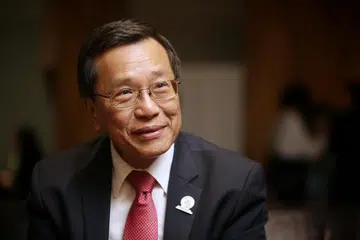
These include those earning low wages or facing more challenges with employment, older workers, lower-income families, and children with special needs, Deputy Prime Minister Heng Swee Keat said on Tuesday.
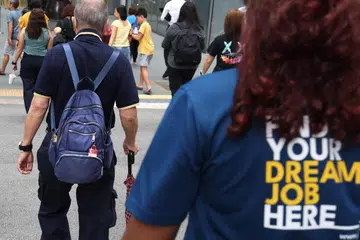
A tripartite workgroup was formed last October to explore ways to uplift the wages and prospects of lower-wage workers.
Existing measures to support lower-wage workers include the enhanced Workfare Income Supplement scheme, the Workfare Skills Support scheme, the Progressive Wage Model and Workcare.
"The government's aspiration is for every sector of the economy to have some form of progressive wages. The tripartite workgroup is making good progress," Mr Heng said in Parliament on Tuesday.
He added that the Ministry of Manpower (MOM) will provide details on the approach for expansion later.
Navigate Asia in
a new global order
Get the insights delivered to your inbox.
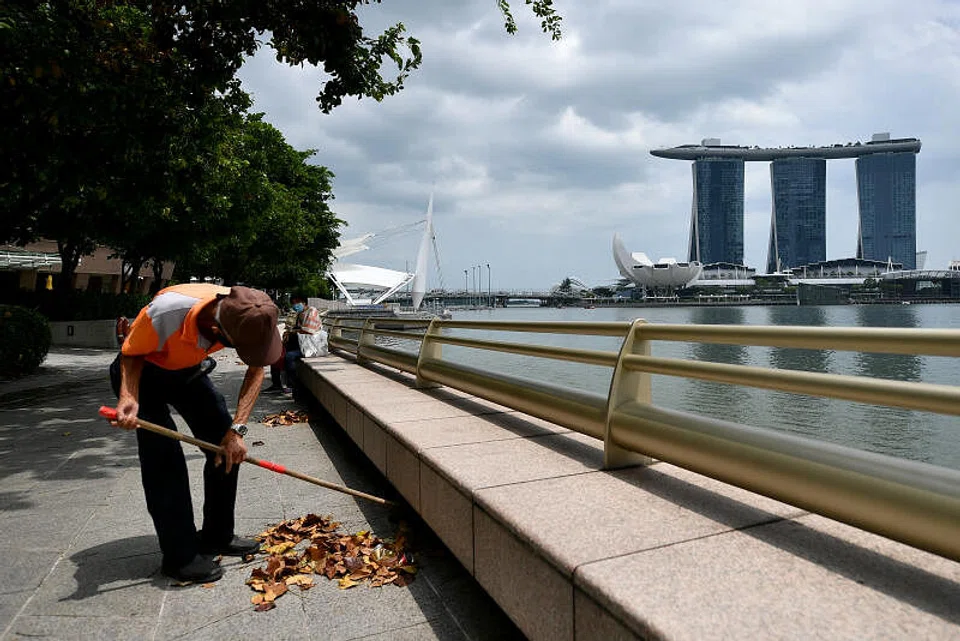
As for older workers, the government has been exploring ways to enable them to continue working if they want to.
It will increase the budget allocation for the Senior Worker Early Adopter Grant and the Part-Time Re-employment Grant by over S$200 million. MOM will provide more details later.
This is to encourage companies to raise their retirement and re-employment ages sooner, Mr Heng said.
Both grants are key components of the Senior Worker Support Package, which was introduced in February 2020 to help businesses adjust to raised retirement and reemployment ages.
Prime Minister Lee Hsien Loong had announced in 2019 that, in 2022, the retirement age will increase to 63 while the re-employment age will be raised to 68. The government and the labour movement are effecting this change earlier, in 2021.
Meanwhile, the Community Link or ComLink initiative will be expanded "significantly" to a nationwide programme to eventually cover 14,000 families with children, over the next two years.
ComLink was introduced in 2019 to help lower-income families with children who are staying in rental housing.
The Minister for Social and Family Development will provide details of ComLink's expansion at the Committee of Supply.
As for children with special needs, the government will look into piloting an Inclusive Support Programme.
This pilot will integrate the provision of early intervention and early childhood services for children who require up to medium levels of early intervention support.
"Children under seven with developmental needs can benefit from a differentiated approach to help them learn better," Mr Heng said.
For self-employed persons, the government will continue to study ways to enhance their job security and strengthen their retirement adequacy. It is working with unions and agencies on these efforts, Mr Heng added.
Ensuring equal opportunities for all and supporting the needy and vulnerable segments of society are integral to strengthening Singapore's social compact, he noted.
The government will continue to identify and target groups that may need further support, including emerging groups of workers in more vulnerable areas.
Decoding Asia newsletter: your guide to navigating Asia in a new global order. Sign up here to get Decoding Asia newsletter. Delivered to your inbox. Free.
Copyright SPH Media. All rights reserved.