Take a holistic view of Budget support to stay competitive: business leaders
It means having clear goals in developing new capabilities, and recognising the training that goes with this.

FIRMS in Singapore should take a holistic view in applying for and implementing the support schemes in the latest Budget, to truly make use of them to stay competitive throughout the pandemic.
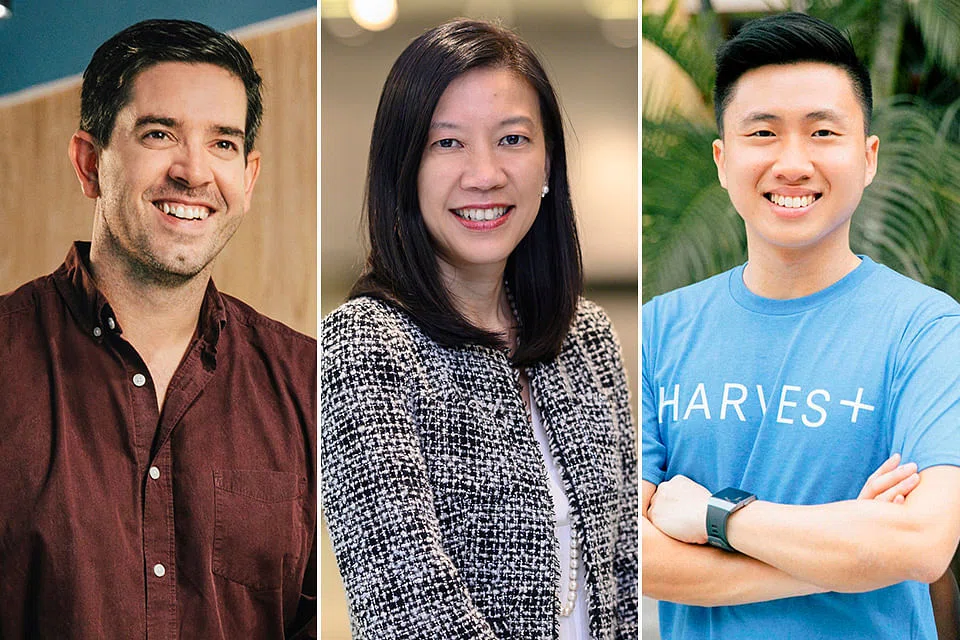
That means being clear about the business objectives and goals in developing new capabilities, as well as recognising the job redesign and training that may need to go with it, said business leaders at a virtual panel hosted by accounting software firm Xero on Feb 25 with support from the Singapore Business Federation.
In this year's Budget, the government has devoted more to helping businesses adapt to structural changes brought about by the pandemic, such as by continuing to co-fund businesses' adoption of digital solutions and technology.
However, Thomas Po, co-founder of Japanese produce retailer Zairyo, noted that it is important to have the right mindset first, and approach to implementation subsequently. "Knowing your objective and the purpose of your business is essential," he said.
Beyond that, aside from simply adopting digital solutions and technology, business owners should also make sure that the solutions will integrate with other systems and processes within the company. "If not, the technology will end up a white elephant," Mr Po added.
Agreeing, Dilys Boey, assistant chief executive officer at Enterprise Singapore, added that business owners may need to redesign jobs around the digital solutions or train workers to embrace them.
Hence, "we need to see the government support quite holistically, where it's not just about putting the technology in place, but where implementation and training are also very important", Ms Boey said.
That's because workers' skills and knowledge may have yet to catch up with the technology being put in place.
Kevin Fitzgerald, Asia managing director at Xero, sees a gap in data analytics talent in Singapore and overseas, for instance. This is evident in clients who have adopted cloud computing tools, but who still need an expert to help them with integrating the software and drawing insights from data.
"The skillset has really turned from being able to build the infrastructure, to setting up the work flow and data flow using the cloud tools, and (analysing the data)," Mr Fitzgerald said.
"When I speak with small and medium-sized enterprises, sometimes they have an IT guy," he noted. "But what I've seen is that person may not have caught up with all of the cloud technology, so they are stuck in a bit of a knowledge gap trying to learn all of it as well."
Hence, new schemes like the chief technology officer or CTO-as-a-Service initiative and Digital Leaders Programme are critical in helping businesses gain a holistic view of transformation.
This is especially as business owners tend to get too caught up in the day-to-day operations to think about transformation, Mr Fitzgerald noted.
The CTO-as-a-Service initiative aims to provide businesses with access to IT consultants who can help them identify and adopt digital solutions. Meanwhile, the Digital Leaders Programme will support promising firms in hiring a core digital team and in developing and implementing their digital transformation roadmaps.
Bryan Zhao, founding partner at Harvest Accounting, suggested that businesses also take steps to document internal processes or create playbooks for staff. Doing so has helped the firm get its new trainees up to speed quickly.
If jobs need to be redesigned, Ms Boey noted that there are elements built into the schemes to encourage this. An example is the support for job redesign under the Productivity Solutions Grant. It subsidises companies' job redesign projects and provides them with access to pre-approved job redesign consultants.
Transformation done right
Overall, digital transformation, implemented right, can help firms stay competitive, the business owners said.
For instance, one of Harvest Accounting's clients, a group in the real estate industry, shifted from a relatively manual way of bookkeeping to a cloud-based system just before the pandemic emerged.
As a result, the client was able to operate with minimal disruption during the lockdown in Singapore last year, and was able to navi-gate the crisis with real-time financial data on hand, Mr Zhao shared.
Zairyo, meanwhile, tapped grants under the Enterprise Grow and Enterprise Transform packages announced in the Budget last February. Those helped Zairyo to improve its website and inventory management system, among other things.
To navigate the schemes and figure out which is most relevant, businesses can refer to government sites like the Business Grants Portal, or approach trade associations and chambers, the panellists suggested.
"When we started the business, there wasn't much information online. We had to do a lot of searching online and figure things out ourselves," said Mr Po. "But now, the government has created very relevant websites. The SME Go Digital, for example, is perfect, everything is well organised."
It can also be useful to find out more about the available schemes from service providers, Mr Po added.
Ms Boey also said that the government works to make sure that there are business advisers within trade associations and chambers or SME Centres.
"They can work with you to identify the right solutions, after which we can more easily figure out which programmes can support you best, be it in terms of finances or access to the right partners," she added.
Talking points
Staying competitive
"If anything, I hope we all recognise that we're a small nation, we're really vulnerable and quite dependent on international markets, tourists and being connected to the rest of the world. The crisis has shown that it doesn't matter whether we're sitting in Ang Mo Kio or Arizona, business and work can still be done. That in itself creates a lot of vulnerability for Singapore businesses. So that's where we really need to take this opportunity to embrace the right tools, to capture the opportunities." Dilys Boey, assistant chief executive officer at Enterprise Singapore
On hiring and critical skills
"This year, we're looking forward to taking advantage of the continued Jobs Growth Incentive to hire more Singaporeans, including mature workers. I believe the scheme will provide small and medium-sized enterprises (SMEs) with much more confidence in their cash flow. SMEs may want to consider hiring ahead of time, so that they have a runway to invest in training or reskilling workers, which will help them better position themselves for recovery." Bryan Zhao, founding partner at Harvest Accounting
"As an early mover in digitalising the shopping experience, I think there are two crucial skillsets required. The first is data analytics. For example, we have been able to better understand our audience and consumers' behaviour and buying patterns... The second is social media management. It's evident that businesses need to boost their efforts in social media as consumers spend more time on social media. It helps to increase brand recall and sales conversions. At the end of the day, the Internet is really the medium for reaching out to customers, and it can help you connect more deeply with your customers." Thomas Po, co-founder of Zairyo
Cash flow is king
"People have come to me to ask about cash flow and working capital since 20 years ago, when I was working as an accountant, and that hasn't changed. In some ways, it frustrates me that we haven't fixed it for SMEs at a huge scale... But now that I'm living in Singapore, I think the benefits that the government provides SMEs are brilliant. Each of the grants we've seen over the last couple of years has ultimately benefited SMEs by giving them an injection of capital, which is something that any SME would want, to maintain or improve the business." Kevin Fitzgerald, Asia managing director at Xero
Embracing innovation
"In talking about emerging stronger, it's also quite imperative that we continue to keep up this spirit of entrepreneurship... We have various efforts, including the Startup SG programme, where startups have benefited from mentorship and incubation opportunities, in addition to funding support. Programmes like the open innovation calls have also been pretty important in allowing startups to access partners with whom they can testbed some of their solutions. For the more mature startups, we continue to expand the Global Innovation Alliance network. It allows our startups to access partners in cities or markets they want to expand to." Dilys Boey, assistant chief executive officer at Enterprise Singapore