Singapore companies look to Asean to pick up slack from trade war: HSBC
Singapore
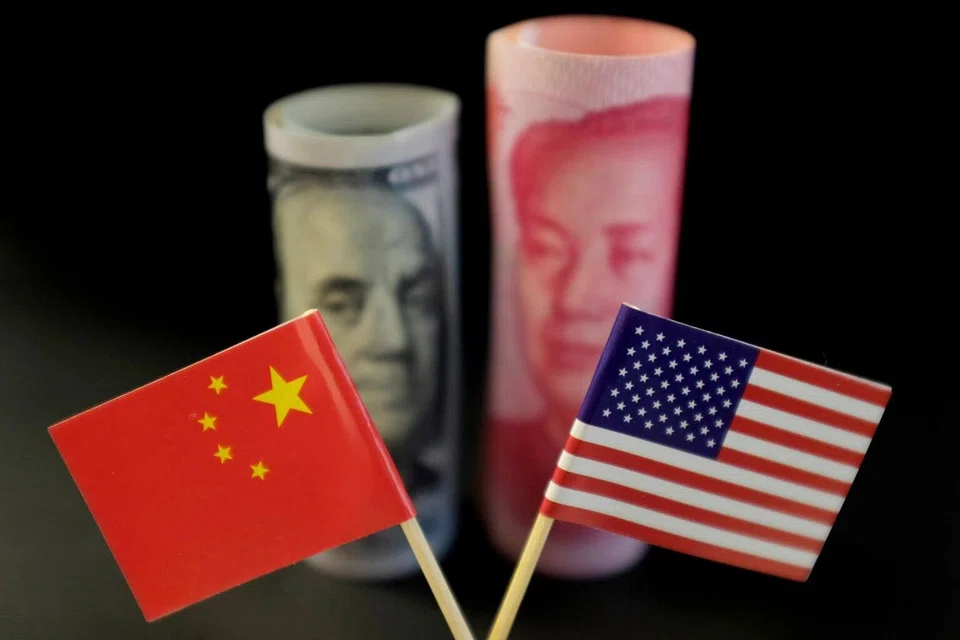
THE United States-China trade conflict has dominated discourse for a year now, but Singapore businesses are not letting it get in the way of their future plans, even as the global growth outlook appears increasingly gloomy.
A survey by HSBC found that even though the trade war is still a concern, local companies are now looking to intra-Asean business activity to cushion themselves from the effects, with the majority expecting to grow in the next one to two years.
The top threat pinpointed by 33 per cent of Singapore firms is, in fact, competition from new competitors. This was followed by uncertain or declining customer demand and protectionism (which takes into account trade tensions), which came in at a joint 20 per cent.
Alan Turner, head of Commercial Banking, HSBC Singapore, told The Business Times: "It may come as a surprise that protectionism is not higher on the list, especially given Singapore's trade-dependent economy."
"Yet, this reflects the growing belief that intra-regional business activity will absorb or shield some of the slack created by slowing and more turbulent markets elsewhere."
Some 78 per cent of companies are expecting to grow in the next one to two years, with 35 per cent of businesses becoming more optimistic about growth in the last 12 months.
The survey polled 200 Singapore companies with at least US$5 million in turnover in May 2019, right in the throes of the ongoing US-China trade war.
But Mr Turner was not surprised with the relatively positive outlook of local businesses.
"As the saying goes, the show must go on," he noted. "No matter what the economic or trade environment, our clients have businesses to run. Their minds are set on the future and the opportunities are there for the taking."
He cited trade liberalisation across South-east Asia, as well as mega trends such as the upgrading of regional infrastructure through China's Belt and Road initiative as "catalysts for growth".
It is not just larger corporates that could stand to gain - small and medium-sized enterprises (SMEs) are also taking things into their own hands, Mr Turner observed.
Instead of seeing business sentiment dive among the smaller businesses, he noted that SMEs are taking a "hands-on" approach to manage uncertainty with many looking to expand abroad, especially in Asean.
"While keeping a close eye on trade and economic developments, SMEs are continuing their hunt for new opportunities in Asean, in particular exploring new supply chain routes and manufacturing centres," he said.
But even as Singapore companies turn to Asean for expansion, the survey also found several pain points that they face in their quest for growth.
The skills shortage was identified as the key barrier to innovation by 36 per cent of local businesses - much higher than the global average of 28 per cent.
Among the new skills needed in the Singapore workforce are cybersecurity, innovation, and tech knowledge and skills in business technologies, according to the poll.
Mr Turner pointed out that while Singapore has gone to great lengths to position itself as an innovation and tech hub for the region, its limited population size will be a challenge.
"Meeting the skills gaps will need to come from either transferring its current working population towards some of these industries or importing the skills from abroad," he said.
There has been "encouraging progress" in the former, such as the Professional Conversion Programmes being extended to include blockchain, he felt.
But Singapore businesses must also do their part.
Mr Turner added: "While Singapore continues to grapple with how to better equip its workers to compete in a technologically advancing and increasingly competitive environment, it will be up to the decision-makers to allocate investments in their people to ensure their businesses are made for the future."