

Singapore employment grows by 64,400 in Q2 on return of non-resident workers
 Add BT as a preferred source
Tessa Oh
DeeperDive is a beta AI feature. Refer to full articles for the facts.
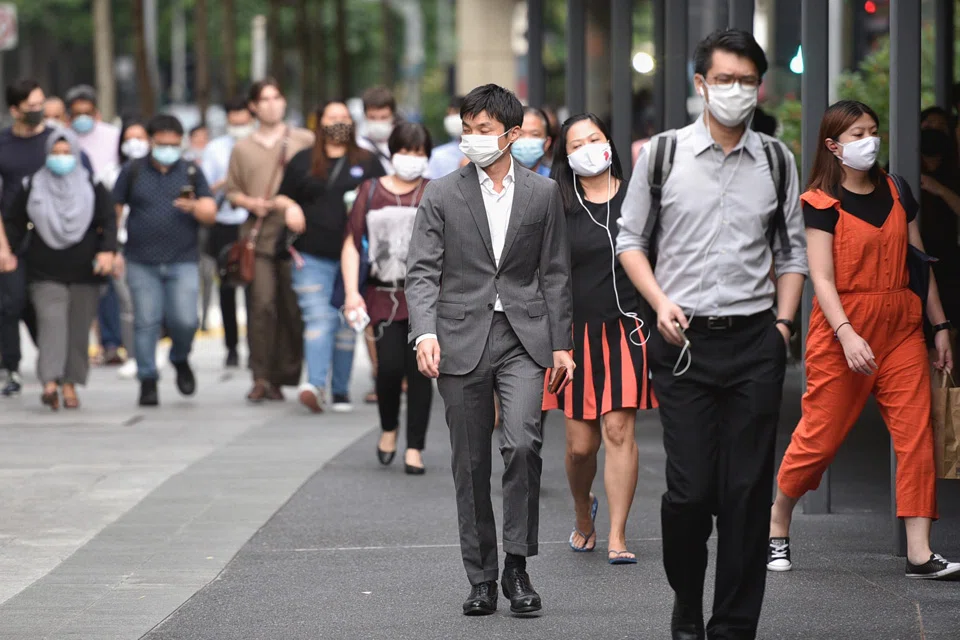
SINGAPORE’S employment levels recovered close to that seen before the pandemic in Q2, with non-resident employment rebounding strongly due to the relaxation of border restrictions, according to the latest data from Ministry of Manpower (MOM).
Total employment grew by 64,400 or 1.9 per cent on the quarter before, excluding migrant domestic workers, said MOM in a preliminary report on Friday (Jul 29). Employment levels grew at a faster pace this quarter than in Q1, where it grew by 42,000 or 1.2 per cent, the ministry noted.
Resident employment rose particularly in growth sectors such as information and communications; professional services; and financial services. But MOM said the overall increase in employment was in large part due to the return of non-resident workers, mainly in construction and manufacturing: “With the significant relaxation of border controls since April this year, employers in such sectors have been hiring to backfill positions and meet rising demand.”
Even so, non-resident employment is still 10 per cent shy of pre-pandemic levels, said Manpower Minister Tan See Leng during a press briefing on the latest report.
“I appreciate that some businesses are finding it challenging to hire staff amidst the tight labour market. We expect the tightness in the coming months to ease, as our non-resident employment numbers continue to recover,” said Dr Tan.
MOM said in its report it expects non-resident employment to continue growing at a “robust pace” as it catches up to pre-Covid levels.
Navigate Asia in
a new global order
Get the insights delivered to your inbox.
Resident employment, on the other hand, will likely see “subdued growth” given the low unemployment rates for this group. It is expected to be at about 4 per cent above 2019 levels.
Barring any unexpected shocks, the labour market recovery is likely to continue into the second half of the year, said the minister. “However, the uncertainties in the global economy may weigh on the pace of our recovery. Demand may be dampened by global headwinds such as strong inflationary pressures, the ongoing Ukraine-Russia conflict, and the resurgence of Covid-19 in major economies such as China”.
MOM said unemployment rates here have been trending downwards since the peak in October 2020, and have held steady after reaching pre-pandemic levels in February. Overall unemployment was at 2.1 per cent in June; resident unemployment, 2.9 per cent; and citizen unemployment, 3.1 per cent.


The number of retrenchments remained low at 1,000 in Q2, said MOM. “As with recent quarters, business reorganisation or restructuring remained the top reason for layoffs.”
Hiring is expected to remain strong in the coming months, as the proportion of companies planning to increase their workforce in the next 3 months rose to 69 per cent in June, from 68 per cent in March.
But wage pressures could ease, as just 28 per cent of firms were thinking of raising the wages of their employees in June, compared to 31 per cent in March.
Asked whether the recent layoffs by tech companies overseas will affect businesses here, Dr Tan replied the government “sees this as an opportunity for us to leverage this talent”.
He added that the sectors that Singapore is focused on — such as financial services, data analytics, healthcare and machine learning — are in sectors which are different from where the layoffs have taken place. “We are still in that growth state and I will say that we are still optimistic about the sectors that we are talking about”.
Decoding Asia newsletter: your guide to navigating Asia in a new global order. Sign up here to get Decoding Asia newsletter. Delivered to your inbox. Free.
Copyright SPH Media. All rights reserved.
TRENDING NOW

Vietnam formalises new state leadership, redefining ‘four pillars’ power balance

‘Largest Singapore commercial S-Reit proxy’: analysts say buy CICT shares after Paragon acquisition

From 1MDB to ‘corporate mafia’: Is Malaysia facing a new governance test?

Why where you park your joint venture matters: Lessons from a US$689 million shareholder dispute

