Singapore factory output falls by 8.4% in July
 Add BT as a preferred source
Annabeth Leow
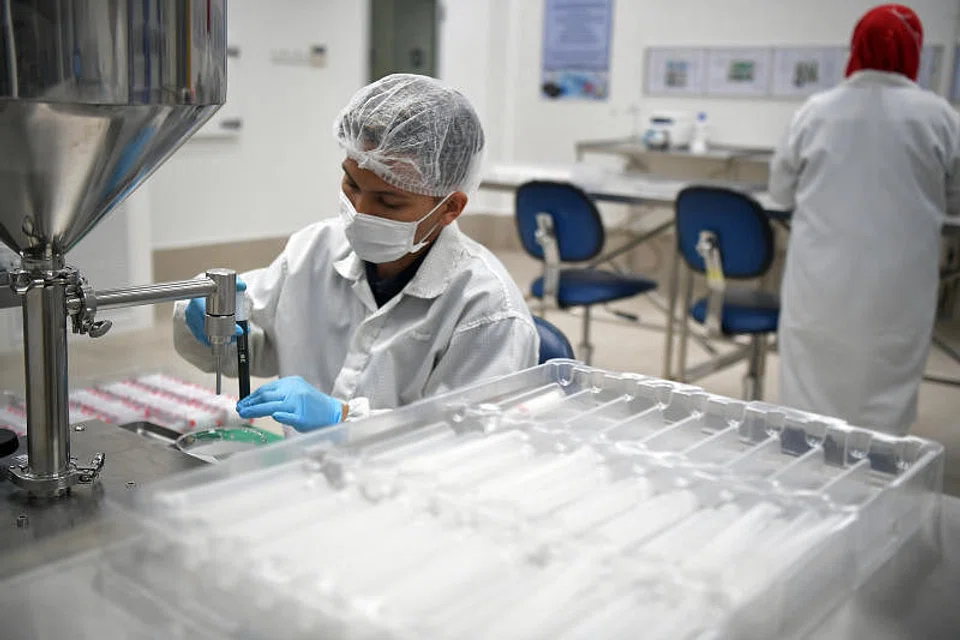
SINGAPORE factory output fell again in July, with a worse-than-expected performance dragged down in part by the return of electronics production to negative territory.
Industrial production lost 8.4 per cent compared with the same period the year before, with the pace of decline increasing from the 6.5 per cent fall in June. The latest drop also came short of private-sector analysts' median estimate of a 7 per cent drop in a Bloomberg poll.
Meanwhile, excluding the volatile biomedical cluster, manufacturing was down by 5.2 per cent on the year before, according to Economic Development Board figures on Wednesday.
"The sharper decline mainly reflected an unfavourable base effect," Barclays Bank economist Brian Tan said in a note, even as he observed that "pharmaceuticals production no longer appears to be benefiting from the Covid-19 outbreak".
Biomedical manufacturing was down by 24.8 per cent in July, compared with the 30.1 per cent fall in June, on lower output of both medical technology and pharmaceuticals.
But the drop in pharmaceutical output "doesn't necessarily signal a weakness in the sector, as it tends to be quite volatile", HSBC economist Liu Yun said.
"We think the pharma production should continue to expand in the coming months, given resilient global demand for the sector and ongoing investment in Singapore."
Similarly, Barnabas Gan, economist at United Overseas Bank, remarked that the fall in biomedical production could have come on factors such as growing inventory, and "may be transient" as pharmaceutical export growth has remained strong.
To be sure, making more semiconductor equipment lifted precision engineering's machinery and systems segment and offset lower output of optical products and dies, moulds, tools, jigs and fixtures. This drove the cluster to grow 9.3 per cent in July, against 10.2 per cent in the month before.
But other manufacturing clusters stood in the red - including electronics manufacturing, which had earlier been a bright spot for the factory sector.
Electronics lost 1.4 per cent year on year in July - reversing the previous month's 17.8 per cent expansion - as growth slowed in the semiconductor segment while the infocomm and consumer electronics segment as well as the computers and data storage segments continued to post declines.
Noting that electronics had hit a peak in the year-ago period, which made for a high base effect, Maybank Kim Eng economists Chua Hak Bin and Lee Ju Ye remained positive on the demand outlook for semiconductor and information technology.
"While the pharma rally may be fading, we expect electronics and precision engineering to continue to support manufacturing for the rest of 2020," they wrote.
Yet Dr Chua and Ms Lee also warned: "One emerging downside risk is the intensifying US-China tech war, with the US announcing new curbs on Huawei's access to US tech, which could disrupt global supply chains. Another risk is a second Covid-19 wave, which may force some countries to revert to targeted or localised lockdowns."
Indeed, the novel coronavirus pandemic was also partly to blame for factories' performance, as the transport engineering cluster's output shrank by 39.8 per cent in July on a broad-based slump, extending the previous month's 37.4 per cent drop.
With the world's passenger airline fleets largely grounded, aircraft repair and maintenance work volumes stayed low, while foreign worker movement controls, taken to curb the spread of the virus, also affected the marine and offshore engineering segment as shipyard activity cooled sharply.
Meanwhile, chemicals output was down by 2.4 per cent, against a decline of 11.7 per cent in June, despite a rebound in petrochemical production growth.
That's as the petroleum and specialty and other chemicals segments all contracted, amid plant maintenance shutdowns and lower export orders from the global Covid-19 outbreak.
General manufacturing also saw production falling across the board. The cluster's output was down by 22.2 per cent in July - widening from the 13.1 per cent drop in June - on lower production of items such as milk powder and beverage products, and construction-related goods.
On a seasonally adjusted, monthly basis, Singapore's industrial production rose by 1.6 per cent in July, or by 10 per cent when biomedical manufacturing output was excluded.
Decoding Asia newsletter: your guide to navigating Asia in a new global order. Sign up here to get Decoding Asia newsletter. Delivered to your inbox. Free.
Copyright SPH Media. All rights reserved.