

Singapore food manufacturers scramble to comply with fresh rules
Already in rough waters, the industry now faces an extended circuit breaker with reduced demand, supply-chain problems and cash flow issues
Singapore
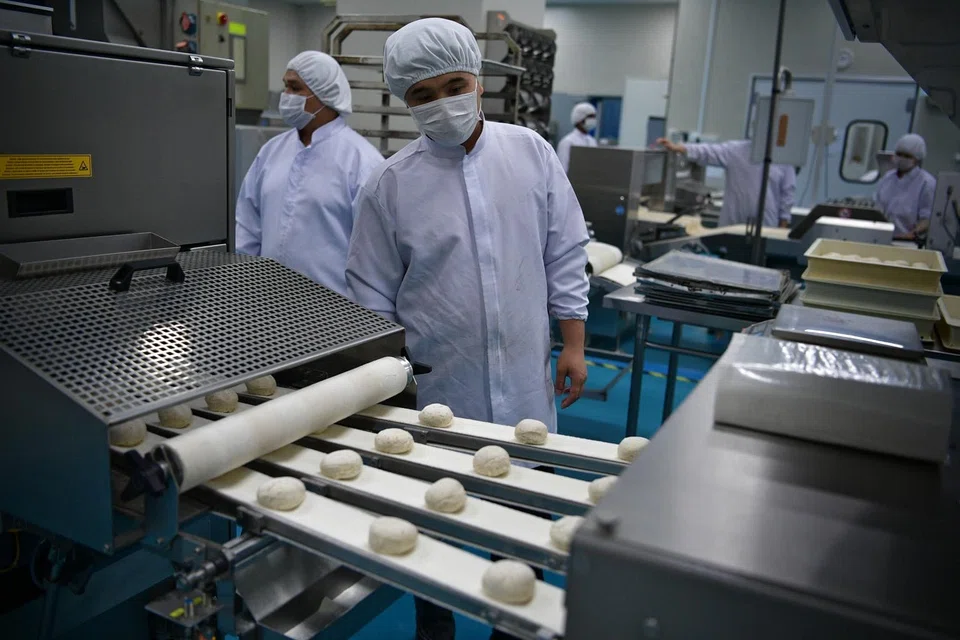
SINGAPORE'S food manufacturers may be facing a rare test in the form of the Covid-19 crisis, as extensive shutdowns, supply chain and cash flow issues assail them from various quarters.
Some food manufacturers, already trying to cope with the situation, were forced to halt operations within hours as new measures were announced on Tuesday night, including the tightening of the list of essential services that can still operate, and the extending of the "circuit-breaker" period by another month till June 1.
For instance, those that produce chocolate and chocolate products or chips, crackers and ice-cream are no longer allowed to operate.
Lau Wee Cheng, director at Annabella Patisserie Trading, said: "We are now working with customers on refunds or changes of delivery dates for the next four weeks."
The company had turned to retailing its macarons and pastries online after facing a 90 per cent drop in demand from its primary clientele of hotels, restaurants and caterers due to Covid-19 - and it had been quite successful then too, pulling in nearly 500 orders a day.
But with even that avenue closed off now, it said on Wednesday that it has no choice but to halve its manpower resources and put the rest of its staff on paid leave.
Singapore brand Udders, which makes and exports its own ice cream, has also temporarily closed its manufacturing and retail operations.
Other food manufacturers are affected in different ways. Gavan Sing, the third-generation owner of Lek Lim Nonya Trading, said the business can continue, but cannot produce sweet kueh, which is classified as a confection.
Bak kwa brand Kim Joo Guan posted on Facebook that all its outlets will be closed till further notice, although its delivery service is still available.
Businesses that are allowed to continue operating may have to do so with reduced staff strength, and must now log workers' entries and exits from the workplace.
But even before this, the food manufacturing sector was already grappling with declines in demand from the hospitality and food-services industries, as well as supply chain disruptions arising from the pandemic.
For instance, food manufacturers supplying to the hospitality and food-services industries have seen demand drop by 50 per cent to 80 per cent since the virus broke out around February, said the Singapore Food Manufacturers' Association (SFMA).
The circuit-breaker measures, introduced early this month, then dealt them another blow. With these measures in place, dine-ins were not allowed; F&B establishments could only offer takeaways or deliveries. Some operators saw business drop further as a result, and others decided to shutter.
Jason Lee, managing director of pastry manufacturer and retailer Home's Favourite, has reduced the number of working days, and put some workers on inventory and maintenance tasks instead of production.
Lim Kee Food Manufacturing's business development head Ang Khim Wee said the company has had to cut production. It has also staggered work hours for its employees' safety, meaning productivity is at "an all-time low".
"Last time, we operated about eight to 10 hours a day. Now, it's 12 to 15 hours - and with reduced output," he said.
Food manufacturers that supply food staples such as dried goods or frozen foods to supermarkets did enjoy a temporary surge in demand as households stockpiled their food supplies - but even for these businesses, supply-chain issues may throw a spanner in the works.
In its annual report released this month, Food Empire Holdings said its core businesses have been "largely unaffected" by the outbreak as its products, such as its instant beverages and frozen finger foods, are mainly for home consumption.
But it has said that it may encounter "temporary disruptions" in production and sales as a result of restrictions on business operations and the movement of goods and people in "several countries".
Indeed, lockdowns overseas, coupled with rising protectionist policies, are threatening the supply of food. For instance, Cambodia has banned selected rice exports since April 5 to ensure local food security. Raw ingredients for food and even plastic packaging from Malaysia, which remains under a movement control order, are also coming through very slowly.
And because some food items are highly perishable, food manufacturers are unable to stockpile them or source them from countries that are too far away.
Lek Lim Nonya Trading's Mr Sing, whose business gets its supply of fresh produce such as onions and turnips from Malaysia, said: "We're trying to stock up so that we can continue production, but we can't stock more than a month's worth."
In addition, air and sea freight rates have gone up disproportionately because airlines and shipping companies have cut capacity, adding to import costs, said SFMA president David Tan, who is also the managing director of Par International Holdings, a local wholesaler of consumer staples.
He said SFMA is working with government agencies to identify alternative channels of food supplies.
Meanwhile, food manufacturers' cash flows are being squeezed by a rise in delayed payments from their customers.
The Singapore Commercial Credit Bureau has reported that the proportion of slow payments within the sector has risen to 41.34 per cent in the first quarter of this year. It is a three-year high.
This comes as some struggling F&B operators, including the larger chains, have asked food manufacturers for discounts ranging from 20 per cent to 50 per cent, as well as extended credit terms of up to 90 days.
Some food manufacturers have either acquiesced or compromised out of goodwill. "Everyone is in the same boat," Mr Sing said.
Overall, the virus pandemic therefore seems to be posing a rare test to the food-manufacturing sector, which has been rather resilient over the years - even following previous crises such as Sars in 2003 and the global financial meltdown of 2008.
Based on official records, the value added from food, beverage and tobacco manufacturing in 2004 (the year following the Sars outbreak) was S$1.28 billion, a roughly 21 per cent increase from the preceding year.
In 2009, the year following the global financial crisis, the industry's value-added also went up: It clocked S$2.11 billion, about 24 per cent more than the previous year.
Some food manufacturers have taken to cutting costs such as utilities; others are taking out bank loans to tide them over this period.
But they intend to continue holding on to their workers, and say government support - particularly the enhanced Jobs Support Scheme, foreign worker levy waiver and rebate - will help, although they will not fully mitigate the impact.
SFMA's Mr Tan said: "We are hoping that the government can issue the relief funds as soon as possible to ensure that manufacturers can keep their businesses going."
Some are thinking of other ways to drum up sales in the meantime. Lim Kee is reallocating resources and re-training some staff to fulfil orders for the food retail segment (supermarkets, mainly), where demand has gone up two- to three-fold "overnight" following the shutdown.
Lek Lim Nonya wants to speed up the commercialisation of its frozen kueh. Home's Favourite intends to develop new products by year-end; some enquiries are still trickling in.
Similarly, Annabella Patisserie said it is preparing to emerge stronger from the crisis. "We have allocated more resources to R&D for various pastries and products, and we will be ready to offer these to existing clients post-crisis."
TRENDING NOW

Vietnam’s northern provinces, not Hanoi or Ho Chi Minh City, are powering near 10% GDP growth

VietJet hit with global asset freeze in FitzWalter dispute
Gridlock or growth? The Asean Power Grid faces a critical window of opportunity

LNG, stronger regional power links key to Asean’s energy resilience: Shell

