

Singapore-HK bubble has limited impact, but is worth pursuing: analysts

Singapore
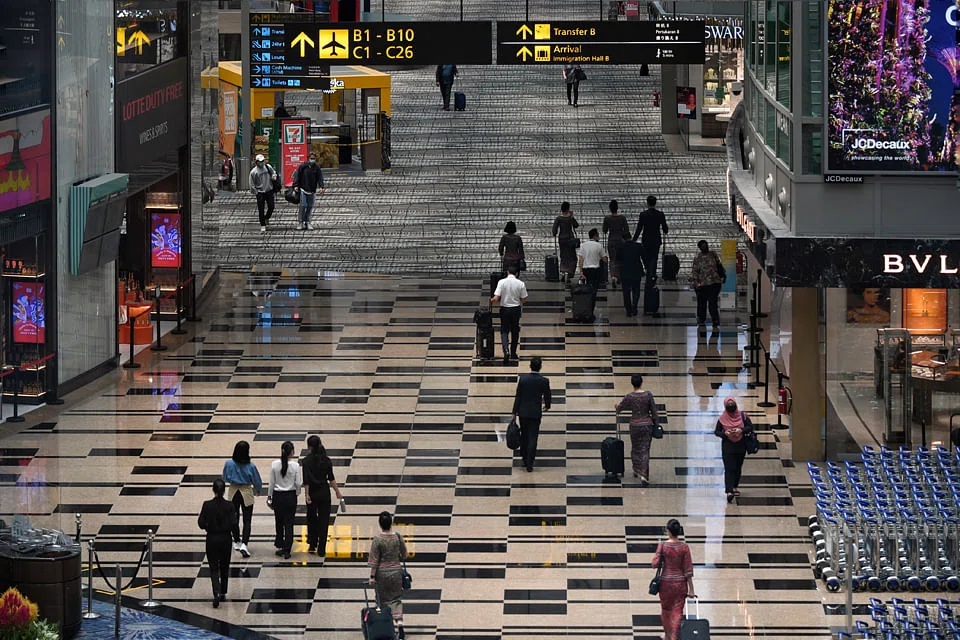
THE long-awaited "air travel bubble" (ATB) between Singapore and Hong Kong will have limited impact on the aviation industry if it can even be pulled off, say analysts. But it is a symbolic step on the road to normalcy.
For one, the target launch date of May 26 depends on both cities keeping a tight lid on Covid-19 in the month ahead. Even if the launch takes off as planned, a fresh outbreak could lead to a suspension - as with how New Zealand partially paused its ATB with Australia on April 23, just days after it began on April 18.
For another, the ATB will begin cautiously, with one daily flight in each direction, capped at 200 passengers per flight. (From June 10, this could be increased to two daily flights.) Joshua Ng, director at Alton Aviation Consultancy, estimates a single daily flight would only gross Singapore Airlines and Cathay Pacific between S$5 million and S$10 million in monthly passenger revenues.
Nor is the move expected to give much of a bump to the hotel and tourism industries. "Passengers are likely to consist mainly of the VFR (visiting friends and relatives) segment, which do not typically benefit hotels or tourism operators," Brendan Sobie, founder of aviation consultancy Sobie Aviation, told The Business Times (BT).
Mr Sobie pointed out that bookings under the initial ATB - planned for November 2020, but postponed due to a Covid-19 flare-up in Hong Kong - were mainly of the VFR segment. He expects VFR bookings to once more dominate, particularly in the initial phase.
"If the bubble can be maintained and expanded - and if other ATBs can be established - there should be more leisure travel, kickstarting the start of recovery for tourism as well as further helping airlines recover," said Mr Sobie. "However, a broader reopening of borders is still needed to facilitate a more meaningful recovery."
While individual bubbles may have limited impact, the analysts agreed they are still worth pursuing. "The importance of an ATB is not necessarily the economic contribution per se, but as an interim and symbolic step as the world looks forward to a return to normalcy," said Alton's Mr Ng.
"There could be additional travel bubbles opening up with key trading partners and popular leisure destinations for Singaporeans, such as Australia, New Zealand and Taiwan. Additional travel bubbles for vaccinated travellers could be contemplated, and may also be easier to implement, with a broader range of countries given the vaccination progress in Europe and the USA."
Said Mr Sobie: "While each bubble is not that significant given the typical quotas on flights and number of passengers, if there are several, we at least would see a bit of pick-up in international traffic, providing a bit of good news until the broader reopening can start."
Ultimately, the long-term goal is for ATBs to become irrelevant through the elimination of Covid-19 border controls. "With vaccination progress, Alton expects that countries may bypass ATBs and move ahead to relax border restrictions once a sizeable portion of the resident population is vaccinated," said Mr Ng. "ATBs merely move forward that timeline by up to 12 months."
On Monday, Singapore and Hong Kong announced the target launch date of May 26 for the ATB. From that date, eligible travellers on designated flights between the two cities will not have to serve quarantine or stay-home notices (SHNs) upon arrival. They will be tested for Covid-19 before departing and upon arrival.
To qualify, travellers must have remained in either Singapore or Hong Kong in the last 14 days prior to departure. This excludes any time spent in quarantine, or serving an SHN arising from one's last overseas trip.
Travellers from Singapore must install Hong Kong's LeaveHomeSafe app on their mobile devices before leaving. Hong Kong residents also need to be fully vaccinated against Covid-19 before leaving, with exceptions made for children and other categories - a condition Singapore has not imposed for its own residents.
The launch on May 26 will only proceed if the Covid-19 situation continues to be "steady and under control in both cities", said Singapore's Ministry of Transport (MOT) in a press statement. The bubble will also be suspended if the seven-day moving average of unlinked cases in either city exceeds five.
"You can't say for sure that everything will be smooth sailing," Transport Minister Ong Ye Kung told reporters on Monday. "Even New Zealand, Australia - at the point of launching the bubble - I think both governments also told their populations that ups and downs are to be expected."
Mr Ong noted that while there were other ATBs already in existence, the Singapore-Hong Kong bubble was still "quite unique" in his view, as it would link two cities which are both aviation and financial services hubs. "To get this bubble up successfully, I think, will have a significant signalling effect to the rest of the world."
READ MORE:
TRENDING NOW

From legacy to launch: Francis Yeoh and Yeoh Pei Xien on family unity and YTL’s next‑gen ventures

Could Japan trigger the next global financial crisis?
Wealthy Indonesians snap up government bonds as yields near 8%: OCBC

‘You buy more picks and shovels because you keep hitting gold’: Why AI spending needs to see results

