

Singapore must 'step up' to global rivalry for talent: Chan Chun Sing
He said that while tech sector could gain from a fast-track visa scheme, all sectors that lack skills should get help
Janice Heng
Singapore
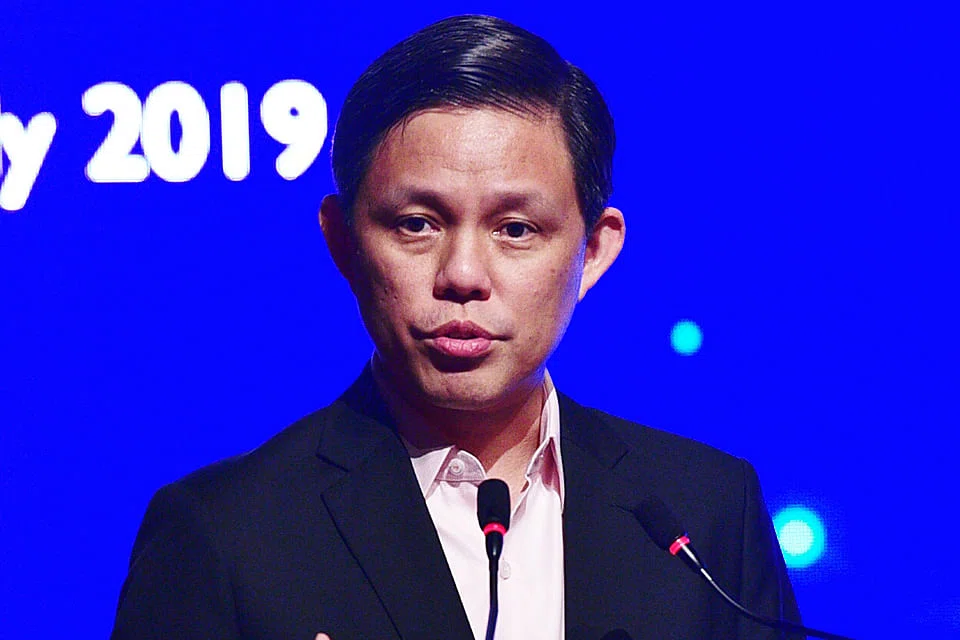
SINGAPORE must do more to attract global talent, in the face of other markets' moves such as fast-track visa schemes, Minister for Trade and Industry Chan Chun Sing said on Monday at the annual A*Star scholarship awards ceremony.
Noting Hong Kong's Technology Talent Admission Scheme and France's French Tech Visa, revamped to make it easier for startups to get skilled manpower, he said: "We will need to step up to the competition."
Strong, dynamic, fast-growing companies, local and foreign, must be assured of access to highly skilled global talent, both Singaporean and non-Singaporean, he said. When such companies set up and grow here, they create more opportunities for Singaporean businesses and workers.
Responding to the remarks, Singapore International Chamber of Commerce chief executive Victor Mills said: "We have to review our employment pass processes and make them more flexible in order to attract and retain the talent and skills we need to complement our own local talent."
If an experienced tech entrepreneur wanted to set up a business here as well as teach at a university and mentor startups, for example, there is currently no employment pass to facilitate this sort of gig work, he said.
"I see the tech sector as the main target for a fast-track visa scheme but we should focus on all sectors where we lack the relevant knowledge and skills," he added.
With Singapore's tech sector facing a major talent shortage, a fast-track visa scheme "can help the industry react to emerging tech trends much more quickly", said SGTech chairman Saw Ken Wye.
Assessment criteria should be "transparent and merit-based" to ensure a high quality of candidates, he added, while soft aspects such as supporting dependents and facilitating the transition process should also be taken into consideration.
The Singapore Business Federation (SBF) would fully support a fast-track visa programme for global talent, said its chief executive Ho Meng Kit. "It will provide certainty to employers who plan to locate their new activities in Singapore, where the local industry does not have the job-ready talent."
The SBF also urges firms to continue to focus on building internal capabilities and nurturing a strong local talent pipeline, he added.
Welcoming global talent is just one of five prongs in Singapore's talent strategy, as laid out by Mr Chan.
Having the right talent mix is important for Singapore in facing three trends, said the minister: an increasingly fragmented world, the rise of intellectual property as a competitive advantage, and the need for cross-discipline, cross-cultural teams.
To meet these trends, Singapore must strengthen its fundamentals, continue restructuring and seize new opportunities - with technology and talent required for all this, he added.
Most important is to cultivate and grow the Singaporean talent pool, he said. Two prongs of Singapore's talent strategy are to "lift the average" through training and upskilling workers, and "stretch the top" through schemes such as A*Star scholarships, which help local talent excel.
Another is to be well-connected globally, through programmes such as the Global Innovation Alliance which links Singapore with innovation ecosystems and markets abroad.
Finally, Singapore will continue to strengthen itself as a regional safe harbour for talent, attracting overseas Singaporeans back and welcoming talent from Asean.
At Monday's event, almost 100 successful applicants were awarded scholarships. These included 11 recipients of the A*Star Computing and Information Science Scholarship, who will pursue PhDs in artificial intelligence (AI) and computer science.
"This is really to meet the demands of the industry," said A*Star Graduate Academy executive director Lisa Ng. While AI is a hot topic now, scholars are encouraged to look at the "big picture" of where it could be applied, from biology to mathematics and engineering, she said.
To date, about 1,600 Singaporeans have taken up various A*Star scholarships to pursue PhDs.
TRENDING NOW

Grab CEO’s wife Chloe Tong on life with Anthony Tan and finding her purpose

Shopping spree: Why investors are after Singapore retail assets

Hao Mart owner resisting OG’s mortgage foreclosure on his Tanglin GCB
Digital payment tokens, insurance policies could become tax-exempted for Singapore family offices

