Singapore retail sales up 6.2% in March, improving from Feb but below expectations
 Add BT as a preferred source
DeeperDive is a beta AI feature. Refer to full articles for the facts.
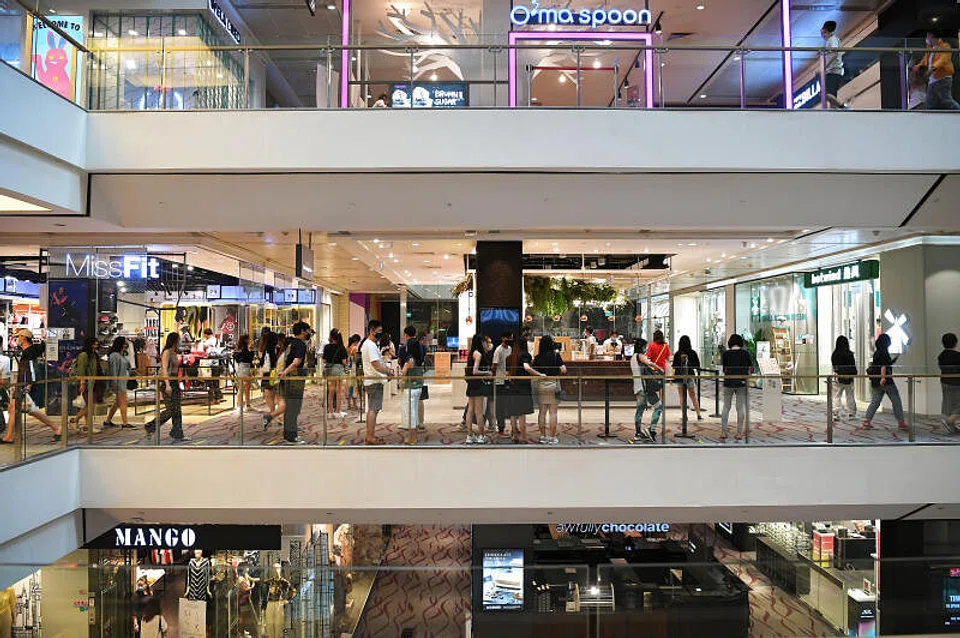
SINGAPORE retail sales rose 6.2 per cent year on year in March, extending February's rise though falling short of economists' expectations of 7.1 per cent, Singapore Department of Statistics (SingStat) figures showed on Wednesday.
March's figures followed growth of 5.3 per cent in February and -6.1 per cent in January, with the differing dates of the Chinese New Year festive season accounting for some of the fluctuation.
The overall sales volume was S$3.5 billion, of which 11.8 per cent was from online sales.
Excluding motor vehicles - which saw a 15.6 per cent growth in sales - retail sales rose 4.4 per cent, slowing from February's 7.8 per cent growth.
On a month-on-month seasonally adjusted basis, retail sales rose 3 per cent, or 2.2 per cent excluding motor vehicles.
March's year-on-year growth figures were shaped by the base conditions a year ago, when Covid-19 border restrictions started to kick in.
Navigate Asia in
a new global order
Get the insights delivered to your inbox.
In its statement, SingStat noted larger sales growth in discretionary categories such as watches and jewellery (60.2 per cent) and wearing apparel and footwear (35.6 per cent), "due to the lower base in March 2020 when there were low tourism receipts arising from tightened border restrictions".
Other categories that saw growth were recreational goods (28.3 per cent), computer and telecommunications equipment (19.9 per cent) and petrol service stations (18.6 per cent).
Seeing smaller rises were optical goods and books (2.9 per cent) and furniture and household equipment (1.8 per cent).
In contrast, sales at supermarkets and hypermarkets fell 14 per cent year on year, "compared to March 2020 when there were higher sales as more people stayed home after safe distancing measures were introduced".
Sales also fell for department stores (-4.2 per cent); food and alcohol (-8.4 per cent); cosmetics, toiletries and medical goods (-13.2 per cent); mini-marts and convenience stores (-6 per cent) and others (-7.1 per cent).
Total food and beverage sales were S$730 million, up 8 per cent year on year, or 4 per cent on a month-on-month seasonally adjusted basis. This was led by 17.9 per cent growth in restaurant sales, attributed to the low base a year ago when safe-distancing measures were introduced.
Also seeing higher sales were fast food outlets (5.5 per cent) and cafes, food courts, and other eating places (5.6 per cent).
But food caterers saw sales fall 25 per cent year on year, as demand for event catering remains low.
Decoding Asia newsletter: your guide to navigating Asia in a new global order. Sign up here to get Decoding Asia newsletter. Delivered to your inbox. Free.
Copyright SPH Media. All rights reserved.