

Singapore tourism sector keeps up domestic market focus in 'twin approach' to recovery

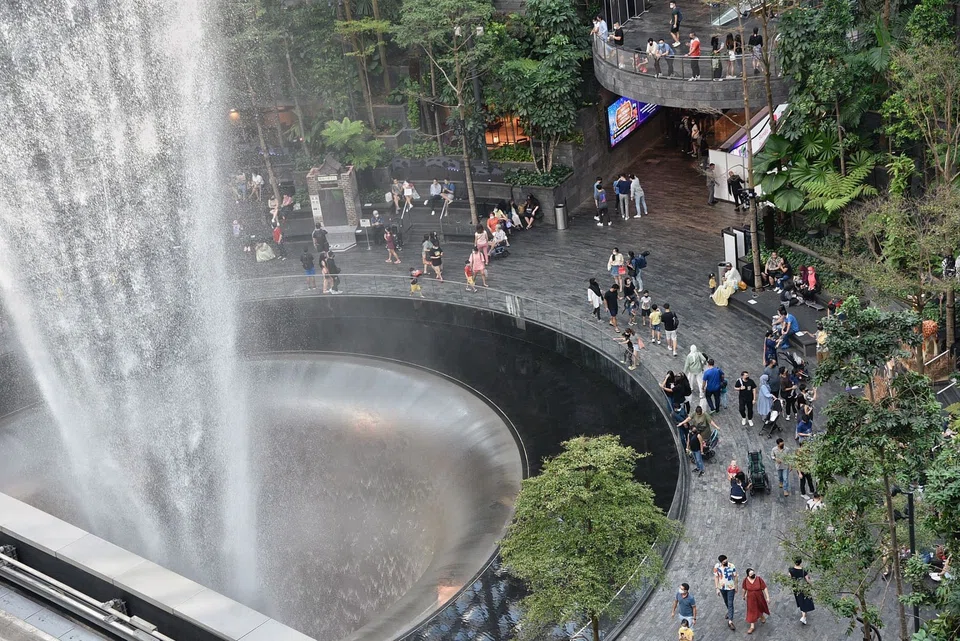
THE Singapore Tourism Board (STB) will continue to encourage domestic tourism, even as policymakers work to win back international visitors, STB chief executive Keith Tan said on Tuesday (Jan 25).
That's as the tourism sector was supported in 2021 by the domestic market, which Tan said goes beyond the SingapoRediscovers Vouchers (SRV) stimulus credit scheme.
But, with domestic demand limited and arrivals not expected to recover fully this year, watchers warned that businesses and workers will remain under pressure.
That's as tourism receipts - that is, spend by foreign travellers - declined to S$1.9 billion in 2021 from S$4.8 billion the year before. Foreign arrivals slumped to 330,000 visitors, from 2.74 million in 2020.
Citing pandemic volatility and market uncertainty, Tan told a briefing he would not give projections about tourism performance in 2022 "because we don't have confidence in the ability to predict".
But Vijay Natarajan, real estate and real estate investment trust analyst at RHB, told The Business Times that visitor arrivals would likely rebound to between 4 million and 6 million in 2022 - which would still be down at least 70 per cent on pre-pandemic levels.
Similarly, Darren Tan, assistant chair of the hotel and hospitality management diploma programme at Republic Polytechnic (RP), suggested that industry recovery to pre-pandemic levels would be a longer-term picture - "by 2024".
As such, the STB CEO Tan said: "We will not let up on domestic tourism, even as we start and step on the accelerator pedal for international tourism. So we will have to do a twin approach this year and hopefully, maybe even next year."
The STB hopes to expand the quarantine-free Vaccinated Travel Lanes (VTLs) that were introduced in September 2021. VTLs are in place with India and Indonesia, which are among Singapore's top 3 source markets, while Juliana Kua, assistant CEO of the STB's international group, said the agency is "extremely confident" that China will remain a key market with its mid- and long-term tourism potential.
But all eyes are on how the tourism industry can weather the time between travel normalisation and the expiry of SRVs in December.
"The domestic market should be viewed with its limited size in mind, and the artificial boost given by the SRV," said RP's Tan. "The boost in demand from the domestic market will not be able to make up the shortfall. Domestic demand is also cyclical."
Nitin Pangarkar, associate professor at the National University of Singapore Business School, added that domestic tourism needs inducements such as vouchers, "and also doesn't involve the associated spending" of international visitors.
On his part, Tan, the STB CEO, noted that "domestic tourism is much more than just the SRV", with the STB also urging tourism business stakeholders "to be attuned to the needs and the interests of locals" in their products and services.
But he acknowledged that the tourism sector in Singapore cannot depend on the domestic market: "That is why we now have, this year, we will have a stronger focus, pivoting back towards international markets and international visitors coming to Singapore."
Observers also raised concerns about the impact of the downturn on the sector's long-term health, especially with a shortage of foreign workers to fill critical service roles.
Luciano Lopez, dean of hospitality management institution Ecole Hotelière de Lausanne's Singapore campus, added that hotels and eateries in other markets have already reported a lack of service staff to cater to the rebound in demand.
"The industry will need to find improved (human resource) models to attract and retain qualified personnel who are not willing to work at minimum wages and overtime anymore," he told The Business Times.
Similarly, Pangarkar remarked: "I expect closures, consolidation. The survivors will have to be leaner and possibly employ more automation... New investments will have to be done more cautiously."
Still, Jeannie Lim, assistant CEO of the STB's policy and planning group, told the press, when asked, that "we have seen more or less the usual churn in the businesses".
Roughly 170 travel agents have left the licensing scheme, compared with 120 to 150 in a normal year, she disclosed, while new hotels have come on stream despite about a dozen closures in the year. The STB cited the Raffles Sentosa Resort & Spa, Citadines Connect City Centre and Pan Pacific Orchard as some upcoming hotel offerings.
Hence, RP's Tan said the tourism industry is taking a longer-term view on Singapore "and the confidence is reflected in the continued opening of new hotels in 2022".
Some watchers who spoke to The Business Times also noted that the government still has longer-term tourism infrastructure commitments in play, such as the Sentosa-Brani redevelopment master plan, the Jurong Lake District integrated tourism project, and the expansion of Singapore's 2 integrated resorts (IRs).
Granted, the IR operators have flagged potential delays from the pandemic, with Kua telling the press that "they're still trying to sort out how long the delays will be and when the exact timeline".
But the STB's Tan added that - even with delays inevitable - ongoing tourism investments are set for delivery from the mid-2020s on, and "will be in time for the full recovery of international travel".
Lopez also noted that the latest visitor arrival and spending figures "merely show the entry numbers of individuals who have managed to make it into Singapore Changi Airport" and do not reflect both demand for transit travel and appetite from markets without VTLs yet.
Added Pangarkar: "Within the constraints of a broader policy, STB has done fine. They can keep pushing domestic tourism until the policies allow international tourism."
TRENDING NOW
Chairman’s role in spotlight with raft of proposed new rules for Singapore boards
Director of PR firm sacked for secretly recording internal meeting loses wrongful dismissal claim
Indonesia stocks suffer worst plunge in nearly 30 years as MSCI proposes standalone status

If Europe goes to war, the fallout will be felt in East Asia

