Singapore union membership bucks sliding global trend
As industries and labour markets change, NTUC recruitment takes on new tack

Janice Heng
Singapore
AS INDUSTRIES and labour markets transform, union membership is falling across the developed world - but in Singapore, the situation appears to be going in the opposite direction.
Among first-world economies, unionisation rates in the United Kingdom have fallen from a peak of 55 per cent in 1979 to 23.5 per cent in 2016.
In the US, which celebrates Labour Day in September, just one in 10 workers are unionised, a plunge from one in five in the 1980s.
Against this backdrop of decline, Singapore provides a sharp contrast as its unions take stock on this Labour Day.
The resident unionisation rate has risen from 20 per cent in 2002 to 28 per cent in 2015 - the last year for which figures were available. As of August 2015, there are about 888,000 members under the National Trades Union Congress (NTUC) umbrella.
This is despite Singapore's labour movement facing similar challenges as its peers elsewhere.
These include structural trends such as a shift in employment towards services and white-collar jobs, which have a traditionally lower unionisation rate than industries such as manufacturing and construction.
With the rise of the gig economy and job-hopping, workers today are also less likely to stay in the same job, and hence feel less need to organise.
So how did Singapore unions buck the trend?
A key reason is the change in tack for recruitment, which includes roping employers into the loop.
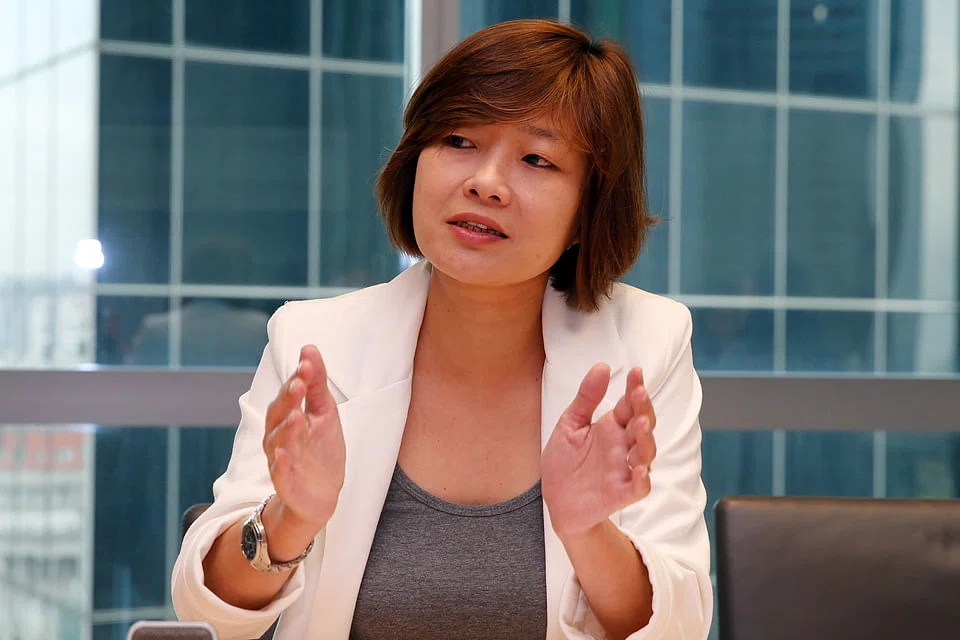
NTUC assistant secretary-general Cham Hui Fong said: "The conventional way of going down to do recruitment, give pamphlets - it can work in some industries, but in a lot of larger companies it's very difficult.
"When you talk to the executives, you can no longer use the argument that 'if you join me, I will make sure that when you are retrenched, you get retrenchment benefits'."
"Because executives today don't stay very long," she added wryly.
More generally, professionals, managers and executives (PMEs) - who form a growing share of the workforce - see less of a need to join up.
Unions have no issues recruiting rank-and-file members, she adds: "They will still need collective bargaining, collective agreements."
But PMEs are more able to bargain for themselves, or move on from a bad deal: "They often tell us 'I won't stay here long enough, so therefore there is no need to join the union.'"
Unions may also be less attractive to PMEs due to the perception that they are only for blue-collar workers, and offer little besides supermarket discounts and savings on petrol.
Says Singapore Manual & Mercantile Workers' Union (SMMWU) secretary-general David Yeo, "Lack of awareness, especially from the PMEs, is the main challenge."
The largest union here, SMMWU saw membership rise from 89,173 in 2013 to 99,740 last year - though that was only a marginal rise from 2016. Mr Yeo adds: "We are currently looking out at new ways of reaching out."
Membership privileges are not a big draw any more, particularly when credit cards offer similar perks, admits Ms Cham. Though a "nice to have", they cannot be a selling point.
With PMEs largely unmoved by both perks and the union's traditional protective role, the NTUC is banking on another offering: progression, with union membership helping workers go further in their careers.
One union taking this approach is United Workers of Electronics & Electrical Industries (UWEEI), which has seen a shrinking pool of rank-and-file workers such as production operators as the industry modernises.
Last August, it held an Electronics and Precision and Machinery Engineering month, including a career fair and training courses aimed at PMEs.
UWEEI's membership has risen from 63,000 in 2013 to about 66,000 today, a growth which executive secretary Melvin Yong calls "modest" yet "significant, given the shrinking workforce in the electronics industry".
The Healthcare Services Employees' Union (HSEU) has seen new members joining thanks to word-of-mouth about its training courses and talks.
"Many, especially PMEs, like the idea of empowerment and to be well-equipped with recent knowledge," says HSEU president president K Thanaletchimi.
The NTUC is even looking at setting up PME-targeted unions, such as in financial services, says Ms Cham.
The existing Singapore Bank Officers' Association and Singapore Bank Employees' Union have few members as they represent workers on the lower rungs, but "the whole financial industry has moved", she adds.
And though workers are its priority, NTUC works closely with firms, which also helps it boost membership.
In fact, one NTUC approach is to offer protection not just for employees, but employers too.
"I can tell employers 'We are now protecting your interests'," says Ms Cham. Small companies may not have a good grasp of ever-changing labour laws, she explains: "They are not updated on a lot of things."
If a firm unionises, the NTUC can keep them updated "so that you don't flout the law and get into trouble."
Unions can also help firms - large and small - with worker retention, through their focus on progression.
At ST Logistics, those setting up the new Supply Chain Employees' Union are senior staff who hope unionisation will help to tackle the issue of talent loss, says Ms Cham: "They want to see how to improve the workplace so people will stay."
Yet even as Singapore remains an outlier in the global trend of declining unionisation rates, the NTUC is looking beyond traditional membership altogether.
In 2005, the NTUC set itself a target of 1 million members. Upon taking over as labour chief in 2015, Chan Chun Sing said the NTUC would continue to work towards this - but that numbers were not its priority.
Since then, Mr Chan has not focused on the membership figure, nor released updated figures.
But Ms Cham says the NTUC has a broader conception of its role, with its "U Network", in which outreach takes place not just via conventional unionisation, but by NTUC bodies that serve SMEs, PMEs, freelancers and the self-employed, and migrant workers.
"There is no intent that you have to join me as a member before I help you," says Ms Cham. Talks and programmes by these other bodies are open to non-union members.
The labour movement offers "a menu" - some may choose protection by becoming card-carrying members, while others look at progression.
Ms Cham does hope that eventually, the latter may join up too. But this will be "after a long-term engagement, when they see some value."
In any case, formal membership is not the sole endgame of NTUC's outreach. Ms Cham draws the distinction thus: "There are some who will not be a union member, but we hope that they can be a member of the labour movement."
READ MORE: New union for logistics and supply chain management sector