

Singapore well-placed for Russia resurgence in Asia
Angela Tan
Singapore
WHEN one thinks of Russia, typical images that pop up are likely to be those of KGB agents reminiscent of a James Bond movie and murky fortunes that can buy influence over democracy and undermine the rule of law.
But that is just one facet of life in a very diverse country, which extends across the whole of northern Asia and the eastern third of Europe, spanning 11 time zones, and home to more than 140 million people.
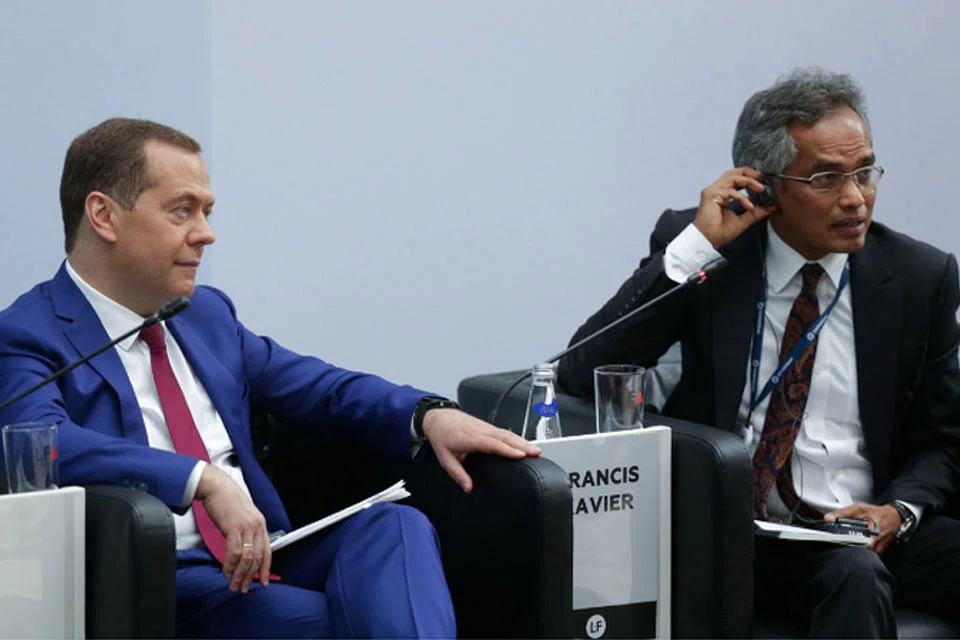
Russia offers immense opportunities that Singapore and Asia cannot ignore, according to Francis Xavier, Senior Counsel and regional head of dispute resolution at Rajah & Tann Singapore.
Mr Xavier is a panel arbitrator of the Russian Arbitration Centre of the Russian Institute of Modern Arbitration, Moscow.
He has advised a number of Russian parties and has conducted arbitration training in Russia at Moscow's request.
The president of the Inter-Pacific Bar Association (IPBA) tells The Business Times that Russians, who historically have looked to Europe and North America, are casting their gaze East too as they bet that the 21st century will be an Asian one.
"Things have changed. First of all, it's the sheer rise of Asia. China, India, and the other juggernauts like Indonesia, IndoChina, the Philippines are all on the rise. World trade is moving to this part of the world. That's number one. Nobody can ignore that," Mr Xavier explained.
"Second are the problems Russia has with the West. The sanctions are a big problem. They are not being received with open arms and there's a sense of anti-Russian sentiment. So they are now looking at the East as well."
Western economic sanctions have dragged Russia's economy into recession, spurring a rebuilding of its profile across Asia with new diplomacy as it tries to diversify its trading partners.
According to Enterprise Singapore, bilateral trade between Russia and Singapore grew at a compounded annual growth rate of more than 10 per cent between 2007 and 2016 to S$4.56 billion.
Singapore businesses have made inroads to Russia and Russian presence is set to grow further in the city-state, which already has over 500 Russian companies.
"We are on the cusp of a big movement which is already happening,' Mr Xavier noted. "The Russians are taking us very seriously. They do see us as a hub in Asia and they are very keen on Asia. Likewise, Russia is huge. We are going to see a resurgence of Russia-Asia interface."
This year's 29th IPBA annual meeting and conference in Singapore attracted about 20 Russian lawyers, compared to two to three previously.
While the number may appear small compared to the 160 Japanese delegates, it reflects a growing Russian interest, Mr Xavier said. "They see real synergies between this part of the world and their neck of the woods."
Attracted by Singapore's safe yet vibrant international environment, the Russians first started coming here in 1991, which marked the collapse of communism and the opening of borders in Russia. More are looking to Singapore as they embrace Asia.
Generally, the Russians like using Singapore as the base for projects in Indonesia, IndoChina and the region. Their interest has been seen in real estates, greenfield and mining projects.
For Singapore, other collaboration opportunities beckon. These include Russia's fast-growing fintech market with new forms of finance, artificial intelligence capabilities as well as new economies and frontier science technology applications.
"I see a great opportunity for Asia. I think Singapore is very well-placed. The Russians have a very high regard for Singapore's know-how and top leadership," Mr Xavier said.
The Russians have shown keen interest to learn about the Singapore International Commercial Court (SICC), designed to handle international, high-value commercial disputes.
Judgments by the SICC are enforceable through the Hague Convention on Choice of Court Agreements and other reciprocal agreements.
They have also shown interest in the Singapore International Arbitration Centre (SIAC), an independent, not-for-profit global arbitration institution that's ranked third among top institutions in the world.
SIAC administers a range of disputes, including corporate and commercial, trade and investment, construction/engineering, shipping and maritime, insurance, intellectual property, and banking and finance.
"As a country, we should make use of this momentum to ride the tide," Mr Xavier said on the need to move beyond the "dating phase".
The Singapore Academy of Law has been working to persuade the Russians to use Singapore law as the governing law in their contracts. The idea is for them to make use of Singapore as a dispute resolution centre.
"We are seeing a great deal of interest in Russia for this. They do appreciate that it may be difficult in an international deal for Asian parties to adopt Russian law as the lingua franca. Because they are moving away from the West due to the challenges they face, they are happy to look at alternatives to British law and they are very receptive to the use of Singapore law," Mr Xavier said.
He believes this is because Singapore's jurisprudence is fairly accepted and that Singapore is the headquarters for many international firms and customers.
"They are familiar with what Singapore law stands for, the rulings of the court of appeal. They are very comfortable with Singapore law," he said, elaborating: "In fact for a while, because of the European Union's (EU) impact on UK law, that was seen as an advantage to Singapore law. We are free of the shackles of the EU framework and the Singapore courts are very progressive, very much alive to the needs of commerce in this part of the world."
On black money and money laundering concerns, Mr Xavier said: "That is a separate regulatory-governance check that any party dealing with not only the Russians, but also the Americans, Latin Americans or with any part of the world, has to satisfy those concerns."
TRENDING NOW
‘We don’t want to stay as we are’: CEO Patrick Ng builds a more resilient Huationg
URA to review guidelines on floor space to give developers more design flexibility: Chee Hong Tat

He built the Vingroup empire. Now South-east Asia’s richest man is handing some key roles to his sons
32 companies, 6 individuals bag accolades at Singapore Corporate Awards 2026

