

Singapore's financial sector is hiring, but tech skills are key
Sector created 1,900 net jobs in H1, but real demand is for tech-related roles - especially higher-level ones
Singapore
SINGAPORE's financial services sector has held steady against the economic toll of the pandemic, creating some 1,900 net jobs for Singaporeans in the first half of the year.
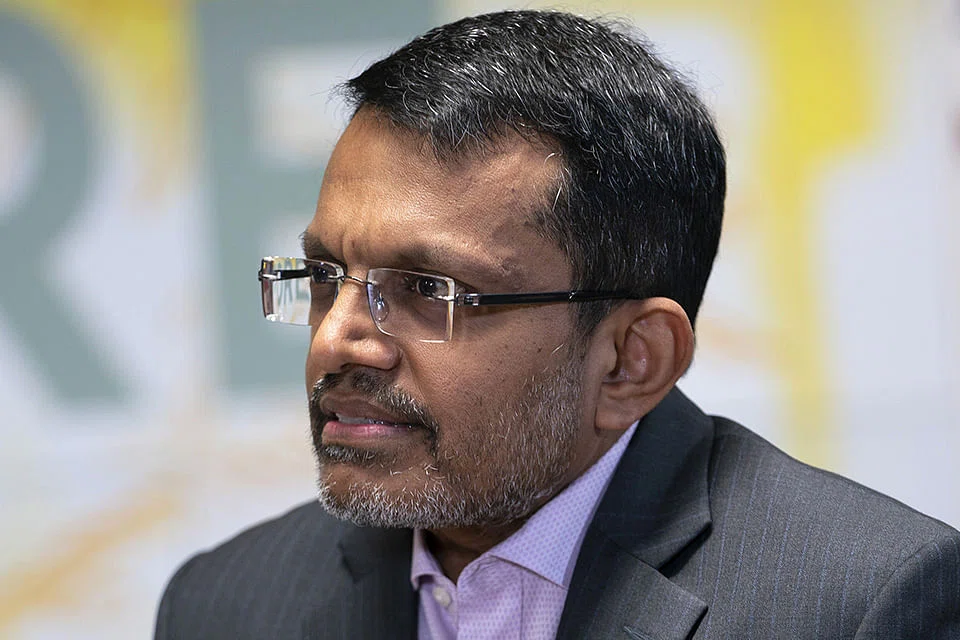
But this trend may not be here to stay, as rising demand for tech roles in the industry continues to outstrip the ability to build up the relevant skills, said Ravi Menon, managing director of the Monetary Authority of Singapore (MAS), at a webinar hosted by MAS and the Institute of Banking and Finance (IBF) Singapore on Thursday.
"We should not be complacent. Just because the sector has done well on the jobs front so far does not mean that it will continue," he noted, adding that economic recovery is uneven and remains highly uncertain.
A pilot employment outlook survey by MAS found that financial institutions in Singapore are planning to offer 1,800 newly created jobs from July 2020 to July 2021. But to be clear, tech-related roles lead the hiring demand, accounting for 880 - or 49 per cent - of the new jobs.
Overall, over 60 per cent of the new positions are targeted at experienced hires or specialists, signalling a need to step up mid-career hiring and training for Singaporeans.
"Advanced" tech roles such as enterprise architects and infrastructure architects require years of training and experience to gain mastery of the necessary skills, said Mr Menon.
"The local supply of talent for such jobs is quite limited. Financial institutions will need to rely on expertise from abroad while building a pipeline of locals for these roles."
He noted that "intermediate" tech jobs such as app developers and cybersecurity specialists are roles that Singaporeans with the relevant background can potentially be trained for.
Mr Menon also said employers should be willing to take a "calculated chance" on mid-career jobseekers, hiring and training them to pick up the requisite skills.
"Likewise, jobseekers must be willing to step out of their comfort zone, and take a stab at trying new roles and picking up new skills."
While there are ongoing programmes that offer structured training and attachments in areas such as data analytics and cloud computing, more can be done to scale up efforts.
IBF chief executive Ng Nam Sin said a person can expect his job to be disrupted more than once in his career amid a shorter tech cycle.
It took 14 years for personal computers to amass 50 million users. The Internet needed four years to reach the same mass, while Chinese super-app WeChat registered 100 million users in a little over a year.
"The time to train our workers is getting shorter and shorter. Now, with the pandemic, the adoption of technology is getting faster, so we have to move even faster," said Mr Ng.
DBS chief Piyush Gupta said tech proliferation had blurred the hard boundaries between major industries, from aerospace and hospitality to banking and financial services, among others. This means skills are now more transferable, creating more opportunities for lateral movement.
"The skills you need for digital marketing at Lazada are no different from the skills you need for digital marketing at DBS," Mr Gupta cited as an example. "It's up to each one of us to take a risk and try. If you're willing to do that, I think we can transition into this workforce of the future quite systematically."
Against this backdrop, MAS and IBF have rolled out fresh measures to help enhance the career prospects of Singaporeans in the financial sector and better position financial institutions for growth.
A Work-Study Support Programme will be launched to develop "job-ready" graduates as the longer-term strategy to build a Singaporean talent pipeline for the sector.
The scheme will fund 80 per cent of the internship stipend, capped at S$1,000 per month, for Singaporean undergraduates who serve their internships at financial institutions as part of the SkillsFuture Work-Study Degree Programme.
Standard Chartered Singapore was the first to embark on this programme in 2017. CEO Patrick Lee said: "With supportive industry initiatives, as well as our continued investments and training efforts, I'm confident this will encourage more aspiring bankers to step forward."
To help retain jobs in financial institutions and fintechs, MAS will extend the Training Allowance Grant for company-sponsored trainees by six months from Dec 31, 2020 to June 30, 2021. This will keep up the training momentum of in-demand skills such as technology, and in new growth areas, such as green finance.
IBF will also extend its 5 per cent additional course fee credit by six months over the same period. Since the introduction of these measures in April, there has been a 65 per cent year-on-year increase in training participation.
Prudential Singapore CEO Dennis Tan said the firm will be extending one of its IBF-accredited programmes to all new financial consultants who joined this year, with a target to have 5,000 employees complete the programme by June 2021.
At the webinar, concerns were raised that not everyone may be equally motivated to upskill and make the most out of existing programmes.
In response, Mr Menon said there is visible anxiety on the ground over job security and prospects, which is "not entirely a bad thing".
"It's good to have a little bit of anxiety about the future and about how to sustain your job. It's a very careful balance - you don't want to make people panic, but you also want to let people know that things are changing rapidly.
"We've got to continually emphasise that people need to change, adapt and acquire new skills, and be flexible and move on to new roles or take on additional tasks in existing jobs."
While it will take a bit more nudging, the urgency to pick up new skills is starting to catch on. "When we get over a tipping point of what becomes the predominant ethos, then I think it'll catch fire," said Mr Menon.
The webinar is part of a new initiative by MAS and IBF, titled "Growing Timber". It comprises a series of monthly webinars and events focused on jobs and skills in the financial services sector.
The first session on Thursday focused on job opportunities, job readiness, and job retention.
TRENDING NOW

Grab CEO’s wife Chloe Tong on life with Anthony Tan and finding her purpose

Number of listed companies an ‘outdated metric’ of Singapore market’s success: SGX chairman

UOB found ‘grossly negligent’ over Stamford Land rights issue advice, to pay S$1.9 million

Oil climbs after Trump denies he is willing to ease sanctions on Iran

