Singapore's fiscal position strong amid further deficit, reserve draw
Overall budget deficit for FY2020 will increase to S$74.3 billion, or 15.4% of GDP
Singapore
AS Singapore incurs a deficit of an unprecedented size and a second draw on its past reserves this financial year, they are necessary to pave the way for recovery and for the economy to emerge stronger.
While the amounts are huge, the country's fiscal position is not threatened given its massive reserves, analysts say.
Singapore is now dedicating S$92.9 billion or 19.2 per cent of its GDP, to support its people in this battle, said Finance Minister Heng Swee Keat in delivering the Fortitude Budget on Tuesday.
The overall budget deficit for FY2020 will increase to S$74.3 billion, or 15.4 per cent of GDP, the largest deficit in Singapore's history since independence, he said.
"This Fortitude Budget will be funded out of past reserves," he said.
The President has given support for in-principle approval for a further draw of S$31 billion to fund the latest budget.
"Altogether we are looking at drawing up to a total of S$52 billion from past reserves this financial year to enable Singaporeans to tide through this crisis and emerge stronger."
This is the second draw on past reserves this financial year. In the earlier budgets, the President gave approval to draw up to S$21 billion from past reserves.
This allowed us to safeguard jobs, keep the economy going, and provide direct assistance to Singaporeans during this difficult period, he said.
"Our past reserves are our strategic asset, built up through the prudence and hard work of our people, across generations. The government has always upheld the principle that our past reserves are to be used only in exceptional circumstances."
Mr Heng set aside an additional S$13 billion in the contingencies fund. In normal years the government sets aside S$3 billion in the contingencies fund to meet urgent and unforseen expenditure needs.
United Overseas Bank economist Barnabas Gan said the layman may be concerned that the government is using so much reserves and hearing about the largest deficit ever, but this needs to be put into perspective.
While no one knows the true level of Singapore's reserves - some estimates put it at US$1 trillion - Mr Gan said just the official total foreign exchange reserves alone is about S$400 billion and that puts the deficit of S$74.3 billion at about 15 to 20 per cent of those reserves. The total official foreign reserves in April 2020 was US$300.8 billion (S$427.5 billion), according to the Monetary Authority of Singapore.
There is also no need to worry about Singapore's fiscal standing from the unprecedented deficit, he said. "The triple-A credit rating basically centres on Singapore having zero foreign debt - where we don't owe anybody anything," he said.
"There is no need for foreign credit rating agencies to worry as we don't need to pay back, nor do future generations have to do so."
DBS Bank economist Irvin Seah said he doesn't see it as a problem for Singapore to incur the deficit, nor the second drawing from reserves. The use of the reserves is to pave the way for economic recovery while mitigating the near term pain, he said.
The recovery process is going to be slow and gradual, hence the need for support for workers and businesses, said Mr Seah.
In a post-Covid-19 world, there will be some permanent shifts such as de-globalisation. Sinapore will need to adapt to new norms like increasing self-sufficiency, he said. "Companies may want their supply lines closer to markets, Singapore may not benefit from this."
Many jobs will not return. "The only option is to create new jobs," he said, hence the amounts which are being spent on training.
Mr Seah expects recovery from this recession to take 24 months; longer than the 18 months during the Asian Financial Crisis.
As to how the government will rebuild the deficit, UOB's Mr Gan pointed to future increases in the goods and services tax or GST.
The government said in February this year that it will delay the increase in the GST to sometime between 2022 and 2025.
It said the government will not raise the GST in 2021, but will instead defer the increase to sometime between 2022 and 2025.
During Budget 2018, Mr Heng had said the GST would be raised from 7 per cent to 9 per cent sometime between 2021 and 2025 to help meet healthcare spending.
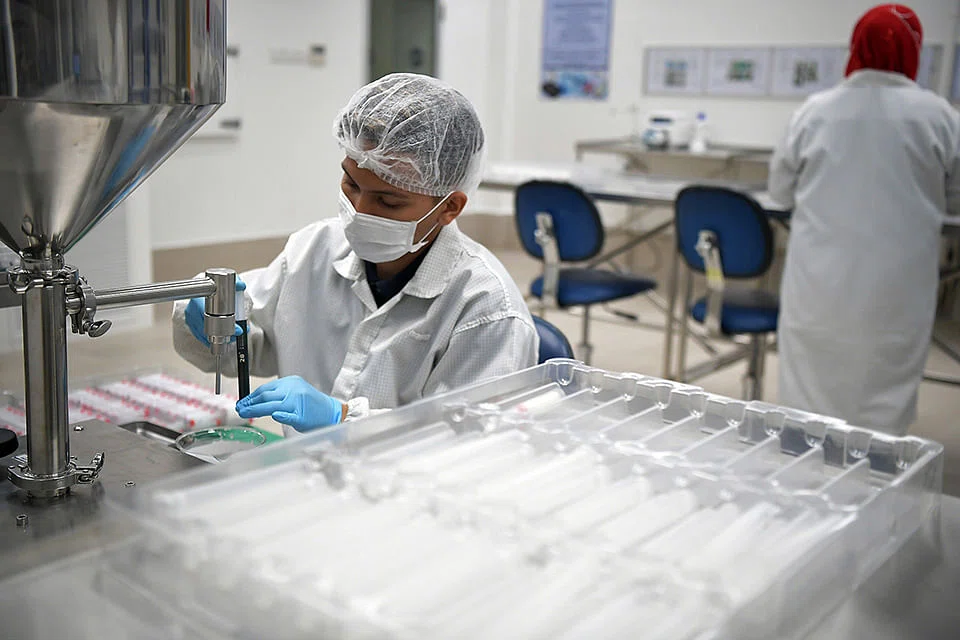
Mr Gan also pointed to a bright spot in the economy - biomedical manufacturing.
"We are of the view that pharmaceutical production and exports will be a boon for Singapore's overall manufacturing and trade environment," he said.
Coupled with a surge of 141.3 per cent year-on-year growth in the production of pharmaceuticals, Singapore also saw a 174.3 per cent year-on-year rise in pharmaceutical NODX (non-oil domestic exports) in April.
"This suggests that Singapore is well-positioned to produce and export medical necessities, which implies that the pharmaceutical industry can act as a support to the overall manufacturing environment," he said.
Coupled with low base prints in the previous year which had a hand in supporting pharmaceutical exports, the increased demand for medical goods during the pandemic may be the linchpin of growth for Singapore's non-electronic NODX, and in turn, biomedical manufacturing.
Pharmaceutical exports accounted for 9.9 per cent of NODX in 2019, while the biomedical manufacturing cluster is weighted at just under 20 per cent of total industrial production.
KEY POINTS