Singapore's travel easing is a risk game
Public health risks must be balanced against a strong economic need for easing controls, analysts say

Annabeth Leow
Singapore
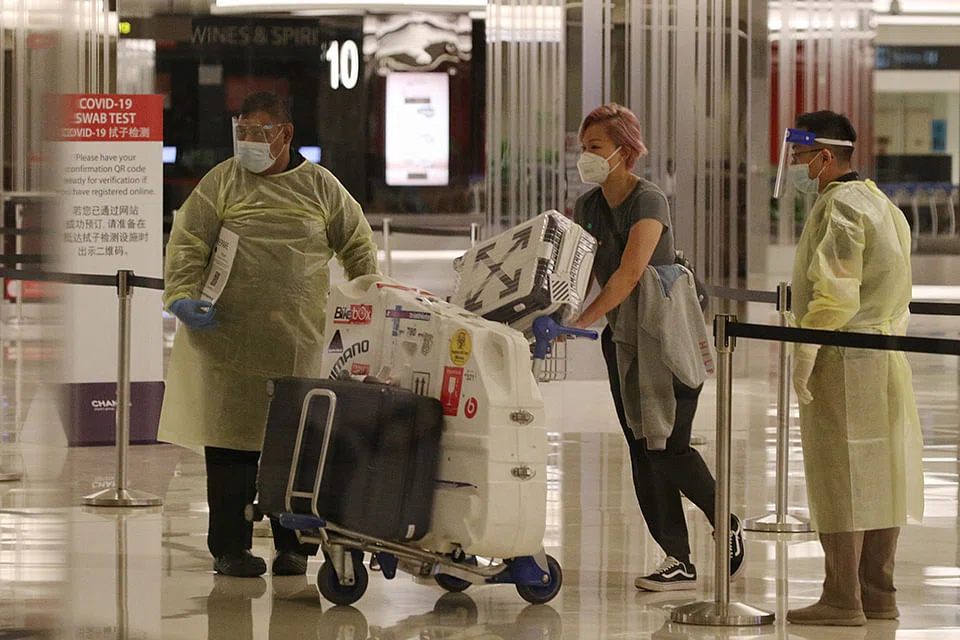
SINGAPORE's gradual border reopening is not risk-free - but the public health risks must be balanced against a strong economic need for easing controls, analysts have said.
Some also suggested that Taiwan and Thailand could be next on the list of places where Singapore allows unrestricted, quarantine-free travel.
This comes as the Republic is expected to reap benefits even from one-way travel arrangements into the country.
"We should quickly move towards re-establishing links with all our important trading and business partners, which is happening right now," said DBS aviation and transport analyst Paul Yong, citing the controlled Covid-19 situation here.
Since closing to short-term visitors in end-March, Singapore has worked to relax its stiff border curbs.
Singapore introduced all-purpose Air Travel Passes with Australia, Brunei, mainland China, New Zealand and Vietnam, and reciprocal green lanes for business and official travel with Brunei, Indonesia, Japan, Malaysia, South Korea and parts of China. From Nov 22, it will also have its first air travel bubble with Hong Kong.
Already, the scheduled seat capacity for flights into Singapore is expected to increase significantly in the next two months, according to aviation analytics firm Cirium.
"The potential growth looks particularly strong in nearby countries such as Malaysia, Thailand and Indonesia, which are usually highly connected with Singapore," Cirium's Herman Tse told The Business Times.
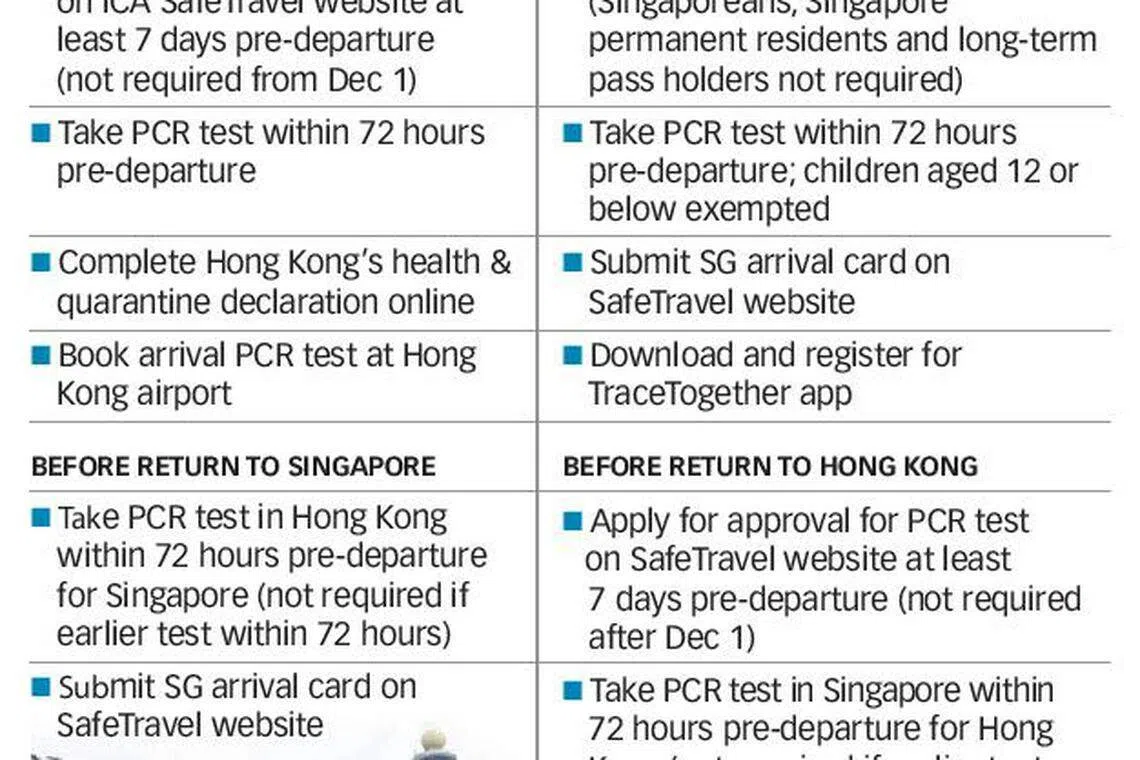
Industry observers like Mr Yong expect trading partners with similar or better virus management - such Thailand and Taiwan - to be added to Singapore's green-lane list.
To be sure, the gradual reopening is not expected to lead to a surge in Singapore's visitor arrivals, which have been tepid in the year to date.
Some 9,500 visitors touched down in September, better than the April trough of 750 but a long way off from 1.46 million in the year-ago period.
But "there will be more airlines resuming international flight services in January 2021", said Mr Tse, adding that arrival growth is also expected to be driven by top-tier Chinese airports in Beijing, Shanghai and Guangzhou.
And even if border controls in other countries make some of Singapore's arrangements unilateral, analysts still expect a positive impact.
Kaewkamol Pitakdumrongkit, deputy head of the Centre for Multilateralism Studies at the S Rajaratnam School of International Studies, said one-sided reopening will support tourism-related industries, such as retail and entertainment, as domestic consumption "may not be enough to keep these businesses afloat" here.
Ong Sin Beng, chief Asean economist at JP Morgan, added that restrictions on cross-border travel have cast uncertainty over Singapore's growth outlook, as the services sector continues to lag manufacturing in recovery.
"We expect a further roll-back of containment measures in late Q4 2020, with the reopening of Singapore to selected countries from November that will signal a gradual return of travel-related income, although it will likely not be a complete normalisation," Mr Ong told BT.
Still, Singapore is not opening up willy-nilly, despite the economic benefits. For example, Mr Yong named the US, the European Union and India as key trading partners that Singapore has not set up green lanes with.
Transport Minister Ong Ye Kung told Parliament on Nov 3 that "we have yet to begin negotiations of a green lane or special travel arrangements with the US", to a question about travel arrangements with the United States, given what MP Cheng Li Hui had called "the high infection rates".
Similarly, Lawrence Wong, who co-chairs the multi-ministry Covid-19 taskforce, told journalists on Nov 10 that Singapore assesses travel risk based on factors such as the virus incidence rate among arrivals from certain countries. Places such as Macau, Taiwan and Malaysia excluding Sabah have been deemed "lower-risk".
Of course, "there is always the risk of imported cases, as no 'air travel bubble' can be completely impregnable", as local infectious disease specialist Paul Tambyah has put it.
He pointed to two cases who tested negative for the coronavirus before and after flying into Singapore from the US and Russia for an Oct 30 sports event, but who later tested positive in a pre-event screening.
Borame Dickens, senior research fellow at the National University of Singapore Saw Swee Hock School of Public Health, explained that "testing is important in identifying people who are soon or already actively infectious", but quarantine can catch very early cases that tests cannot detect.
Singapore will require pre-departure testing for travellers from higher-risk regions from Nov 18, on top of a mandated stay-home period.
Yet Dr Tambyah, president of the Asia Pacific Society of Clinical Microbiology and Infection, also noted that Singapore has already been living with trade-offs in risks and benefits.
Citing the shorter seven-day stay-home period for Malaysian staff entering Singapore under the Periodic Commuting Arrangement, he said: "If there is someone on the tail-end of the average incubation period . . . this person will be allowed back to work while potentially infectious. The risk is low but this has to be balanced against the loss of Malaysian workers in healthcare and other sectors."
But, at the end of the day, Singapore has to be ready to close the tap if Covid-19 infections rise in partner destinations. Dr Dickens stressed that it must "be very flexible in how to respond to the global situation".
Dr Kaewkamol added: "To lessen the likelihood of international tensions arising from such action, governments should at least agree on a set of rules - namely the conditions under which the closure is allowed."
Although Singapore's reopening cannot be risk-free, careful risk management is the name of the game.
READ MORE: HK travel bubble to help Singapore aviation take off when time's right