Skills Framework for Design to help firms, workers across sectors

Janice Heng
Singapore
REQUIRED skills and salary information for design-related job roles are laid out in a new government publication, meant for workers and employers both within and outside the design industry.
Beyond creative industries such as architecture and graphic design, firms in other industries such as healthcare and banking can refer to the new Skills Framework for Design for guidance in hiring for roles such as UI/UX (user interface/user experience) designers.
The publication covers 25 job roles across the four broad tracks of design, business, innovation and technology. It details 18 generic and 48 technical skills and competencies, including user experience design, business model innovation, and content development and strategy.
It also lays out possible career paths and gives information on existing training programmes. Workers themselves can use the framework to help make decisions about their education, training and career paths.
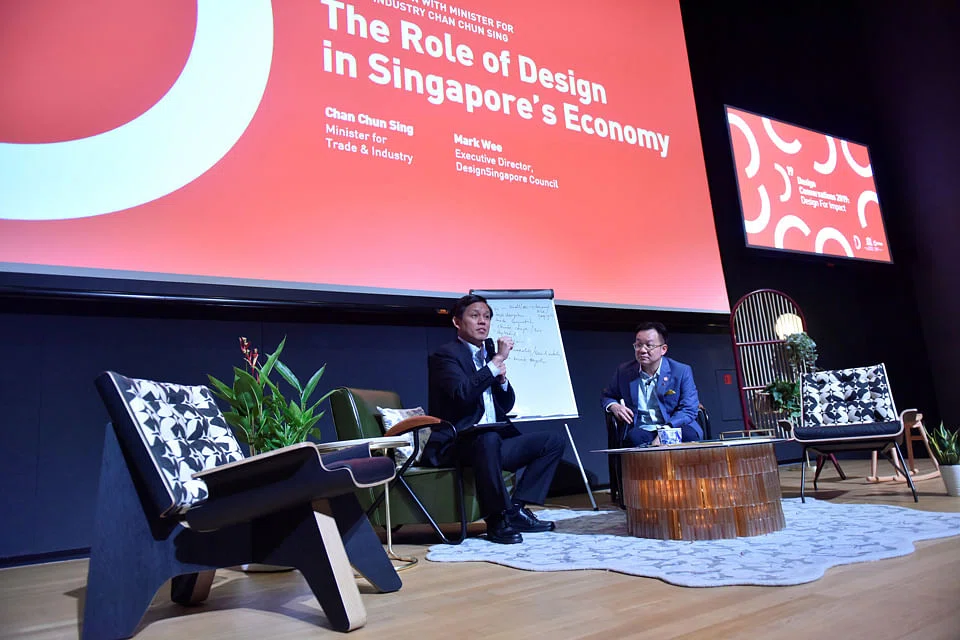
The Skills Framework for Design was launched on Wednesday at Design Conversations 2019, the inaugural edition of an annual industry dialogue. At the event, Minister for Trade and Industry Chan Chun Sing noted the importance of design in tackling Singapore's greatest future challenges, from reducing the country's carbon footprint to designing a liveable city.
There is a role for designers all the way from city planning down to the use of materials, and beyond product design to social arrangements, he added. "You are almost designing how we develop as a society."
Developed by the DesignSingapore Council (DSg), SkillsFuture Singapore and Workforce Singapore (WSG), the new skills framework is part of the industry transformation map for professional services, as well as DSg's Design Industry Manpower Plan.
DSg executive director Mark Wee noted that a study showed that over 5,000 companies in Singapore intend to adopt design capabilities in the next three years.
Amid today's digitisation push, digital technology alone does not lead to innovative success, he added. "The other critical part is that it has to be humanly desirable too." This is where design comes in.
Beyond the actual design industry, the council will reach out to multinationals, large local enterprises and even small and medium enterprises across sectors to encourage adoption of the framework.
Interested employers can sign up for workshops on using the framework at https://tinyurl.com/SkillsFrameworkWorkshop.
Seven organisations have already committed to adopting the framework, from technology firms to design studios.
These include design education company Methodology, which aligned its recently launched Professional Conversion Programme for UX/UI with the framework.
Regarding the framework's utility for firms outside the creative design sector, Methodology director Jackson Tan noted that non-design firms looking to hire a UX/UI designer, for instance, can use the framework to figure out how their new hire might fit in the greater scheme of things.