

SMEs need to contribute more to Singapore economy: Chan Chun Sing
He said SMEs' current contribution of 47% of GDP can grow with more efficiency
Singapore
SMALL and medium enterprises (SMEs) in Singapore need to pull their weight in raising their contribution to the Singapore economy, by being much more productive and efficient.
This was the prognosis from Trade and Industry Minister Chan Chun Sing, who noted that while SMEs here make up 99 per cent of all businesses and employ 72 per cent of the workforce, collectively, they only contribute 47 per cent of Singapore's gross domestic product.
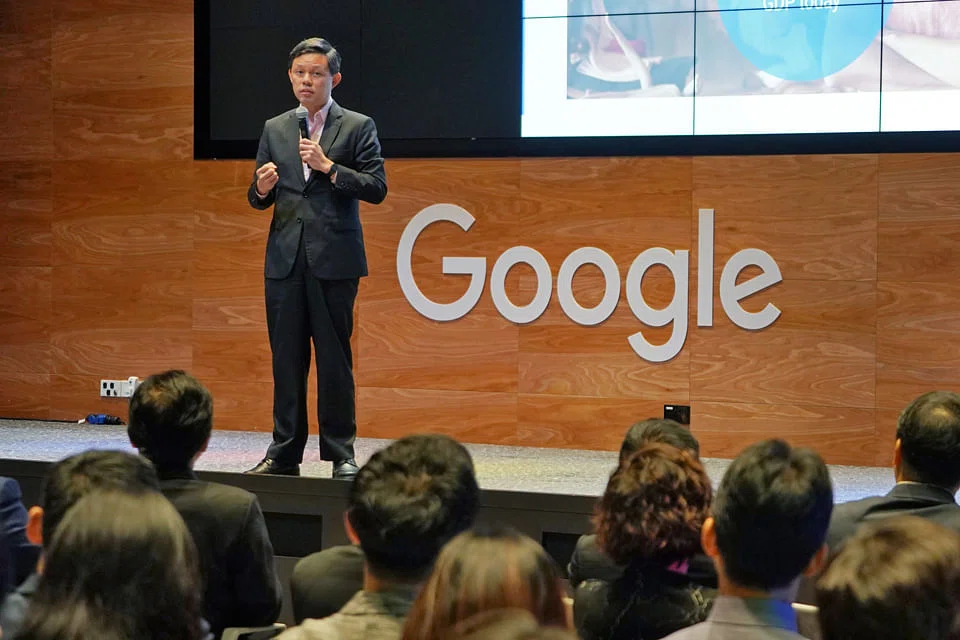
"If indeed this is 99 per cent of all our companies, and if indeed the SMEs are employing 72 per cent of our workforce, and they only produce 47 per cent of our GDP, then in the definition of the banking world, we are underperforming right?" Mr Chan said, referencing the figures from Google's presentation slides.
"Which means that it's our intention - MTI's intention, UOB's intention, Google's intention - and all of us here today, we are united in one thing. We want to see this number grow, the 47 per cent to GDP, and we want, if possible, the other percentage (72 per cent) to drop. So that we are much more productive and much more efficient."
Among the ways that SMEs can raise their game is through digitalisation, he said.
On Monday, Google and UOB announced a free programme to train 400 SME leaders in using digital tools to solve business issues, from generating digital marketing strategies and implementing data-driven HR solutions, to using other kinds of software to boost their efficiency.
The SME Leadership Academy, supported by government agencies Digital Industry Singapore and SkillsFuture Singapore, will be a 11/2-day programme involving interactive discussions and lessons by business leaders from Google, UOB and other organisations.
Google and UOB will run a cohort every quarter, starting from Aug 13, till end 2020. Each cohort will have 50 participants.
The programme was developed based on feedback from over 100 businesses that had taken part in the programme when it was piloted in April. They come from various industries such as retail, F&B, engineering, manufacturing and travel.
Mr Chan also stressed that SMEs should look to expand their markets beyond Singapore, in order to grow and contribute more to the local economy.
In that aspect, digital technology can also lend its benefits, such as enabling businesses to "scale cross-border and reach out to markets without having to do the conventional scaling in terms of brick-and-mortar scaling, or even in terms of number of employees," Mr Chan pointed out.
TRENDING NOW

Vietnam’s northern provinces, not Hanoi or Ho Chi Minh City, are powering near 10% GDP growth

VietJet hit with global asset freeze in FitzWalter dispute

Gridlock or growth? The Asean Power Grid faces a critical window of opportunity

LNG, stronger regional power links key to Asean’s energy resilience: Shell

