

Some insurers reviewing products to facilitate stepped border reopenings
NTUC Income is also looking to develop a travel insurance product to cover inbound travellers during pandemic

Tay Peck Gek
Singapore
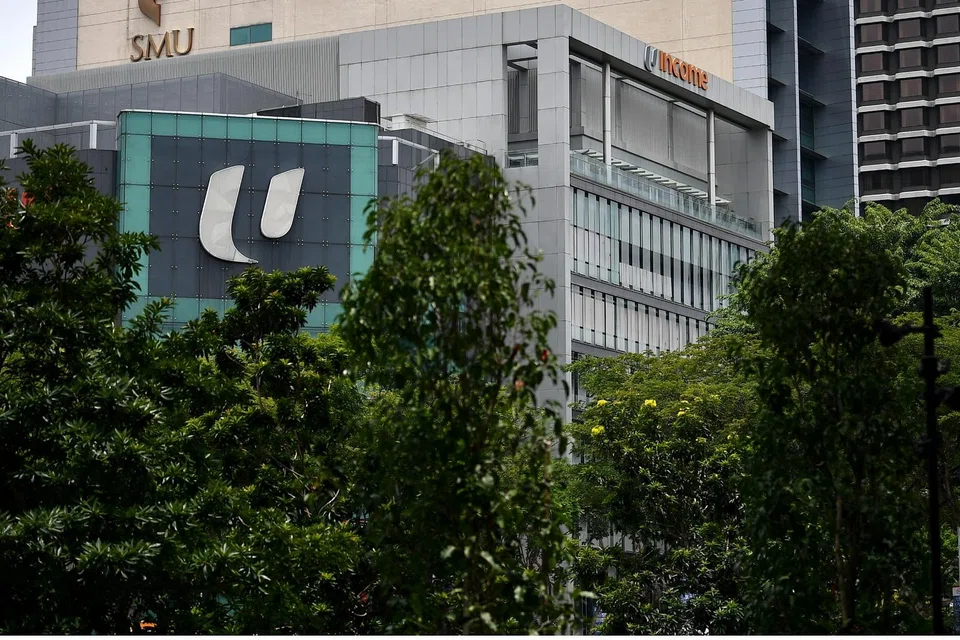
MOST travel insurance products currently do not cover Covid-19 related claims - but some market leaders, including NTUC Income, are reviewing offerings to facilitate the gradual reopening of borders under some schemes.
Income's head of personal lines Annie Chua told The Business Times that it is keeping up with recent developments on permitted outbound travel and reviewing its travel insurance offerings to ensure that they provide customers with suitable coverage for the novel coronavirus to better protect them and their future travel plans.
The move is an important one as without such coverage, the government's efforts to allow business and other essential travel may not reach their full potential.
"With more 'green lanes' opening up for business and other essential travel, we want to ensure that our customers are able to go abroad with peace of mind when they need to," Ms Chua said.
With the outbreak of the Covid-19 pandemic, the majority of travel insurance products do not cover Covid-19 related claims. This is because the novel coronavirus has become a known event. As NTUC Income said on its website, there will be no coverage for any claims arising from the virus for trips to anywhere in the world because it is foreseeable that one's health or trip would be affected by the pandemic situation.
NTUC Income is also looking to develop a travel insurance product to cover inbound travellers to Singapore during this pandemic.
Air travel bubbles are not the same as reciprocal green lanes, which are for official and essential business travel only.
A check with Great Eastern showed that its current position of excluding coverage for the novel coronavirus has not changed since the pandemic spread across the world. But it covers other travel claims benefits, provided that the insured travels to countries under Singapore's approved travel destinations.
According to a 2017 survey by the insurance company Chubb that polled more than 1,700 people, about 72 per cent of Singapore travellers buy travel insurance products when going overseas for leisure. That includes 61 per cent who said they always do. Among the top travel worries of respondents are encountering an injury/accident, stolen luggage, becoming ill, trip cancellation/postponement and natural disasters.
Consumers buy travel insurance for protection. But if they can't claim for expenses when they fall sick or have to be hospitalised or postpone travel plans because of Covid-19, then those travel policies would be deemed useless.
The Singapore Tourism Board (STB) has said a travel insurance product is in the works to cover critical coronavirus-related expenses "to give inbound travellers further peace of mind". This could possibly lower the insurance premium and make it more palatable for leisure visitors. If it is not made compulsory, at least the lower premium might make inbound travellers more likely to take it up.
Hence ChangiAssure, a new travel insurance product introduced in September by Changi Travel Services, a unit of Changi Airport Group, and underwritten by HL Assurance, is a good start. The basic plan covers up to S$8,000 for hospitalisation or expenses at a quarantine facility, without other benefits. The "superior plan" offers up to S$100,000 of coverage for the same purpose and also provides non-coronavirus coverage such as loss of baggage and flight delays.
A basic plan is priced at S$37.50 and a superior plan S$111 for a four-day visit to Singapore.
However, it only covers incoming visitors. When asked if Changi Travel Services will offer such insurance for outbound travellers as well, it said other products and plans are still in the works as it prepares for the reopening of travel.
Similar products need to be launched for partner countries within Singapore's network of travel bubbles for Singaporeans to feel comfortable about going abroad too. After all, an air hub revival will need healthy flows of both inbound and outbound traffic.
In addition to relevant insurance coverage, there are also other issues to be ironed out to give leisure travellers the confidence to take that plunge.
If the rules governing essential and business travel for reciprocal green lanes are any guide, swab tests would be required for leisure travellers at both pre-departure and post-arrival points for residents from certain places as well.
Some countries also require their residents to produce a negative swab test result upon return from overseas. At S$300 per test (at Changi Airport), this could come up to as much as S$1,200 per return trip.
This could mean a significant increase in travel costs, when S$1,137 is the average sum a Chinese tourist spent on shopping, accommodation, food and beverage in Singapore last year (excluding sight-seeing, gaming and entertainment) for a three-to-four day trip.
Annual statistics from STB showed that international visitors stayed an average of just 3.4 days on the island last year. Also, Singapore has generally been bundled with neighbouring destinations for tourists from China, Hong Kong and Taiwan. The fact that Singapore does not have travel bubbles with Thailand, Malaysia and Indonesia yet could present difficulties for tour agents marketing Singapore.
However, it could also mean an opportunity to sell Singapore as a standalone destination, with more unique tours and activities that can occupy individual travellers and families for a longer period of time.
In other words, Singapore would need to work out an irresistible proposition that makes it worth the hassle, cost and, more importantly, the health risk, to come here.
Suggestions include: that STB leverage its statistics and use a targeted approach for different markets such as throwing in accommodation at promotional rates beyond the third night to lengthen the stay, making the Covid-induced hassle and extra costs seem more worthwhile.
Or, charge affluent tourists a premium for expediting the turnaround time for swab test results. Or, perhaps, it is time to drum up Singapore's positioning as a premier medical tourism hub again, though not at the expense of over-burdening the Republic's healthcare system.
READ MORE: Near virus-free environment vital if 'air travel bubble' is to work
TRENDING NOW
Far East Organization’s The Serra Residences sells less than a quarter of units released at average S$3,460 psf

Once staunchly pro-China, Malaysian Chinese businesses are now distancing themselves from Beijing
Ageing in Asia: Huge potential for the consumer economy

DBS, OCBC, UOB face rate hike reality check

