

South-east Asia economic growth likely to slow to 4.5% this year: report
Uncertain outcome of US-China trade talks may dent economic prospects further; central banks expected to cut rates to boost domestic demand

Singapore
ECONOMIC growth in South-east Asia is forecast to ease to 4.5 per cent this year from 5.1 per cent in 2018, before stabilising at the same rate of 4.5 per cent in 2020, British advisory firm Oxford Economics said on Thursday.
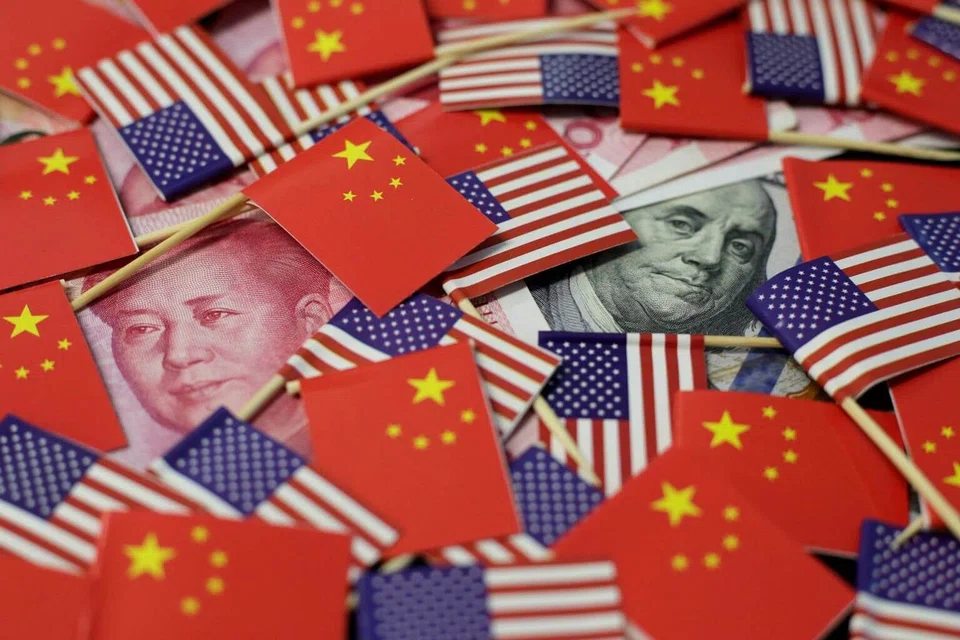
The slowdown comes amid a fresh round of tariffs and trade restrictions by the US and China, according to the firm's latest Economic Update: South-East Asia report.
Produced by Oxford Economics and commissioned by the Institute of Chartered Accountants in England and Wales (ICAEW), the report is a quarterly review of the region, focusing on Indonesia, Malaysia, the Philippines, Singapore, Thailand and Vietnam. Oxford Economics is ICAEW's partner and economic forecaster.
"Amid ongoing global headwinds and uncertainty around the outcome of US-China trade talks, we expect a further deterioration in economic prospects in the region," said Sian Fenner, ICAEW economic advisor and Oxford Economics' lead Asia economist.
Accommodative macro policies, coupled with domestic-driven activities, are likely to cushion the weaker trade outlook, according to Mark Billington, ICAEW regional director for Greater China and South-east Asia. However, this will vary across economies, with growth set to remain below potential in Indonesia, the Philippines and Thailand, while Singapore braces for the hardest impact, he added.
In H1 2019, overall gross domestic product (GDP) growth across the region slowed to 4 per cent on the year, compared to 4.5 per cent in H2 2018.
This was due to spill-overs from the US-China trade war, slower Chinese domestic demand and a downturn in the global electronics cycle.
Slower export momentum has also weighed heavily on the growth of trade-dependent economies such as Singapore, Thailand and the Philippines.
Meanwhile, Malaysia and Vietnam have outperformed the region, with a more modest deceleration in export growth and resilient domestic demand.
Central banks in South-east Asia are expected to cut interest rates to boost domestic demand, against the challenging external backdrop of lower US interest rates and subdued inflationary pressures, the report noted. Fiscal policy will also likely become more supportive amid higher infrastructure investment.
On Thursday, Indonesia reduced its key interest rate for the third straight month, by 25 basis points (bps). The Philippine central bank is forecast to lower rates again in Q4 2019, after having trimmed its rates by 50 bps this year. Likewise, Thailand and Malaysia are expected to cut rates by at least 25 bps by early 2020.
In Singapore, the central bank is expected to ease policy in October, shifting to a zero-appreciation bias in its key policy tool, S$NEER, a trade-weighted baskets of currencies against the Singapore dollar. The city-state is forecast to dip into a manufacturing-led technical recession - two consecutive quarters of negative growth - in Q3 2019.
Elsewhere in the region, Vietnam is set to continue outperforming the rest of South-east Asia, albeit with a moderation in its GDP growth to 6.7 per cent this year, the report noted. This is thanks to a 33 per cent surge in exports to the US in H1 2019, which offset slower trade with China and other regional markets.
TRENDING NOW

Simba admits exceeding spectrum limits amid failed M1 deal; parent company Tuas’ full-year profit surges 277%

‘Our bread and butter’: Family-run Loo’s Hainanese Curry Rice hands reins to third generation

StarHub, Keppel confirm talks over potential M1 deal

Grab executives buy back shares after stock hits 3-year low on Atome deal

