

South Korea's nuclear envoy visits US as tensions flare with North Korea
 Add BT as a preferred source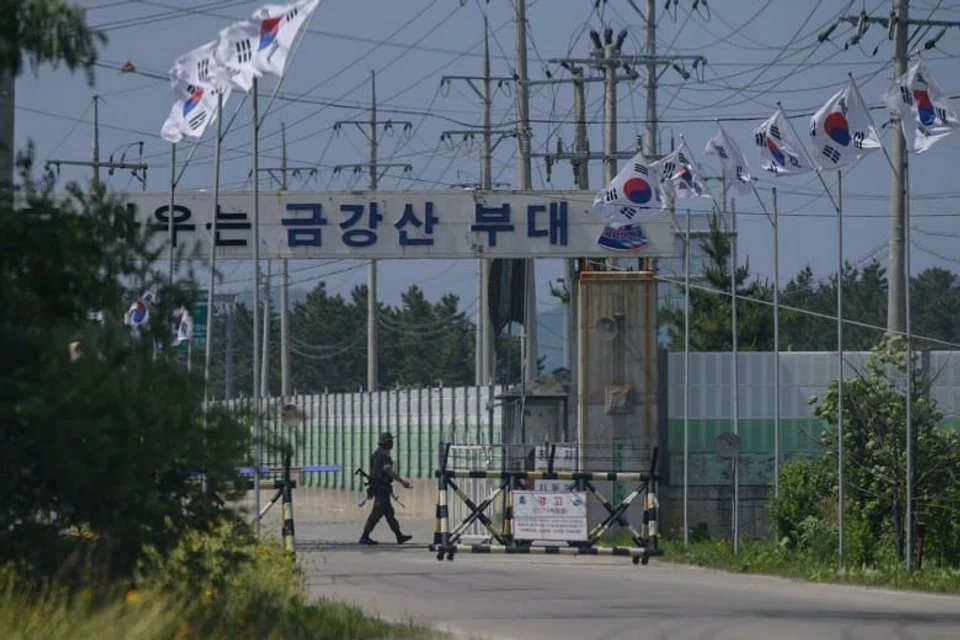
DeeperDive is a beta AI feature. Refer to full articles for the facts.
[SEOUL] South Korea's chief nuclear negotiator will hold talks with officials in Washington on Thursday amid flaring tensions with North Korea after Pyongyang blew up an inter-Korean liaison office and threatened military action.
Lee Do-hoon's unannounced trip came days after North Korea blew up a joint liaison office in Kaesong, near the South Korean border and declared an end to dialogue with the South.
Mr Lee is expected to hold consultations with US officials, including Deputy Secretary of State Stephen Biegun who had led denuclearisation negotiations with North Korea, Seoul's foreign ministry said.
Mr Lee and Mr Biegun will "assess the current situation on the Korean peninsula and discuss responses", the ministry said in a statement.
South Korean television showed Mr Lee arriving at Washington's Dulles International Airport on Wednesday evening, where he declined to comment to reporters.
Pyongyang has increasingly snubbed Seoul's calls for engagement as efforts to restart inter-Korean economic projects stalled due to international sanctions designed to rein in the North's nuclear and missile programmes.
Navigate Asia in
a new global order
Get the insights delivered to your inbox.
North Korean leader Kim Jong Un's sister, Kim Yo Jong, on Wednesday criticised South Korean President Moon Jae-in for failing to implement a 2018 peace accord, saying Mr Moon "put his neck into the noose of pro-US flunkeyism".
Pyongyang has also taken issue over defectors in the South sending propaganda leaflets into North Korea.
Several defector-led groups regularly send back flyers carrying critical messages of Kim Jong Un, often together with food, US$1 bills, mini radios and USB sticks containing South Korean dramas and news.
The Rodong Sinmun, the official newspaper of the North's ruling Workers' Party, said the demolition of the liaison office was the "first stage action" in its "holy war" aimed at punishing Seoul authorities for turning a blind eye to the defector's campaign.
"It was an iron hammer of stern punishment meted out to those who were having empty dreams while pursuing concealed hostile policy," it said in a commentary.
The newspaper also ran a series of articles and photos carrying angry ordinary citizens calling for retaliation and vowing to send anti-South leaflets over the border.
REUTERS
Decoding Asia newsletter: your guide to navigating Asia in a new global order. Sign up here to get Decoding Asia newsletter. Delivered to your inbox. Free.
Share with us your feedback on BT's products and services
TRENDING NOW

Ministry of Home Affairs Permanent Secretary Pang Kin Keong to retire

Shelving S$5 billion office redevelopment plan proved ‘wise’ as geopolitical risks mount: OCBC chairman

Richard Eu on how core values, customers keep Singapore’s TCM chain Eu Yan Sang relevant

China pips the US if Asean is forced to choose, but analysts warn against reading it like a sports result

