Stagflation and why it occurs

Singapore
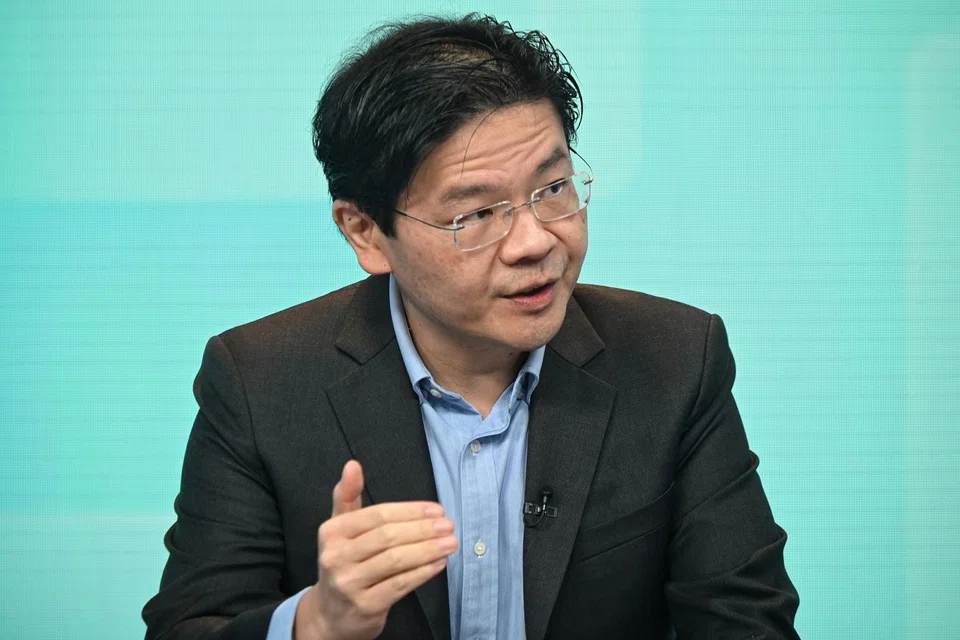
THE global economy faces the risk of recession or stagflation if the Russia-led war in Ukraine is prolonged, and Singapore could be adversely affected in these scenarios, despite its limited links to Russia and Ukraine, warned Finance Minister Lawrence Wong at an event on Tuesday (Mar 22).
For now, Singapore's baseline assumption is for the economy to grow by 3-5 per cent in 2022, although President Halimah Yacob noted in a speech this week that projection "may be affected", and that the Republic must be prepared for "secondary and tertiary effects".
What is stagflation?
A term popularised in the 1970s, stagflation occurs when stagnation, high unemployment and rising inflation occur at the same time, a combination that economists previously believed was not possible.
Typically, unless the central bank raises interest rates, inflation discourages savings and pushes consumers and businesses to spend more, spurring economic growth and employment.
The term stagflation was coined back in November 1965 by Britain's Tory MP Iain Macleod, who told the House of Commons: "We now have the worst of both worlds - not just inflation on the one side or stagnation on the other, but both of them together. We have a sort of 'stagflation' situation and history in modern terms is indeed being made."
What caused stagflation in the 1970s?
The 1970s was marked by a period of slow growth and rapidly rising prices.
This was triggered in part by the 1973 oil crisis, when the Organization of the Petroleum Exporting Countries (Opec) imposed an oil embargo to punish countries that supported Israel during the Yom Kippur War. By end-March 1974, the price of oil quadrupled, leading to the world's first oil crisis.
This was coupled with other troubles that had emerged in the late 1960s, as the post-war economic boom in the United States had begun to fade.
Beset by an expensive war in Vietnam, the US was also facing greater international competition amid high unemployment and high prices.
In the first half of 1974, Singapore's imported inflation surged, and headline inflation rose to nearly 30 per cent, according to the Monetary Authority of Singapore (MAS).
Monetary policy then was aimed at curbing inflation before easing to support growth in the second half of the year.
Singapore avoided a recession and grew 4.6 per cent in 1975 with inflation at 2.6 per cent, the central bank said.
Why might the war in Ukraine cause stagflation?
The Russia-led war amounts to a supply shock, wrote the Financial Times (FT), since it reduces the capacity of the global economy to produce goods and services, leading to crises that hit growth while raising inflation, which is already at a 4-decade high in the US.
While lower interest rates may be able to encourage investment and spending, they would not be able to alleviate the energy crunch, FT added.
Oil prices have been trending above US$100 per barrel after Russia invaded Ukraine on Feb 24.
But OCBC's executive director of investment strategy Vasu Menon does not foresee a US or global recession this year, predicting a global growth rate of 3.7 per cent instead.
"Although inflation is rising, we still see the world economy expanding above its long-term 3 per cent trend rate this year despite the oil shock and problems in Ukraine," he said.
"Crucially, global growth is still benefiting from a strong tailwind as economies reopen from the pandemic. This is helping to prevent the global economy from stagnating."