

State-owned units headed for new Indonesian SWF
Entity set to start ops in Q2 with initial injection of US$5b in assets; goal of US$40b in investments by end of year
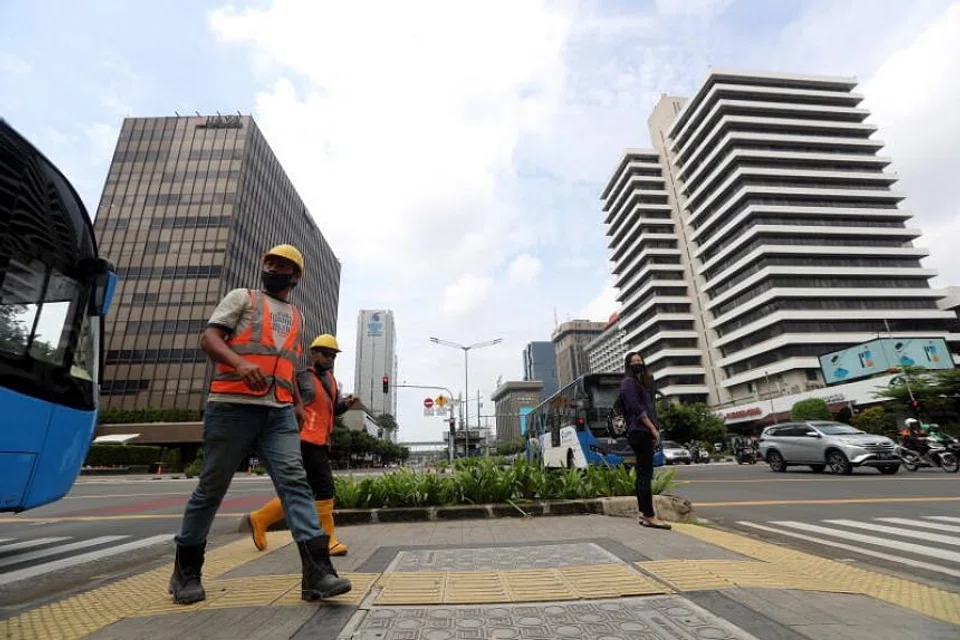
Jakarta
INDONESIA is preparing a host of state-owned enterprises (SOEs) that are primarily involved in infrastructure development, whose assets will be injected in the soon-to-be-launched Indonesia Investment Authority (IIA).
Masyita Crystallin, a special adviser at the Ministry of Finance's Fiscal Policy Institute, said the IIA is scheduled to start operations in the second quarter of this year with an initial injection of US$5 billion in assets.
The government aims to raise up to US$40 billion in investments by the end of 2021 to fund new infrastructure projects.
Last week, Indonesian President Joko Widodo appointed five members for the IIA's advisory board, with Finance Minister Sri Mulyani Indrawati named the board's head
The other members are State Enterprise Minister Erick Thohir and three professionals - Haryanto Sahari, Darwin Cyril Noerhadi and Yozua Makes.
Arya Sinulingga, a special staff at the Ministry of State-Owned Enterprises, noted that the companies that will benefit from the IIA include construction giants Waskita Karya and Wijaya Karya, and cement company Semen Indonesia Group.
"The idea is how to make sure you can recycle the financing capacity of these state-owned companies for new infrastructure projects," said one source who is familiar with the project. "The government needs to make sure it is attractive enough for foreign investors to come in and invest."
To date, the Indonesian government has received some US$8 billion in pledges from several international institutions.
This includes US$2 billion from the United States International Development Finance Corporation, US$4 billion from the Japan Bank for International Cooperation, and US$2 billion from Canada pension fund CDPQ.
Mr Joko has made infrastructure development a key priority over the past four years.
The country, however, is facing a challenge in terms of financing capacity, as many of the SOEs are over-leveraged. The state budget has had to allocate funds for tackling the Covid-19 pandemic including the purchase of vaccines.
"The SOEs have to offload their assets so they can free up capacity to undertake more infrastructure projects," the source noted.
"There has been a shift in thinking within the government on ownership of these assets, as the entity that owns them is now considered less important than the ability to undertake more projects."
Unlike other sovereign wealth funds (SWFs) that manage the country's reserves to invest locally and abroad, Indonesia seeks to attract foreign capital as co-investors.
Mr Joko's administration is also working to consolidate SOEs in a number of other sectors including healthcare, transportation and natural resources.
Sources told The Business Times that newly-appointed Health Minister Budi Gunadi Sadikin, a former banker, has been tasked with restructuring a number of public hospitals to prepare them for future inclusion in the IIA.
There are also plans for MRT Jakarta to acquire shares of Kereta Commuter Indonesia from state-owned railway operator Kereta Api Indonesia, in an effort to create an integrated transportation company serving Jakarta.
The merged entity could also be part of the assets that are offered to global investors further down the road.
"It will be interesting to see the structure of the IIA," said Fauzi Ichsan, chairman of the Indonesia Financial Group, which is a holding company for state-owned insurance firms.
"What kind of business model will it adopt, and who will assume the liabilities of the companies? The devil is in the details," he added.
TRENDING NOW
Green fuels, autonomous ships: How Singapore is future-proofing its shipping industry
US trade chief to consider trade deal tariff caps in excess capacity probe

Grab CEO’s wife Chloe Tong on life with Anthony Tan and finding her purpose

Deal between tycoon friends sparks scrutiny of Philippine power sector

