

Success of global fight against climate change rests on developing nations: EIU

Singapore
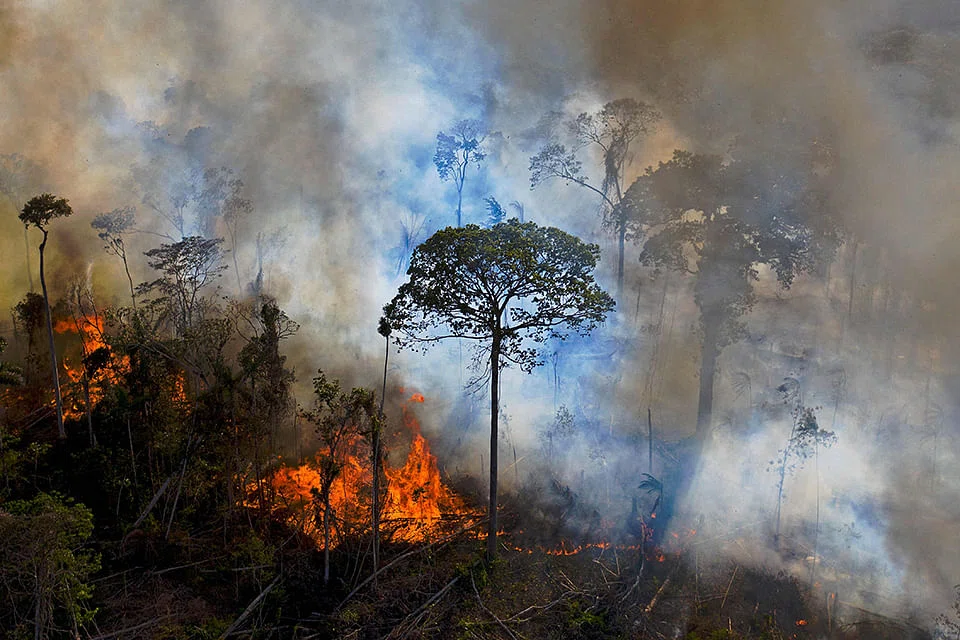
THE international community has put in concerted efforts in recent years to tackle the climate crisis, but their success could be undermined by developing nations' refusal to commit to absolute emissions cuts and these countries' struggles to emerge from the Covid-19 pandemic.
Such was the rather gloomy prediction from the Economic Intelligence Unit (EIU), in a special report commemorating its 75th anniversary, published on Friday (Nov 5).
In it, the research and analysis division of The Economist Group looked back at its coverage to present its take on the most important events of the past two decades, and also presented some forward-looking scenarios on events that could reshape the global geopolitical, economic and business landscape.
In terms of climate change, the EIU noted that "it is no longer an issue of the future, but very much of the present".
"The good news is that the international community has started to mobilise to tackle this crisis. However, the path ahead remains full of stumbling blocks, especially in terms of securing the compliance of developing countries, which now account for over half of total emissions globally.
"Indeed, the success of the effort to avert the most disastrous aspects of climate change now rests almost entirely with the emissions trajectories of developing countries. However, they have long resisted making cuts in absolute terms. This impasse risks taking the world to the brink of disaster and will, therefore, dominate global policy discussions on climate for decades to come," it said.
Its comments come amid global talks being held in Glasgow this month on the escalating climate crisis, as world leaders gather for the United Nations' climate summit, COP26.
The EIU believes that many developing countries will continue to refuse binding emissions cuts, even though the cost of inaction skyrockets with every year of delay. "Advanced economies will agree to foot part of the bill, but this will not be enough to secure progress and some dramatic climatic developments (including even more frequent and extreme heat waves, floods and droughts) will not be averted, with potentially catastrophic consequences both for the global economy and human society."
A number of developing nations will also have their hands full, as they struggle to cope with the Covid-19 pandemic. "Vaccines have been developed at breakneck speed, but rich countries have administered around 100 times as many shots to their citizens as poorer ones," the EIU noted, adding that the vaccination timelines of low-income countries will be long, with some likely not being immunised at all.
It forecast that the countries that end up vaccinating less than 60 per cent of their population by mid-2022 will register GDP losses totalling around US$2 trillion in 2022-25, which is roughly equivalent to the annual GDP of France. It expects emerging countries to shoulder around two-thirds of these losses, which will fuel poverty and further delay their economic convergence with more developed countries.
The poor rate of immunisation will also further affect tourism flows to these nations, widening the gulf between them and more developed nations; social and political unrest is likely to grow as a result, the EIU said.
The global fight against climate change, meanwhile, will also have its positive effects: the EIU believes it will reshape the global business environment for many years to come, unleashing a wave of innovation and technological change.
"Industry 4.0 could well come to be known as the green revolution, with technological advances that will reshape society in ways that make the changes seen in previous industrial revolutions seem conservative by comparison. Industrial transformation will create winners and losers, as old, energy-intensive industries disappear or are transformed into greentech behemoths to compete alongside new, innovative low-carbon sectors," the EIU said.
It believes the pool of global climate financing will grow exponentially, driven by fast-rising demand for environmental, social and governance (ESG) investment instruments.
"This will spark a flurry of investment activity the like of which the world has never seen. Society will survive and continue to thrive - but the world will be a very different place," it said.
READ MORE: Chasm opens between COP26 words and climate action






