Suppliers struggle to meet soaring demand for takeaway food packaging
Singapore
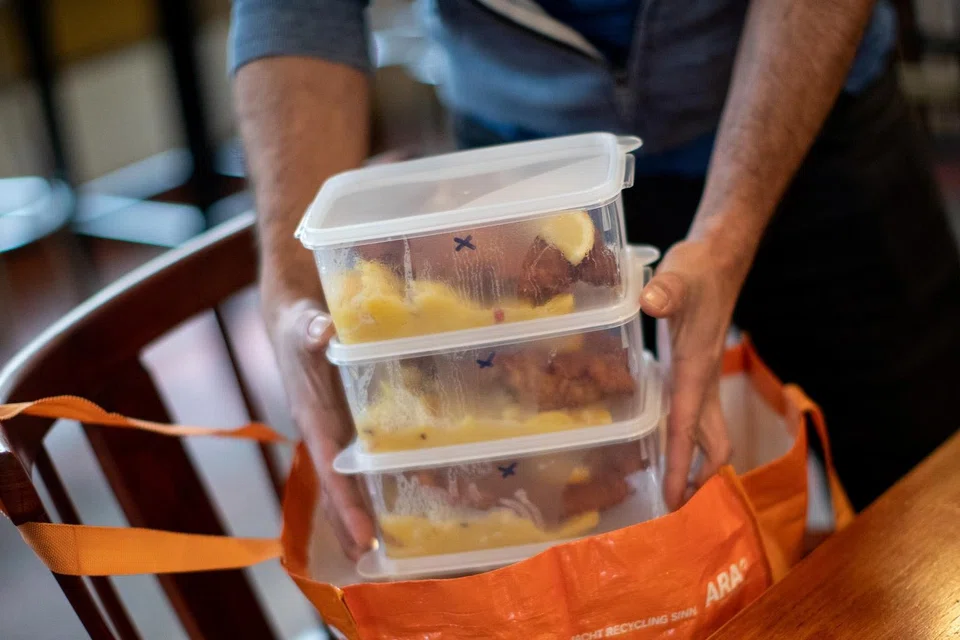
DEMAND for takeaway food packaging has shot through the roof since Friday, when the Singapore government announced that food and beverage (F&B) establishments can only offer takeaway and delivery during a month-long "circuit-breaker" period that started on Tuesday.
Suppliers told The Business Times (BT) that their phones have been ringing non-stop, even during the weekend, from old and new customers alike. New Modern Metals & Plastics estimates the rise in demand to be at least 40 per cent, while Sea Trading Company has seen 100 to 200 per cent jumps for some product lines.
However, an ongoing lockdown in key manufacturing node Malaysia is making it impossible for many companies to meet the new demand.
"We see a huge surge from supermarket users, hospitality players who are providing for those on Stay-Home Notice, foreign worker dormitories and people doing takeaways more than usual," said Sea Trading director Jacqui Chua. "Everything to do with takeaway is selling like hotcakes."
Julian Chen, founder of Supply Smiths, said he noticed a spike in food packaging orders on Friday from new and old customers and has roughly doubled his supplies, which are sourced from China. "We reckon it is because they are uncertain about their food packaging output for the next month themselves, and would prefer to have a surplus than to run out," he said.
The surge in demand might have been welcome, as it follows a dip in business for some companies in February and March when events were cancelled and people went out less often to buy food. However, manufacturing facilities in neighbouring Malaysia were forced to shut down by the Restriction of Movement Order on March 18, cutting off a major node of Singapore's packaging supply chain.
The Malaysian factories that have obtained permits to operate are only allowed to do so at half strength, and movement restrictions continue to reduce the manpower available to transport the goods.
As a result, companies that depend heavily on manufacturers there are having to turn down new customers and prioritise existing clients. Allswell Polythene, a supplier of plastic bags, food wrappers and cutlery, is ramping up orders by as much as five times to meet existing clients' needs.
Meanwhile, SKP, which manufactures in Singapore and Malaysia, said that the output from its two local plants will only be sufficient to support its existing customers' regular orders.
"If (Malaysian manufacturers) were able to ramp up supply like in normal conditions, they would probably be able to serve the whole heightened demand," said Sea Trading's Ms Chua, whose company gets 90 per cent of its supplies from overseas, primarily from Malaysia. "They are nimble and can move fast because they know their productivity and efficiency."
New Modern Metals & Plastics director Stephanie Ng said that although the majority of its foam and plastic food box products are from Malaysia, its manufacturing partners there have confirmed that they are doing their best to fulfil the new orders, and New Modern does not foresee any problems in meeting demand.
Sourcing products from more than one country has proved key for some suppliers. Dillic International has had to deal with lockdowns in both its source countries of China and Malaysia, but fortunately the two events did not coincide.
"Currently, we have no problem meeting the demand," said operations director Priscilla Ng, though she noted that there may still be some delays. "We are starting to ramp up our orders, but we were given a very short lead time, so there's no way we can shore up the goods and replenish so quickly."
Sea Trading is searching for alternative options in neighbouring countries like Indonesia, hoping to find manufacturers that can ship products to Singapore within three days.
F&B companies that BT spoke to, such as Ka Soh Restaurant and Boon Tong Kee, said they have had few to no issues placing orders with their regular suppliers so far, although Yum Cha Restaurant was unable to get containers in certain sizes.
The Federation of Merchants' Association (FMAS) said it is too early to tell how its hawker members will be impacted by the strained supply chain. FMAS president Yeo Hiang Meng said the association is monitoring the situation closely, and is prepared to help aggregate demands and negotiate with overseas manufacturers or major local importers to secure needed supply.
"At most hawker stalls, they have put up signages and reminders to customers to bring in their own food containers," Mr Yeo said. "We have already seen consumers (doing so), and hopefully they will continue to do so for their next purchases."